Signs Your Slope Needs a Boulder Wall
- Soil, mulch, or gravel washing downhill after every hard mountain rain
- A steep, unusable bank you want to level into terraced, plantable space
- An existing timber or block wall that is leaning, bulging, or cracking
- Erosion undermining a driveway, foundation, or septic field
- Exposed roots and gullies forming on a hillside above your home
How We Build Boulder Walls That Actually Hold
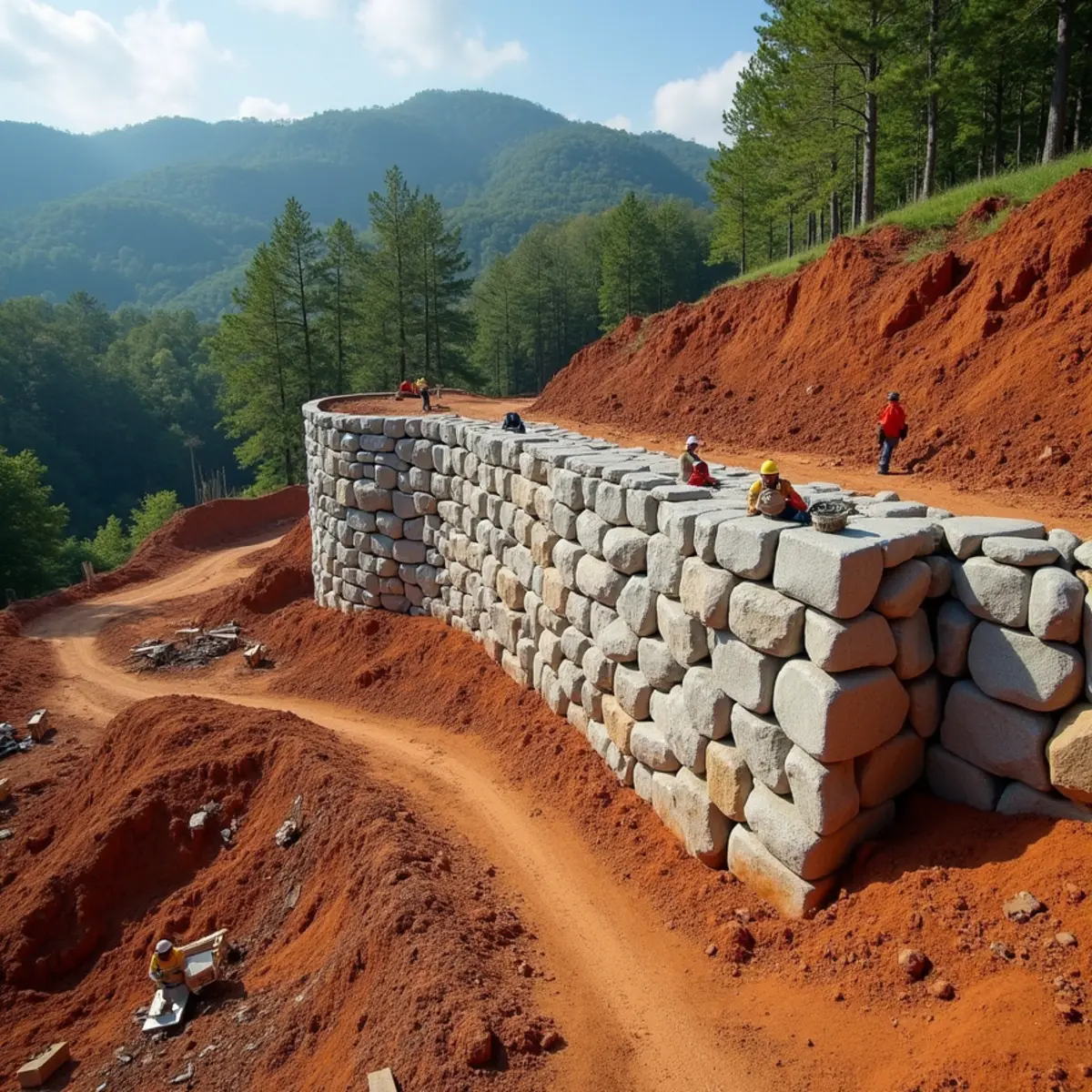
A boulder retaining wall is a gravity structure: it resists the push of the hillside through sheer mass and a properly battered face, not through mortar. On North Georgia slopes that means the base course is the most important course. We excavate a level trench below grade, compact a crushed-stone footing, and set the largest stones first so every boulder above locks into the one below.
Georgia red clay holds water, and saturated clay behind a wall creates enormous hydrostatic pressure. That is what topples most failed walls. We install a continuous drainage zone - clean #57 washed stone wrapped in non-woven geotextile fabric with a perforated drain line - so groundwater is captured and carried away instead of shoving against the stone. Every wall is pitched back into the hill (battered) so gravity works with us, not against us. Where a slope also needs the finished area leveled for use, this work pairs directly with hillside excavation and terracing.
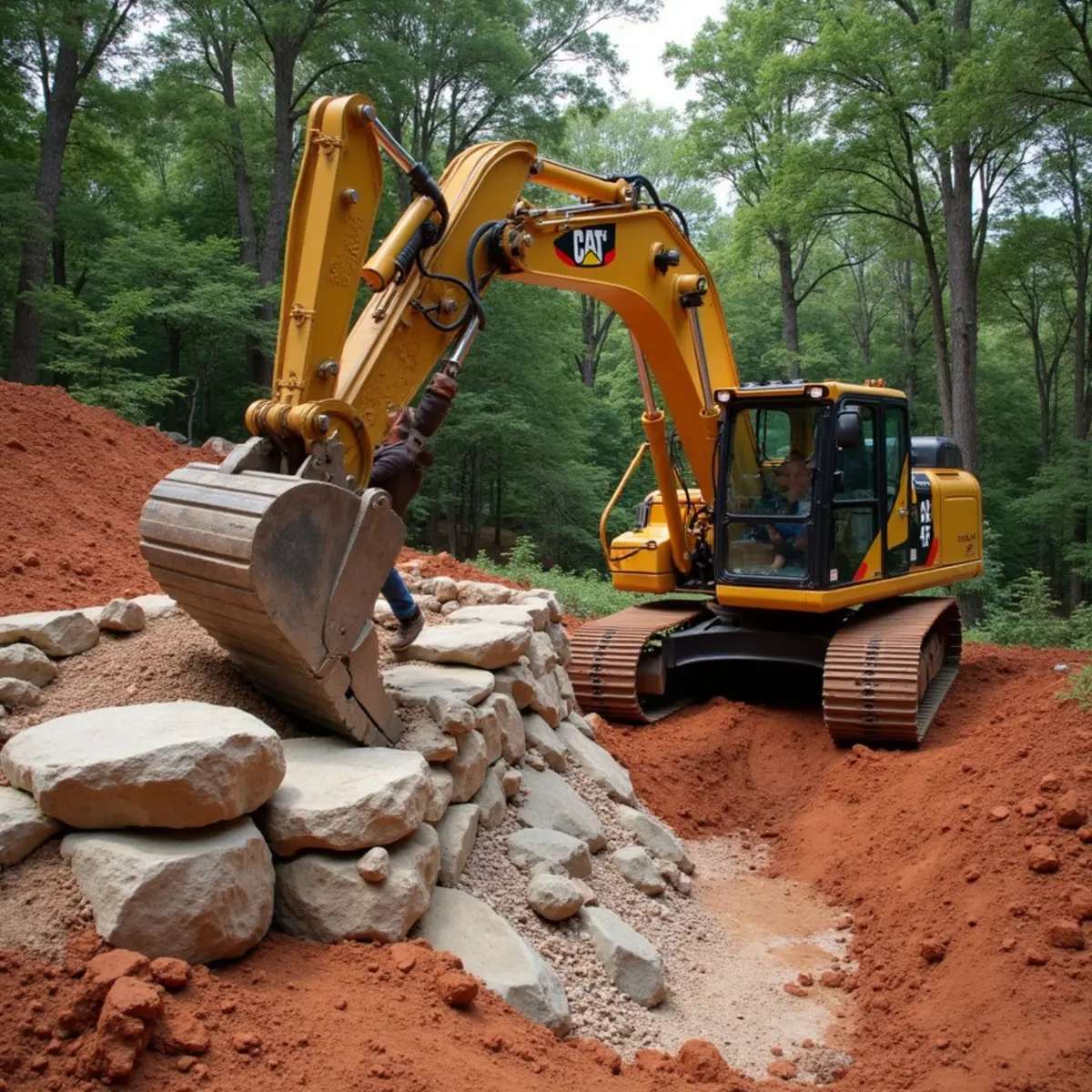
- Native granite and fieldstone sized to the slope, placed with an excavator and hydraulic thumb
- Compacted crushed-stone base trench dug below frost and topsoil
- Full drainage stone, filter fabric, and perforated pipe behind the wall face
- Terracing and backfill grading to create usable, plantable yard space
Choosing the Right Stone and Engineering for Taller Walls
Not every boulder belongs in every wall. We source native North Georgia granite and weathered fieldstone in the tonnage a given slope demands, hand-selecting flat-bedded stones for the base and blockier stones for the face so the wall reads as a natural mountain outcrop rather than a dumped rock pile. Color, lichen, and grain are matched to the surrounding Blue Ridge landscape, which is why a Kipps wall settles into a property instead of standing out from it. For clients who want the same stone language carried into a patio or seating area, boulder walls pair naturally with our stone fire pits and flagstone patios.
Wall height changes the engineering. Short garden walls under three feet are straightforward gravity structures, but as walls climb past four feet - or carry a surcharge like a driveway, pool, or structure above - Habersham County and most North Georgia jurisdictions require an engineered design and permit. On tall or steep sites we tier the wall into stepped terraces, add geogrid soil reinforcement tied back into the hillside, and oversize the drainage to handle the extra water a bigger catchment sheds. If an older wall is already failing, we also handle emergency retaining wall shoring and repair before it takes the slope with it. Homeowners across Clarkesville and the surrounding mountains rely on us to get this judgment right the first time.
Equipment, Stone Sourcing, and Safety on a Boulder Wall Build
We run our own excavators fitted with hydraulic thumb attachments - typically 20,000 to 45,000 pound class machines depending on boulder size - so stone is placed and rotated precisely rather than dropped and hoped into position. Boulders in the two- to six-ton range are common on a mountain gravity wall, and moving stone that size safely means keeping ground personnel clear of the swing radius at all times and working the base course methodically from one end rather than leapfrogging placement.
Stone is sourced from North Georgia quarries and select landowner sources in tonnage lots matched to the wall's engineered face batter, typically an inch of setback per foot of height, which is what lets gravity lock each course against the one below instead of relying on friction alone. Chinking stones - smaller wedge-shaped pieces - are hand-fit into voids between larger boulders as the wall rises, both to lock the face tight and to keep soil from washing through gaps before the drainage zone is fully backfilled.
- Excavators with hydraulic thumb attachments in the 20,000 to 45,000 pound class
- Boulders in the two- to six-ton range set and rotated into precise position
- Face batter of roughly one inch per foot of height engineered into every course
- Hand-fit chinking stones locking the face and closing voids as the wall rises
Our Process
- 1
On-Site Slope Assessment
We walk the hillside, read the soil and water flow, and measure the grade change to size the wall and machinery correctly.
- 2
Excavation & Base Trench
We cut a level footing trench, compact a crushed-stone base, and stage the boulders by size for placement.
- 3
Boulder Placement
The largest stones set the base course; each stone is keyed, battered, and chinked so the wall locks together as one mass.
- 4
Drainage & Backfill
We build the drainage zone with washed stone, fabric, and pipe, then backfill and compact in lifts behind the wall.
- 5
Grading & Cleanup
We terrace and finish-grade the reclaimed space, seed or prep for planting, and haul off all spoil.
Materials & Equipment
- Native North Georgia granite and fieldstone boulders
- Clean #57 washed drainage stone
- Non-woven geotextile filter fabric
- Perforated corrugated drain pipe
- Mini and full-size excavators with hydraulic thumb attachments
What Affects Your Price
Every mountain and lakefront project is different. These are the factors we weigh in a free on-site estimate — no fixed price fits every property.
- Total wall height and length, and whether tiered terraces are required
- Boulder sourcing and tonnage - larger stones need bigger machines
- Site access on steep or wooded mountain lots
- Drainage complexity and volume of water the wall must manage
- Excavation and haul-off of existing failed walls or spoil
- Whether an engineered stamp or permit is required (walls over 4 ft)
Why Choose Kipps Kustom Landscapes for Boulder Retaining Walls
Our Own Excavators and Thumb Operators - No Subbing Heavy Work
We run our own fleet of excavators with hydraulic thumb attachments and have operated them on North Georgia slopes for 15+ years; the same crew that quotes your wall places every boulder, and we never sub out the heavy lifting to a rented machine and an unfamiliar operator.
4.9 Stars Across 47 Local Reviews
Homeowners across Habersham County have rated us 4.9 stars on 47 reviews, largely for the same reason a boulder wall has to perform: it either holds the hill or it does not, and ours hold.
Licensed and Insured Under Miller Landscaping Group LLC
Every wall we build is backed by a licensed and insured local business, not a side crew - proof of coverage is provided before equipment ever touches your slope.
A Free On-Site Estimate With the Engineering Threshold Explained
We walk the slope with you, measure the exposed height, and tell you plainly whether your wall needs an engineered stamp under Habersham County rules before we hand you a written line-item scope.
Frequently Asked Questions
- Walls under four feet of exposed height generally do not require an engineered permit, but taller walls, tiered walls, or walls carrying a surcharge (like a driveway above) typically do. We assess this on site and handle the permitting and engineering coordination when a wall crosses that threshold.