
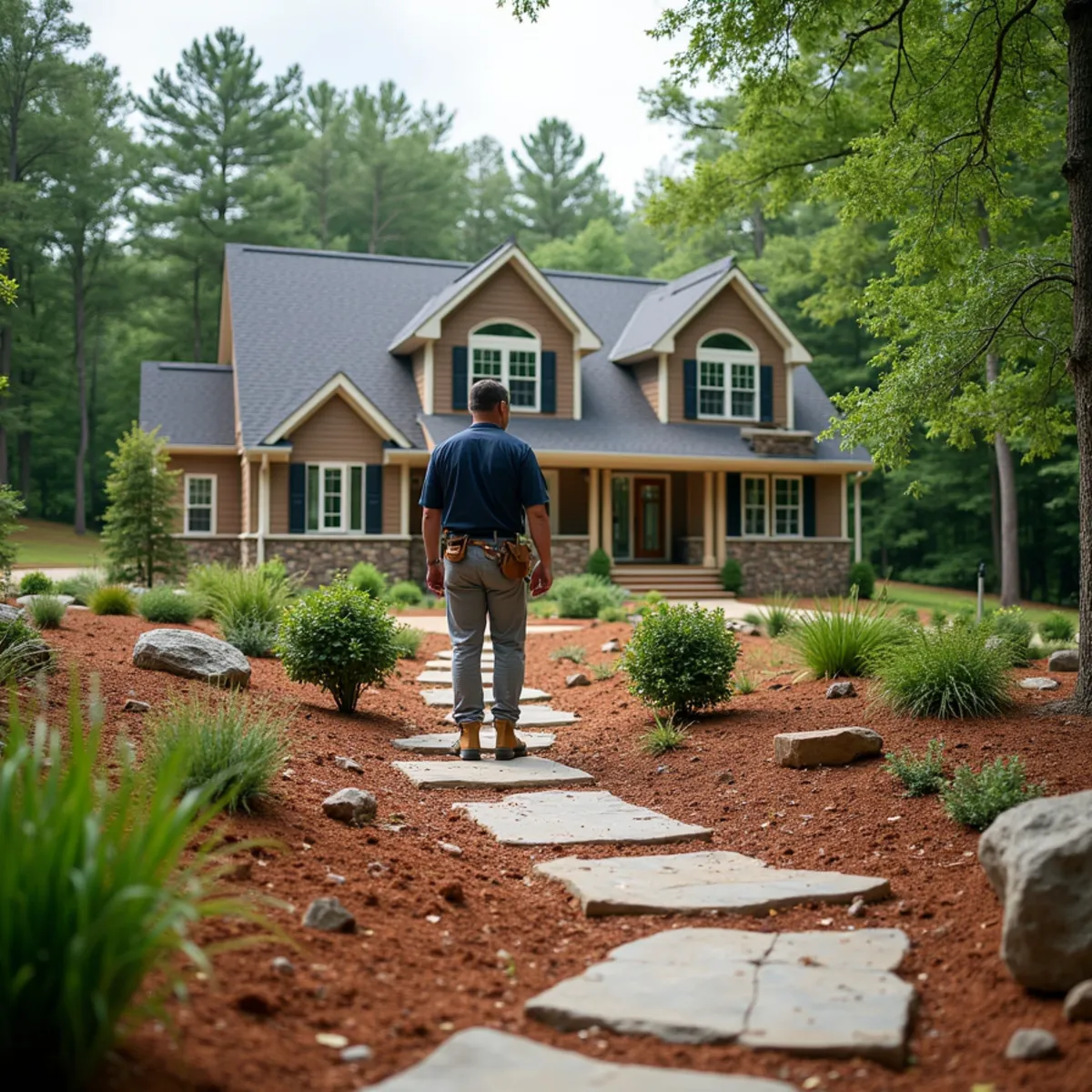
A Valley That Feeds the Lake Burton Watershed
The creeks and small drainages winding through the Batesville valley are part of the same watershed system that eventually feeds Lake Burton, one of the cleanest recreational lakes in this part of the state. That downstream relationship matters for landscaping decisions made up here, because sediment, fertilizer, and disturbed soil that washes off a Batesville property does not just disappear, it travels downstream and shows up as turbidity and nutrient loading in the lake system that Rabun County residents rely on.
That is why we treat runoff control on Batesville jobs as a watershed issue, not just a yard issue. A drainage plan that simply moves water off one property and onto the next, or straight into an unprotected creek, is not actually solving the problem here, it is exporting it downstream.
Non-Point Runoff Buffers Done Right
Our approach for Batesville properties near a creek or drainage feeding the Burton watershed is to build vegetated buffer strips along the waterway before we do anything else, planted with deep-rooted native grasses and shrubs that filter sediment and slow water velocity before it reaches the creek. We keep French drain discharge points well back from any stream bank and route them through a graded, planted swale rather than piping straight to the water's edge, which is the single biggest mistake we see from unpermitted work in this area.
For slope work above a buffer zone, we favor boulder retaining walls and terracing that minimizes exposed soil during construction, using erosion control fabric and phased grading so a Batesville hillside is never left bare and unprotected during an active build.
Native Perennial Planting for Valley Properties
Batesville's elevation and valley microclimate suit native perennials well, and we favor them over high-maintenance ornamentals for both aesthetic and watershed reasons: established native root systems hold soil, need less fertilizer input that could otherwise wash toward the creek system, and thrive in the cooler valley conditions here better than plants bred for lowland Georgia gardens. Combined with native rhododendron along shaded slope transitions, this gives Batesville properties a planting scheme suited to the valley rather than fighting it.
We regularly coordinate Batesville work with nearby Hollywood and Turnerville jobs, all of which sit in similar high-elevation, watershed-sensitive terrain.
Permit Awareness and Cold-Season Buffer Planting
Because Batesville drainage ultimately reaches the Lake Burton watershed, some site work here intersects with state and local buffer requirements around streams and wetlands, particularly on parcels close to a named creek. We check jurisdictional buffer distance before finalizing any grading plan that comes within reach of a waterway, since disturbing a protected buffer without the right approach can create problems well beyond the property line. That review happens early in our process, not after design is finished, precisely because Batesville carries more regulatory weight than a typical inland Habersham County lot. Winters here run colder than the lower valley towns given the elevation, and buffer plantings installed in late fall need species that can establish root systems before a hard freeze locks up the soil, which shapes our planting calendar for this area specifically.
We generally install buffer and slope plantings in Batesville during early fall or early spring, avoiding the deep winter window when cold-stressed new plantings struggle to root before the ground freezes, and avoiding mid-summer when young roots compete hardest with established vegetation for limited water. Native switchgrass, river birch, and inkberry holly handle both the watershed-protection role and Batesville's cooler valley temperatures well, rooting deep enough by their second season to hold soil through a real storm event. For larger acreage parcels in the valley, this buffer-first planting approach pairs naturally with the forestry mulching work we do to reclaim overgrown pasture margins without disturbing the watershed itself, the same standard we apply nearby in Hollywood.
Well water is standard throughout the Batesville valley, and because so many properties draw directly from groundwater tied to the same system feeding the creeks below, we are especially careful about fertilizer and herbicide use near any wellhead during planting or turf establishment, favoring slow-release organic amendments over conventional chemical fertilizer whenever a job sits close to a private well or the watershed buffer itself.
Neighborhoods & Areas We Serve in Batesville
Batesville's parcels split between creek-adjacent bottomland feeding directly toward the Lake Burton watershed and higher valley ground set back from any named waterway. Creek-adjacent lots need the vegetated buffer and setback-discharge approach we already build into our watershed work here, while the higher valley parcels behave more like a typical high-elevation Habersham County lot, with fewer buffer restrictions but the same cooler valley microclimate.
We coordinate that distinction on the same crew rotation we run near Hollywood and Turnerville, both of which sit in similar high-elevation terrain without the same watershed sensitivity Batesville's creek-adjacent lots carry.
What a Typical Batesville Project Looks Like
A typical Batesville project starts with a landowner near a creek feeding the Lake Burton headwaters who wants slope stabilization or a new planting bed without exporting sediment downstream. We walk the property, identify the jurisdictional buffer distance before any grading begins, and build a vegetated buffer strip with native rhododendron and deep-rooted grasses before any structural work starts.
The second common project is a valley acreage owner clearing overgrown pasture margins, work we handle with the same forestry mulching equipment and buffer-aware grading we use throughout Batesville's watershed-sensitive ground.
Native Plant Palette & Microclimate Notes for Batesville
Batesville's valley elevation and cooler microclimate suit native switchgrass, river birch, and inkberry holly particularly well, species that already do double duty holding soil along the Lake Burton watershed buffers we build here. We favor them over high-maintenance ornamentals that need heavier fertilizer input, which matters directly in a valley where anything applied to a lawn eventually reaches the creek system below, the same reasoning behind the native rhododendron plantings we use along shaded slope transitions throughout the valley. Established native root systems also recover faster after a hard winter than nursery-grown ornamentals bred for lowland Georgia gardens, which matters on a property that sees real elevation-driven cold.
The same cooler valley air that helps those natives establish also means Batesville sees a shorter safe planting window than lower-elevation towns like Hollywood, so we generally hold buffer and slope plantings for early fall or early spring rather than deep summer or the coldest weeks of winter. Homeowners moving up from a warmer, lower-elevation lot are often surprised how much that narrower window changes a planting schedule they assumed would work the same way it did before.
Our Services in Batesville
Every core Kipps Kustom Landscapes service is available to Batesville property owners:
Why Batesville Residents Choose Kipps Kustom
Eleven Miles From Clarkesville to the Burton Headwaters
Batesville sits about 11 miles out, and we coordinate watershed-sensitive jobs here with our regular Hollywood and Turnerville routes to keep travel efficient for this high-elevation valley.
15+ Years Respecting Downstream Water Quality
Building vegetated buffer strips and setback discharge points instead of piping runoff straight to a creek takes a watershed-first mindset we have applied across NE Georgia for over fifteen years.
Licensed and Insured for Buffer-Sensitive Work
Miller Landscaping Group LLC is fully licensed and insured, and we check jurisdictional buffer distance before finalizing any grading plan near a Batesville creek feeding the Lake Burton system.
4.9 Stars From Clients Who Value the Lake
Our 4.9-star rating across 47 reviews includes Batesville and Rabun-area clients who specifically wanted a contractor that would not export their runoff problem downstream.
Batesville Landscaping FAQs
- If your property drains toward a creek feeding the Burton watershed, we recommend vegetated buffer strips and setback discharge points rather than piping runoff straight to the water's edge.