
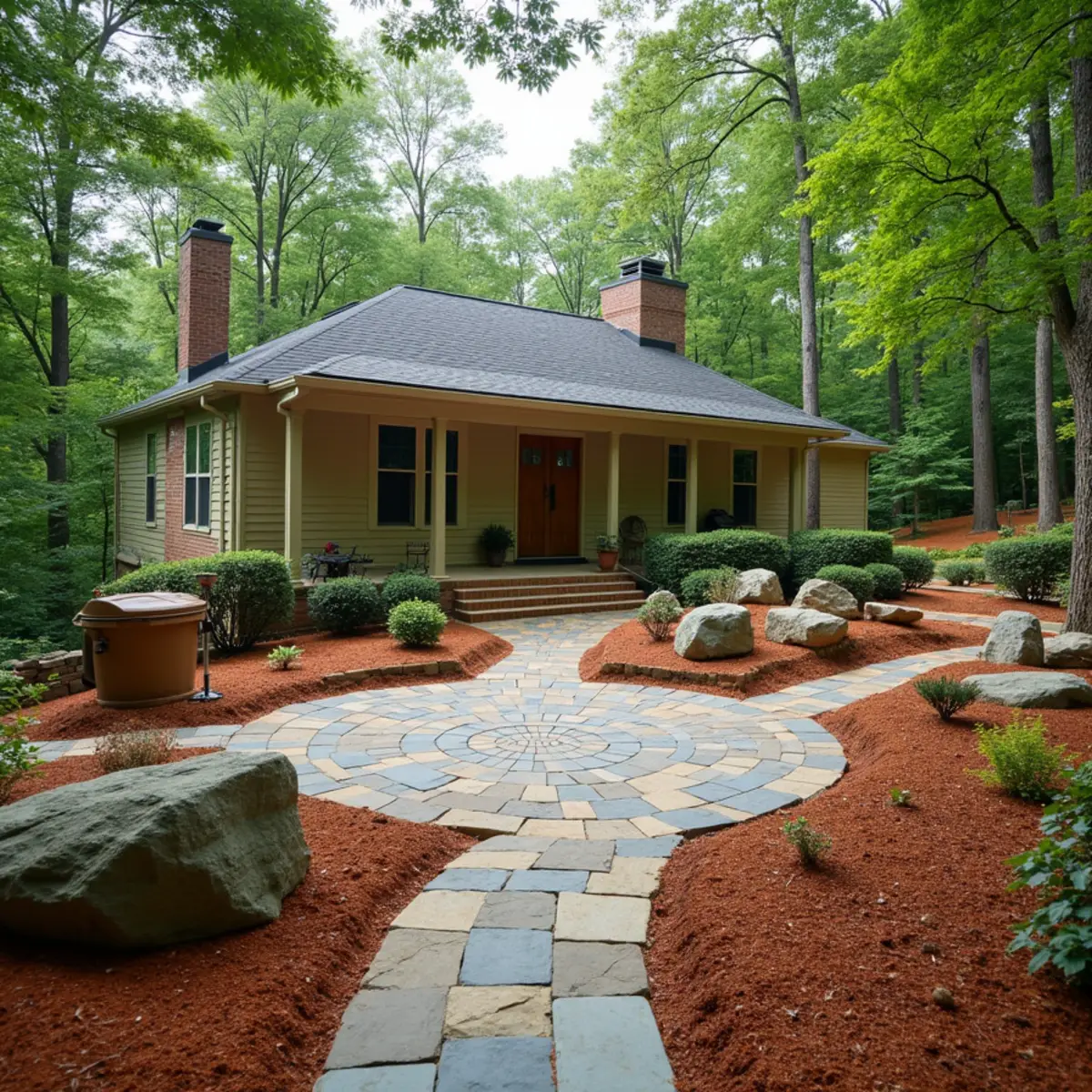
Landscaping Around a Historic Campus District
The streets surrounding Piedmont University, and the older residential blocks near downtown Demorest, are lined with hardwood trees that predate most of the houses. That canopy is an asset worth protecting, but it complicates almost everything below grade. Root flare from a 60-year-old white oak can extend well past the drip line, and a standard excavation for a patio slab or wall footing will sever roots that keep that tree alive and stable.
We treat these properties differently from a cleared new-build lot. Before we dig near a mature tree, we hand-expose root zones instead of trenching blind with equipment, and we design hardscape footprints around the roots we find rather than through them.
Root-Safe Flagstone and Terracing
Our answer for Demorest's shaded lots is usually flagstone patios set on a permeable base rather than a poured concrete slab. A dry-laid flagstone patio breathes, lets water and air reach root systems underneath, and can be reset section by section if a root does eventually lift a stone, none of which is true of concrete. For sloped lots near the historic district, we also build low terraced steps rather than one continuous grade change, which limits how much soil disturbance happens around any single tree's root zone.
Where a slope genuinely needs structural holding, we still use boulder retaining walls, but we set footings between root zones identified during our site walk, and we favor dry-stack construction over poured concrete footers whenever the grade allows it, since dry-stack disturbs less soil.
Soil, Shade and Lawn Health
Heavy shade from the campus canopy means turf struggles in Demorest yards no matter how good the soil is. We steer homeowners here toward shade-tolerant fescue blends and native groundcovers instead of forcing zoysia or bermuda into conditions it cannot survive, and we pair that with French drain work where downspouts from historic homes dump straight onto compacted clay near foundations. For the largest campus-adjacent properties, we also provide estate grounds maintenance and pruning to keep that mature canopy healthy and structurally sound over time.
Demorest sits close enough to Clarkesville and Cornelia that we can schedule campus-district tree-root evaluations without a special trip charge for most jobs.
Campus-Season Timing and Soil Beneath the Canopy
Demorest's rhythm follows Piedmont University's academic calendar almost as much as it follows the weather, and that matters for scheduling landscape work near campus-adjacent rentals and historic homes, since move-in and move-out weeks in August and May bring extra vehicle traffic down streets that were never built for it. We plan heavier equipment work, like patio excavation or wall footings, around those windows when possible, both to avoid blocking narrow historic streets and because spring semester crowds make on-site parking for a crew genuinely difficult near the quad. Soil beneath the oak and hickory canopy here is a shaded, moisture-retentive Pacolet clay loam, cooler and slower to dry than open-lot ground elsewhere in Habersham County, which changes how long a freshly excavated footing needs to cure before we build on it.
The historic district also carries its own informal expectations around street-facing appearance, and homeowners here often want fieldstone or flagstone that reads as original to the era of the house rather than an obviously modern material. We source stone with that in mind for Demorest jobs specifically. Drainage beneath the canopy needs the same root-conscious approach as our hardscape work, so downspout tie-ins from century-old roof lines get routed through hand-dug trenches rather than trenched blind, protecting the same root systems the flagstone patios are designed around. For estate-scale properties near the edge of the campus district, we often pair that root-safe drainage with ongoing estate grounds maintenance and pruning, since a mature oak canopy this valuable needs structural pruning, not just seasonal cleanup, to stay safe over decades. Demorest work often runs alongside jobs in Habersham.
Winter ice is a specific concern on Demorest's older brick and stone walkways near campus, since uneven historic paving traps water that refreezes overnight into a slick surface, and we regrade those transitions with a slight positive pitch during any patio or walkway rebuild to keep water moving instead of pooling and freezing in place. Spring brings a heavy pollen and seed-pod drop from the campus oaks that can clog newly installed French drain inlets within the first season, so we spec accessible cleanout points into every drainage system we install near the historic district rather than burying the line with no future access.
Permits, Codes & Compliance Near Piedmont University
Demorest's historic district and the streets ringing Piedmont University carry an added layer of consideration beyond the standard Habersham County permit process, since disturbing soil near a protected root zone or a designated historic structure can draw extra scrutiny during plan review. We confirm the exact rule with the local building department before design work starts on any campus-adjacent lot, particularly for retaining walls approaching the four-foot mark that Habersham County typically wants engineered and stamped, the same review threshold we track for boulder retaining walls anywhere in the county.
Any project that disturbs a meaningful amount of soil near campus can also fall under Georgia EPD erosion and sediment control requirements once the disturbed area crosses the state threshold, which means silt fencing and an inspection schedule alongside the usual root-zone protection we already build into every Demorest job, coordination we also handle for lots near Clarkesville.
What a Typical Demorest Project Looks Like
A typical call from Demorest starts with a homeowner near the historic district or the Piedmont University quad who wants a patio or garden bed but has already had one contractor tell them the roots make it impossible. We walk the site, hand-expose the root zones instead of guessing from the drip line, and design a flagstone patio footprint that fits between what we actually find underground.
The second common project pairs that root-safe hardscape with French drain work for downspouts off a century-old roofline, since historic homes near campus were rarely built with modern drainage in mind. Both project types run on the same academic-calendar-aware scheduling we use for every Demorest job near Habersham.
Native Plant Palette & Microclimate Notes for Demorest
Demorest's elevation and shaded canopy suit a specific palette: native oakleaf hydrangea, Christmas fern, and shade-tolerant heuchera do well in the acidic, moisture-holding soil under the campus oaks, while sun-loving shrubs bred for open Georgia lawns tend to struggle and get replaced within a season or two. We plan bed layouts around that reality rather than fighting it, using native mountain rhododendron plantings along the shadiest transitions where turf has already failed.
The same canopy that shapes the plant list also holds cooler, damper air longer into spring than open lots near Cornelia, which pushes back the safe planting window for anything frost-sensitive by a couple of weeks most years.
Our Services in Demorest
Every core Kipps Kustom Landscapes service is available to Demorest property owners:
Why Demorest Residents Choose Kipps Kustom
Four Miles From Clarkesville, Fast to the Quad
Demorest sits only about 4 miles from our 208 Friar Tuck Rd shop, so campus-district tree-root evaluations and historic-home drainage calls near Piedmont University rarely carry a special trip charge.
Root-Safe Technique Built From 15+ Years on Canopy Lots
We have hand-exposed root zones under century-old oaks across Habersham County for well over a decade, which is why our flagstone patios near the historic district outlast concrete slabs poured over roots other crews cut through.
4.9 Stars From Homeowners Who Kept Their Trees
Our 47 reviews and 4.9-star average include Demorest clients whose canopy survived a hardscape install intact, the outcome we design every root-safe project around.
Free Site Walk Before Any Root Gets Touched
We provide a free on-site estimate that includes identifying root flare and drip lines before quoting a patio or wall, so homeowners know the plan before equipment shows up.
Demorest Landscaping FAQs
- No. In Demorest's historic and campus-adjacent neighborhoods, we hand-expose root zones and design flagstone patios and terracing around mature root systems rather than trenching through them.