
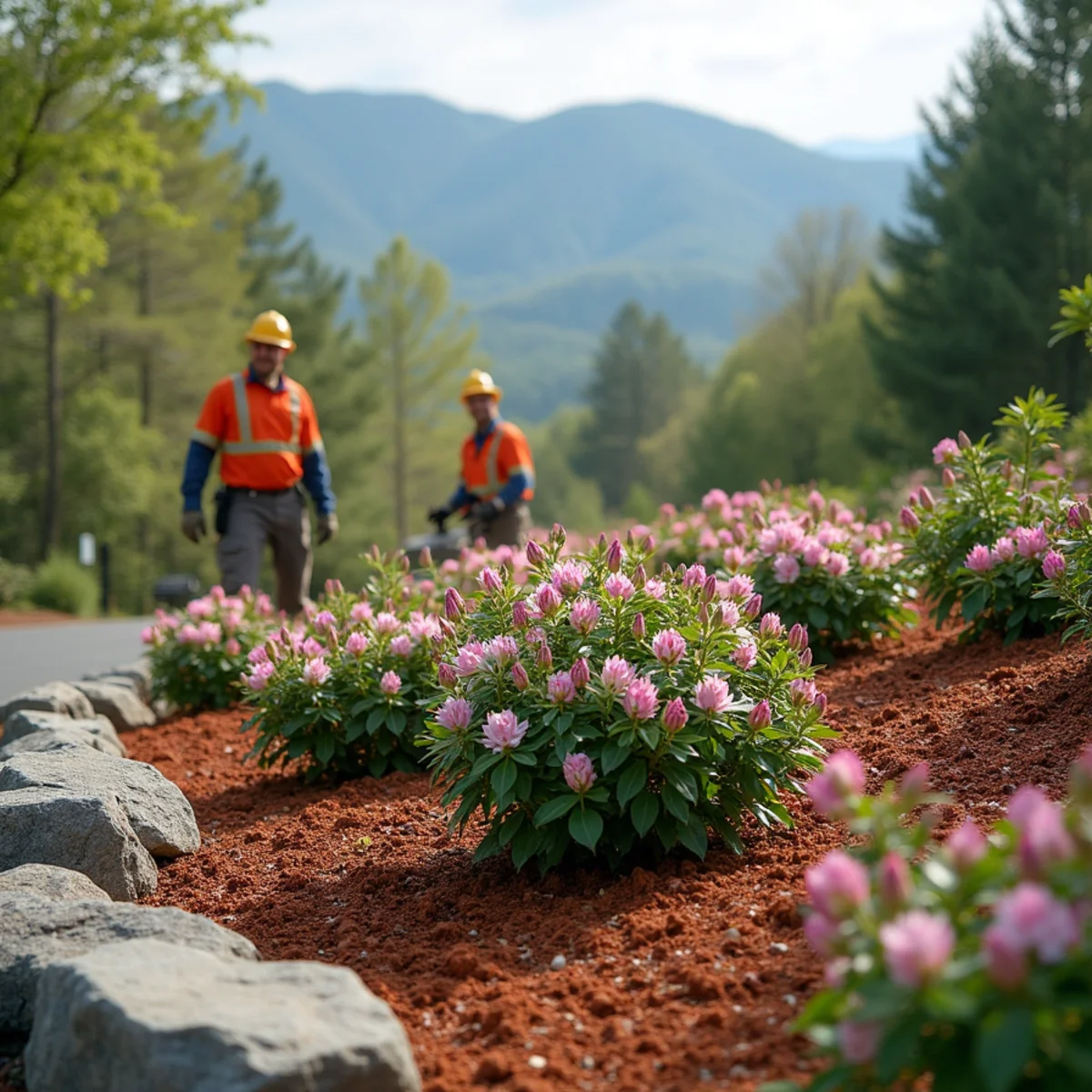
Signs Your Property Is Ready for Native Planting
- Bare, shaded ground under hardwood trees where nothing seems to grow well
- Store-bought azaleas or rhododendrons that struggled or died within a season
- A wooded slope that could use color and structure without clearing the canopy
- Soil that has never been amended and may not support acid-loving plants as-is
- A desire for a natural, Blue Ridge look rather than a formal ornamental bed
- Erosion on a shaded slope where groundcover and root mass would help hold soil
Preparing Soil Native Plants Will Actually Root Into
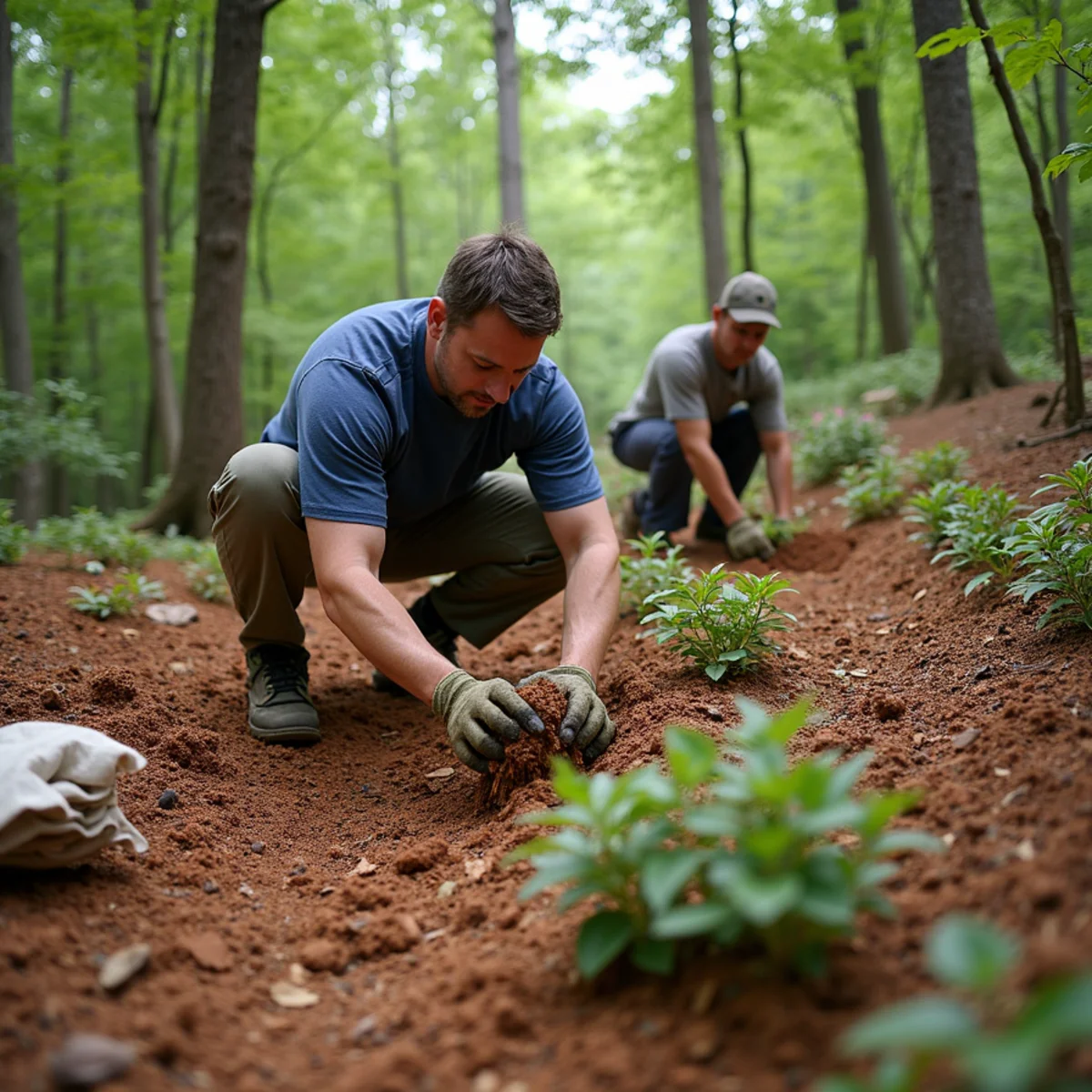
Rhododendron, mountain laurel, and native azaleas evolved in the acidic, humus-rich, well-drained soil of Appalachian hardwood forests, and they fail predictably when planted into unamended, compacted red clay with a neutral-to-high pH. We test soil pH before planting and amend with pine bark fines, aged pine needle mulch, and other acidifying organic matter worked into the planting bed rather than just top-dressed, since these species root shallowly and need that acidic, loose structure right where the roots actually sit.
Drainage matters just as much as pH - rhododendron and mountain laurel roots rot quickly in standing water, so beds on lower or flatter ground get raised slightly and, where the site has a documented water problem, tied into drainage work before planting rather than after the shrubs are already struggling. On slopes, we plant with the understanding that shallow-rooted species need mulch and, in some cases, temporary erosion matting to hold soil in place while root systems establish enough to do that job themselves.
- Soil pH testing and amendment with pine bark fines and acidifying organic matter
- Raised or improved drainage in planting beds prone to standing water
- Erosion matting on slopes while shallow root systems establish
- Bed preparation worked into the root zone, not just top-dressed
Placing Species Where the Site Will Actually Support Them
Sun exposure under a hardwood canopy shifts through the year and varies significantly across even a single hillside, so we assess actual light conditions at each planting location rather than assuming uniform shade across a wooded lot. Catawba rhododendron and mountain laurel tolerate deeper shade and thrive as understory plants beneath oak and hickory canopy, while native azalea species generally want more filtered light or partial sun to bloom well, so we place each based on the specific spot rather than a single planting plan applied everywhere.
Native perennials and ferns fill in around the shrub layer for a fuller, more natural look and additional groundcover for erosion control, and the whole planting is designed to complement existing hardscape like fire pit patios or tie into a broader grounds management plan for ongoing care. This work suits the wooded, sloped lots common around Raoul and similar Habersham County communities, where the goal is usually a planting that looks like it belongs on the mountain rather than an imported ornamental bed.
- Site-specific sun assessment rather than a uniform shade assumption
- Species placement matched to each location's actual light conditions
- Native perennials and ferns layered in for fuller coverage and erosion control
- Design integrated with existing hardscape and ongoing grounds care
Planting Depth, Spacing, and Establishment Watering
Rhododendron and mountain laurel are planted with the root ball's top slightly above surrounding grade rather than flush or sunken, since these species are notorious for rotting when planted too deep or when mulch is piled against the stem - a mistake we see often in DIY plantings that looked fine the first season. Spacing between shrubs is set based on mature spread rather than how full the bed looks on planting day, typically 3 to 5 feet between rhododendron and mountain laurel depending on variety, since crowding plants for immediate fullness leads to competition for light and airflow that increases fungal disease risk within a few years.
Mulch is applied 2 to 3 inches deep with pine straw or aged pine bark, kept a few inches back from each stem to avoid the same rot risk as deep planting, and watering during the first growing season follows a deep, infrequent schedule - typically once or twice weekly with enough volume to reach the full root depth, rather than light daily watering that only wets the surface and encourages shallow root development. We walk clients through this schedule specifically because overwatering shallow and underwatering deep are both common ways a new planting struggles despite good intentions.
- Root ball top set slightly above grade, never sunken, to prevent stem and crown rot
- Spacing of 3 to 5 feet between shrubs based on mature spread, not planting-day fullness
- Mulch applied 2 to 3 inches deep, held back from stems to avoid rot
- Deep, infrequent watering schedule during establishment rather than light daily watering
Our Process
- 1
Site & Light Assessment
We evaluate actual sun exposure at each planting location across the property, not just a general shade estimate.
- 2
Soil Testing & Amendment
We test pH and amend planting beds with pine bark fines and organic matter to create acidic, well-drained soil.
- 3
Species Selection
We choose rhododendron, mountain laurel, azalea, and perennial species matched to each specific spot's conditions.
- 4
Planting & Bed Finishing
Plants are installed at correct depth and spacing, with mulch and erosion matting added where slopes need it.
- 5
Establishment Care Guidance
We walk you through watering and care needs specific to native species through their first growing season.
Materials & Equipment
- Catawba rhododendron, mountain laurel, and native azalea species
- Native perennials and ferns for understory layering
- Pine bark fines and acidifying organic soil amendments
- Aged pine needle mulch
- Erosion control matting for sloped planting beds
What Affects Your Price
Every mountain and lakefront project is different. These are the factors we weigh in a free on-site estimate — no fixed price fits every property.
- Total planting bed area and number of plants specified
- Extent of soil amendment and pH correction required
- Species mix - rhododendron, mountain laurel, azalea, perennials, ferns
- Slope and erosion control needs during establishment
- Site access for delivering plants and soil amendments
- Coordination with existing hardscape or drainage work
Why Choose Kipps Kustom Landscapes for Native Mountain Rhododendron & Plantings
We Plant for Mature Spread, Not Planting-Day Fullness
We space rhododendron and mountain laurel for how large they will actually grow, which means a bed we plant looks intentional in year three instead of overcrowded and fighting itself.
15+ Years Working This Specific Understory
Since founding the company in 2010 we have planted native rhododendron, mountain laurel, and azalea throughout Habersham County's hardwood canopy lots, learning exactly how local light and soil conditions treat these species.
In-House Soil Amendment - Same Crew, Same Standard
The crew that tests and acidifies your soil is the same crew that plants into it, so bed preparation and planting are not split between two different standards of care.
Free Site Walk to Match Species to Real Light Conditions
We assess actual sun exposure at each planting location during a free visit and give you a written plant list and scope matched to what that specific spot will support.
Frequently Asked Questions
- Most likely unamended, poorly draining soil or the wrong light exposure. These species need acidic, loose, well-drained soil and specific sun conditions - planting directly into unprepared red clay is the most common cause of failure.