
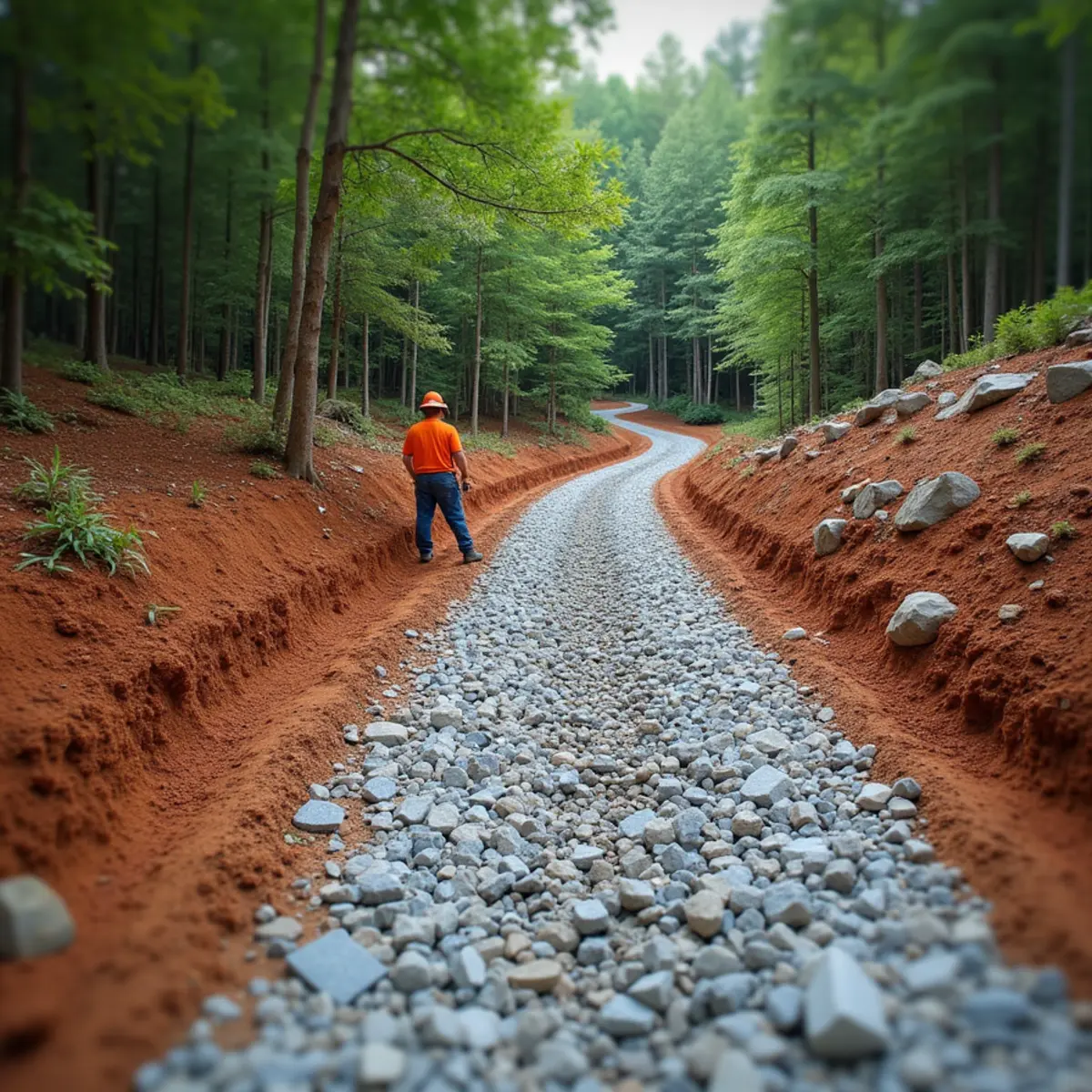
Signs of a Stormwater Runoff Problem
- A gully or channel cutting deeper into your yard or ditch line after each storm
- A gravel or dirt driveway that washboards or washes out along one edge
- Water pooling at the bottom of a slope where a culvert or pipe has clogged or failed
- Rock or gravel migrating from a ditch or swale after heavy rain
- A culvert under your driveway that regularly backs up or overflows
- Sediment and debris depositing across a road, path, or lower yard after storms
Repairing an Active Gully the Right Way
A gully forms when water moving fast enough gains enough energy to erode soil rather than just flow over it, and once a channel starts it self-reinforces - the deeper it cuts, the faster the water moves through it. Repair starts with regrading the gully to remove the vertical or undercut banks that keep accelerating the flow, replacing them with a wider, shallower channel shape that slows the water down. We then place rock check dams at intervals down the channel, which break the flow into a series of small drops instead of one continuous fast-moving stream, dramatically cutting the erosive energy the water carries.
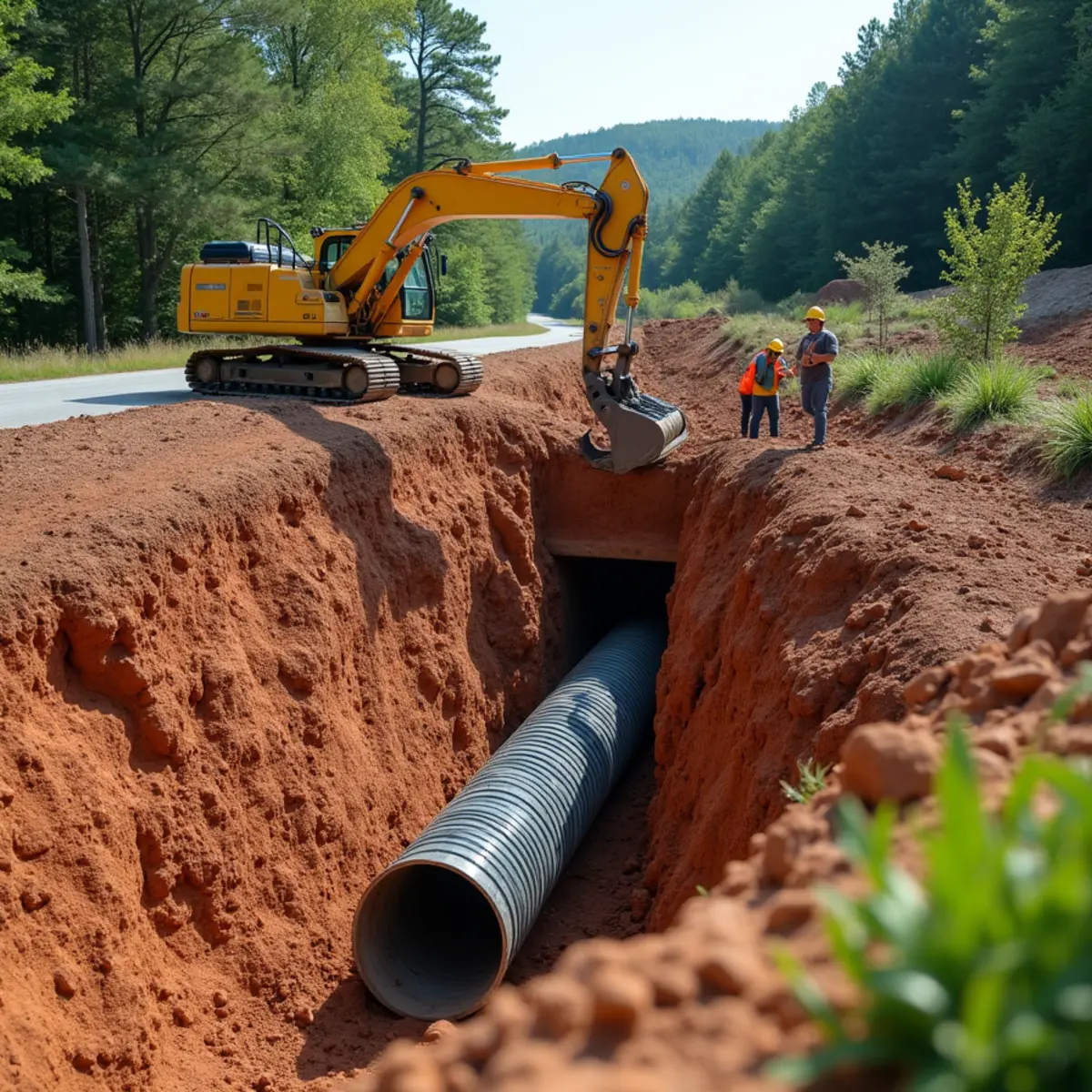
Where the gully crosses under a driveway or access road, we size and install a culvert pipe rated for the actual peak flow the site has demonstrated, not a generic diameter - undersized culverts are one of the most common causes of repeat driveway washouts on mountain properties. The inlet and outlet ends get rock energy dissipators so water entering and leaving the pipe does not simply resume cutting a new gully immediately on the other side.
- Regrading undercut and vertical gully banks to a wider, shallower channel
- Rock check dams placed at intervals to slow flow and reduce erosive energy
- Culverts sized to demonstrated peak flow, not a generic pipe diameter
- Rock energy dissipators at culvert inlets and outlets
Fixing the Source, Not Just the Symptom
Every active gully has an upstream cause - a driveway shedding sheet flow to one low point, a roof downspout discharging directly onto bare soil, or a neighboring lot's runoff crossing a property line uncontrolled. We trace that source as part of the repair and build a swale, French drain, or diversion berm to spread the water out or redirect it before it concentrates again, which is the same diagnostic approach behind our red clay drainage work and directly overlaps with active hillside washout repair when the gully is undermining a slope.
This is common work on the steep, gravel-driveway lots around Mount Airy and similar mountain communities, where long driveways crossing multiple grade changes are especially prone to concentrated runoff. We rebuild the channel and the drainage feeding it together so the fix holds through the next significant storm, not just a light rain.
- Upstream water source tracing to identify what concentrated the flow
- Swales, French drains, or diversion berms built to spread or redirect runoff
- Coordination with hillside repair where a gully is undermining a slope
- Repairs built to hold through significant storm events, not just light rain
Check Dam Spacing and Culvert Sizing in Practice
Check dam spacing follows the channel's slope - as a rule of thumb, each dam is set so its crest sits roughly level with the toe of the dam upstream, which on a steep mountain ditch can mean check dams every 10 to 20 feet, while a gentler grade may only need one every 40 to 50 feet. Dam height typically runs 12 to 18 inches for a residential drainage channel, built from rock large enough that moving water cannot simply roll it out of place - undersized check-dam rock is a common reason a homeowner's DIY attempt gets washed downstream in the first real storm.
Culvert diameter is sized using drainage area, slope, and rainfall intensity for the region rather than matching whatever pipe happened to fail, since an undersized replacement just recreates the same washout on a predictable schedule. On driveway crossings we typically install a minimum 15-inch culvert for a modest drainage area and size up from there, always with rock riprap at both the inlet and outlet to dissipate the velocity the pipe concentrates.
- Check dams spaced so each dam's crest meets the toe of the one upstream
- Dam height of 12 to 18 inches with rock sized to resist being rolled out of place
- Culvert diameter sized to drainage area, slope, and regional rainfall intensity
- Minimum 15-inch culvert on driveway crossings, sized larger for bigger catchments
Our Process
- 1
Emergency Site Assessment
We evaluate the gully's depth, active flow, and immediate risk to driveways, structures, or slopes.
- 2
Source Tracing
We identify what upstream flow is concentrating and feeding the gully.
- 3
Regrading & Channel Reshaping
The gully is reshaped into a wider, shallower, more stable channel.
- 4
Check Dams & Culvert Installation
Rock check dams and properly sized culverts are installed to control flow energy.
- 5
Upstream Drainage Fix
We build the swale, drain, or berm needed to keep the source from recreating the gully.
Materials & Equipment
- Rock for check dams and channel armoring
- Culvert pipe sized to demonstrated peak flow
- Rock energy dissipators for culvert inlets and outlets
- Compacted fill for regrading
- Mini excavators and skid steers for driveway and slope access
What Affects Your Price
Every mountain and lakefront project is different. These are the factors we weigh in a free on-site estimate — no fixed price fits every property.
- Length and depth of the gully being repaired
- Whether a culvert must be sized and replaced under a driveway
- Volume of rock and fill needed for regrading and check dams
- Complexity of tracing and fixing the upstream water source
- Site access for emergency equipment on steep driveways
- Coordination with hillside or retaining wall repair if a slope is involved
Why Choose Kipps Kustom Landscapes for Stormwater Runoff & Gully Repair
24/7 Response When a Gully Is Actively Cutting
An actively growing gully self-reinforces with every storm, so we run 24/7 emergency erosion response to get check dams and regrading in before a channel that started a foot deep becomes a multi-foot washout.
We Run Our Own Excavators and Skid Steers
The equipment that regrades your gully and sets check dams is ours, maintained and staged for dispatch, not rented after the fact, which keeps emergency response measured in hours, not a rental yard's next availability.
15+ Years Sizing Culverts for This Exact Terrain
Since founding the company in 2010 we have replaced undersized culverts on mountain driveways throughout Habersham County, so we size pipe to the rainfall and drainage area this region actually sees, not a generic residential default.
Free Emergency Assessment, Written Scope Before Work Begins
Even on an urgent call we walk the site, trace the source, and give you a written line-item scope covering regrading, rock, and culvert work before committing to the repair.
Frequently Asked Questions
- Almost always an undersized or clogged culvert, or a grading issue upstream that keeps concentrating water at that exact point. We fix the channel and the culvert together so the same spot does not fail again next storm.