Emergency Situations & Urgent Damage Mitigation
Stormwater Runoff Ravines: Fixing Driveway Washouts in Georgia
How Cloudbursts Carve Gullies in Mountain Gravel Roads
Fixing a driveway washout for good means correcting the crown or inslope that sheds water off the travel surface, routing that water through riprap-lined swales and properly sized culverts, and rebuilding any sunk pipe or washed-out base - simply adding gravel back on top of the same uncorrected grade will wash out again in the next hard rain.
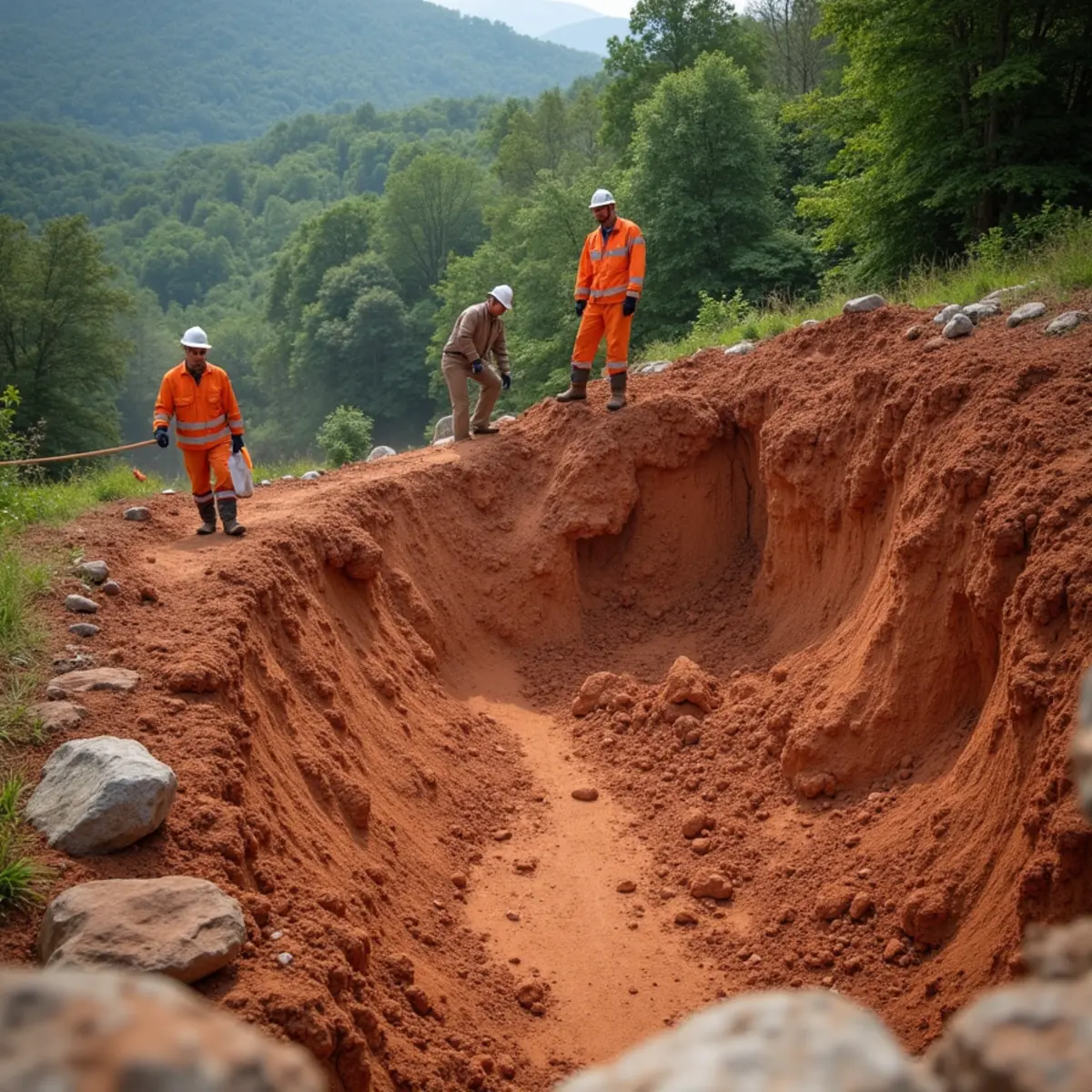
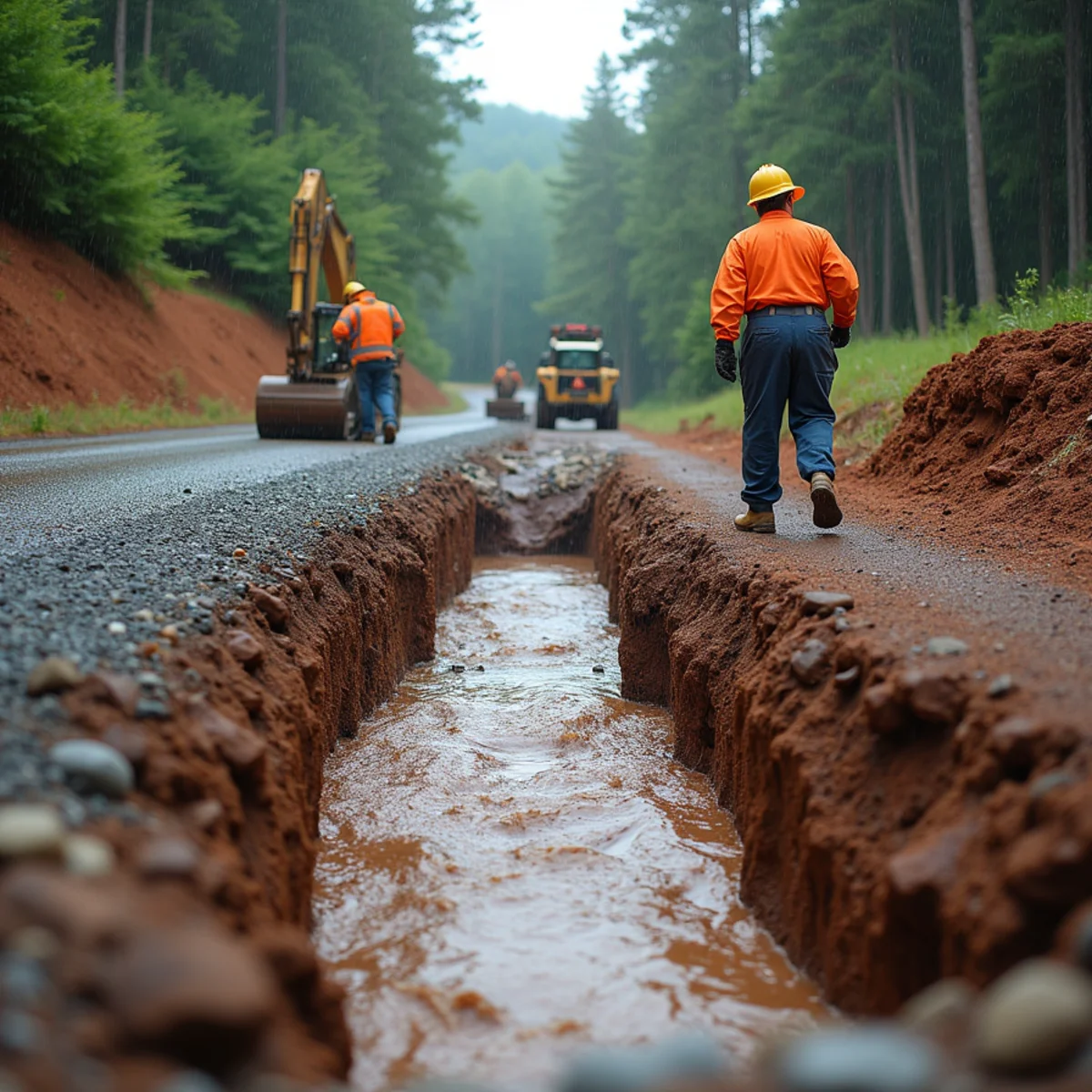
A steep gravel driveway concentrates water the moment rain starts falling, and on a mountain grade that runoff picks up speed fast. Once water starts moving faster than about 2 to 3 feet per second across bare gravel or clay, it begins carrying soil particles with it, and that erosive flow rapidly deepens any low point into a channel, then a gully, then a full ravine that can be a foot or more deep after a single intense summer thunderstorm.
The problem compounds because gravel driveways lack the compacted, crowned surface of a paved road, so water has fewer barriers to lateral flow. Once a channel forms, it becomes the path of least resistance for every future rain event, deepening progressively rather than healing on its own.
Ravines on mountain driveways tend to form at predictable points - the outside of a curve, a low spot where two drainage paths converge, or just below where an underperforming culvert lets water spill over the road surface instead of passing beneath it. Identifying these predictable failure points during a dry-weather site walk, rather than only after a washout, lets us target the fix instead of just refilling the same hole every season.
The Importance of Driveway Crowning and Insloping
A properly built mountain driveway is crowned or insloped so that water sheets off to one or both sides into a controlled ditch line rather than running down the center of the travel surface. Many older or poorly built gravel driveways in Habersham and Stephens counties were never graded this way, which is why the same washout keeps reappearing in the same spot every rainy season.
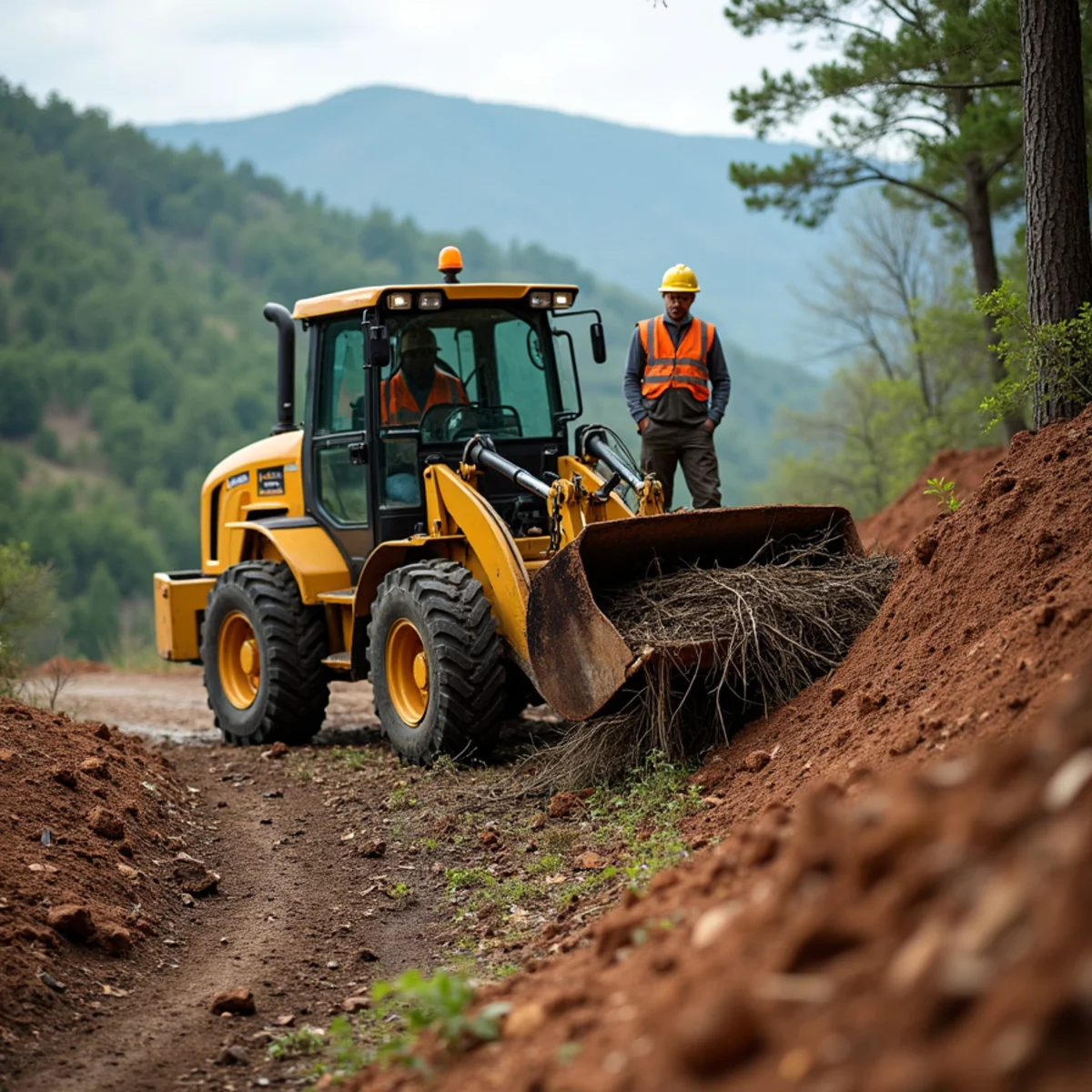
Correcting crown and grade usually requires reshaping the road base with an excavator or grader, not just adding more gravel on top of the existing washed profile. Adding gravel without correcting the underlying grade is a temporary patch that the next hard rain will simply wash out again.
A properly crowned gravel driveway typically has a cross slope of around 2 to 4 percent from the centerline to each edge, enough to shed water quickly without the surface feeling noticeably tilted when driving on it. Insloped sections - which pitch the entire road surface toward a single ditch line rather than crowning to both sides - are sometimes used on the uphill side of a switchback where a crown would send water toward a cut slope instead of away from it.
Installing Riprap-Lined Swales and Heavy-Duty Culverts
Water diverted off a crowned driveway needs somewhere controlled to go. A riprap-lined swale along the ditch line slows and armors the flow path so it does not erode a new channel of its own, while properly sized culverts carry water beneath the driveway surface at low points instead of letting it run across the top of the road.
Undersized culverts are one of the most common causes of repeat washouts we find on mountain driveways: a 12-inch pipe installed for a small drainage area may be badly overwhelmed once nearby land is cleared or developed and runoff volume increases. Our stormwater runoff and gully repair work includes recalculating culvert sizing against actual drainage area, not just replacing what was already there.
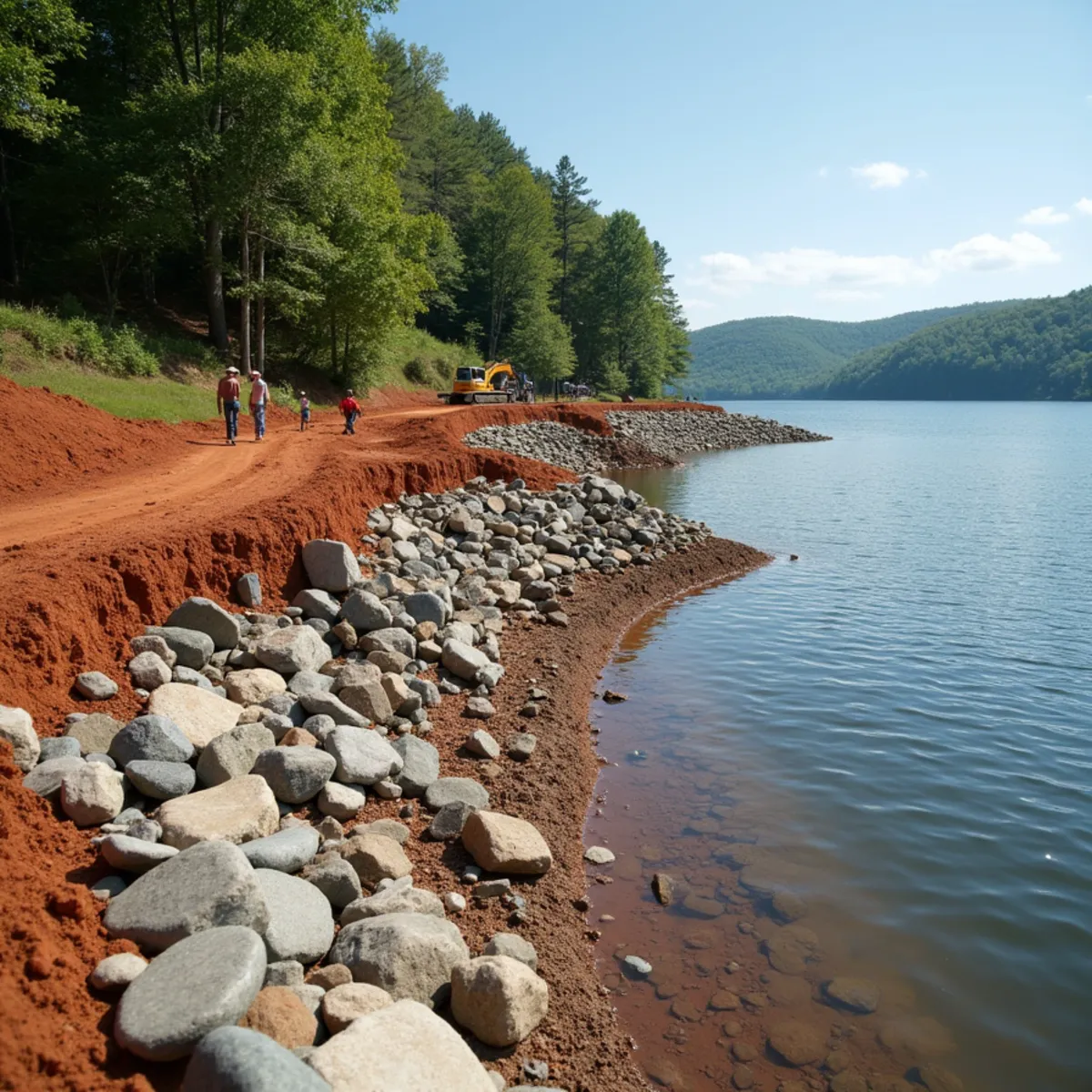
Riprap sizing in a driveway swale follows the same principle as lakefront riprap: larger, faster-moving flow needs larger stone to stay in place rather than washing downstream itself. A swale carrying concentrated runoff from a large upslope drainage area needs noticeably heavier stone than a shallow roadside ditch handling only sheet flow off the road surface, which is one more reason a generic gravel-lined ditch often fails where an engineered riprap swale holds.
Calculating Culvert Size from Drainage Area
Culvert sizing is not guesswork - it is based on estimating peak runoff from the watershed area draining to that point using the size of the contributing drainage area, the steepness of that area, and how much of it is impervious surface like roof or pavement versus wooded or grassed ground. A small culvert sized correctly for a quarter-acre drainage area can be badly undersized if a neighboring lot clears trees or adds impervious surface upslope, which increases both the volume and the speed of runoff reaching the same pipe.
This is why we recalculate expected flow rather than simply replacing a failed culvert with an identical one. If the surrounding watershed has changed since the original pipe was installed - through new construction, land clearing, or even significant tree loss from a storm - the replacement often needs to be a size or two larger than what failed, along with properly compacted bedding and headwalls to keep the inlet and outlet from eroding around the new pipe.
Fixing Sunk Culvert Pipes and Washed-Out Road Base
A culvert that has settled or sunk below grade creates a low spot that traps water and accelerates erosion around the pipe ends, eventually undermining the road base above it. Repair requires excavating the pipe, correcting the bedding and slope, and compacting proper base material back around it rather than simply piling more gravel on top of a failing pipe.
We see this pattern regularly on older mountain lots around Cleveland and Toccoa, where original culvert installations from decades ago were undersized for today's rainfall intensity and have slowly failed under repeated saturation cycles.
A sunk or misaligned culvert is also a safety issue for vehicles crossing it, since the resulting dip can be jarring at speed and worsens quickly once water starts pooling and eroding the road base around the depression. We compact new base material in lifts around a repaired or replaced culvert rather than backfilling all at once, since a single deep backfill is far more prone to future settling than properly compacted layers.
Gravel Base Materials That Hold Up on Steep Grades
Not all gravel performs the same on a steep driveway. A well-built mountain driveway base typically uses graded aggregate base (GAB) or dense-graded crusher run - a mix of stone sizes down to fine particles that compacts into a dense, interlocking surface - rather than clean, uniformly sized decorative gravel, which stays loose underfoot and migrates downhill under traffic and rain far more easily. The base layer is typically compacted in place before a final wear course of smaller gravel is added on top for a finished driving surface.
On the steepest grades, sometimes exceeding 15 to 20 percent on switchback sections of North Georgia mountain driveways, even a well-compacted crusher run base benefits from periodic topping as the wear surface migrates downhill over years of traffic and rain, which is a normal maintenance item rather than a sign of an underlying problem, provided the crown and drainage are otherwise functioning correctly.
Long-Term Maintenance for Steep Mountain Driveways
Even a well-built mountain driveway benefits from periodic maintenance: clearing debris from ditch lines and culvert inlets before they clog, checking crown after freeze-thaw seasons, and topping gravel wear surfaces before the underlying base is exposed. Small maintenance now is far cheaper than gully repair after a major storm.
If your driveway or access road has developed a recurring washout, the underlying grading or drainage issue almost certainly needs correcting rather than another round of gravel. Call (323) 606-0255 and we will assess the full drainage path, not just the visible washout, before recommending a fix.
Keeping ditch lines and culvert inlets clear of leaves and sediment before the rainy season, rather than after a driveway has already washed out, is the single cheapest maintenance step available. A partially blocked culvert inlet can turn a moderate storm into a washout event that a clear inlet would have handled without incident.
- Clear debris from ditch lines and culvert inlets before the rainy season
- Check crown and cross slope after freeze-thaw cycles
- Top gravel wear surfaces before the compacted base underneath is exposed
- Recalculate culvert sizing if upslope land has been cleared or developed
- Correct grade and crown before adding fresh gravel over a washed profile
- Inspect the outside of curves and low points where drainage paths converge
Contact Our Heavy Equipment Crew
We bring excavators, graders, and dump trucks capable of working steep, narrow mountain access roads throughout Habersham, White, and Stephens counties. Whether the fix is a single culvert replacement or a full regrade of a long gravel driveway, we scope the whole drainage path before starting work.
Reach us at (323) 606-0255 to schedule an assessment, or explore our full hillside excavation and slope terracing capabilities if your access road issues are tied to broader slope grading on the property.
Frequently Asked Questions
- A recurring washout almost always points to an underlying grading or drainage problem, such as missing crown, an undersized culvert, or a sunk pipe. Adding gravel without fixing the grade usually washes out again in the next hard rain.
Get Expert Help on Your North Georgia Property
Kipps Kustom Landscapes has spent 15+ years solving exactly these challenges across the Blue Ridge foothills. Call for a free on-site estimate.
Call (323) 606-0255
Written by
Hunter Kipps — Owner & Lead Craftsman
Hunter Kipps has spent 15+ years building and repairing mountain and lakefront landscapes across Northeast Georgia — boulder retaining walls, shoreline riprap, red-clay drainage, and estate stonework. He personally runs the heavy equipment and walks every site before quoting it.