Service Comparisons, ROI & Material Selection
Dry Creek Bed vs French Drain: Which Do You Need?
The Core Difference: Surface Water vs Subsurface Water
A dry creek bed is a surface drainage feature, an open, rock-lined channel that carries visible runoff during and after a storm. A french drain is a subsurface system, a buried perforated pipe in gravel that intercepts groundwater and saturated soil moisture before it surfaces. Most North Georgia mountain lots have both problems at once and need both solutions working together.
The two get confused constantly because both involve moving water off a property, and both can involve river rock in the finished look. But they solve genuinely different problems, and installing the wrong one, or only one when a site needs both, is the most common reason a homeowner's drainage fix does not actually work.
We diagnose which problem a property actually has before recommending either system, because the visible symptom, water in the yard, looks similar whether the source is surface sheet flow or a saturated subsurface seep.
When a Dry Creek Bed Is the Right Fix
A dry creek bed works when the problem is concentrated surface runoff, water that is visibly moving across the ground during a rain event, typically down a slope, along a driveway edge, or from a downspout discharge point toward a low area of the yard.
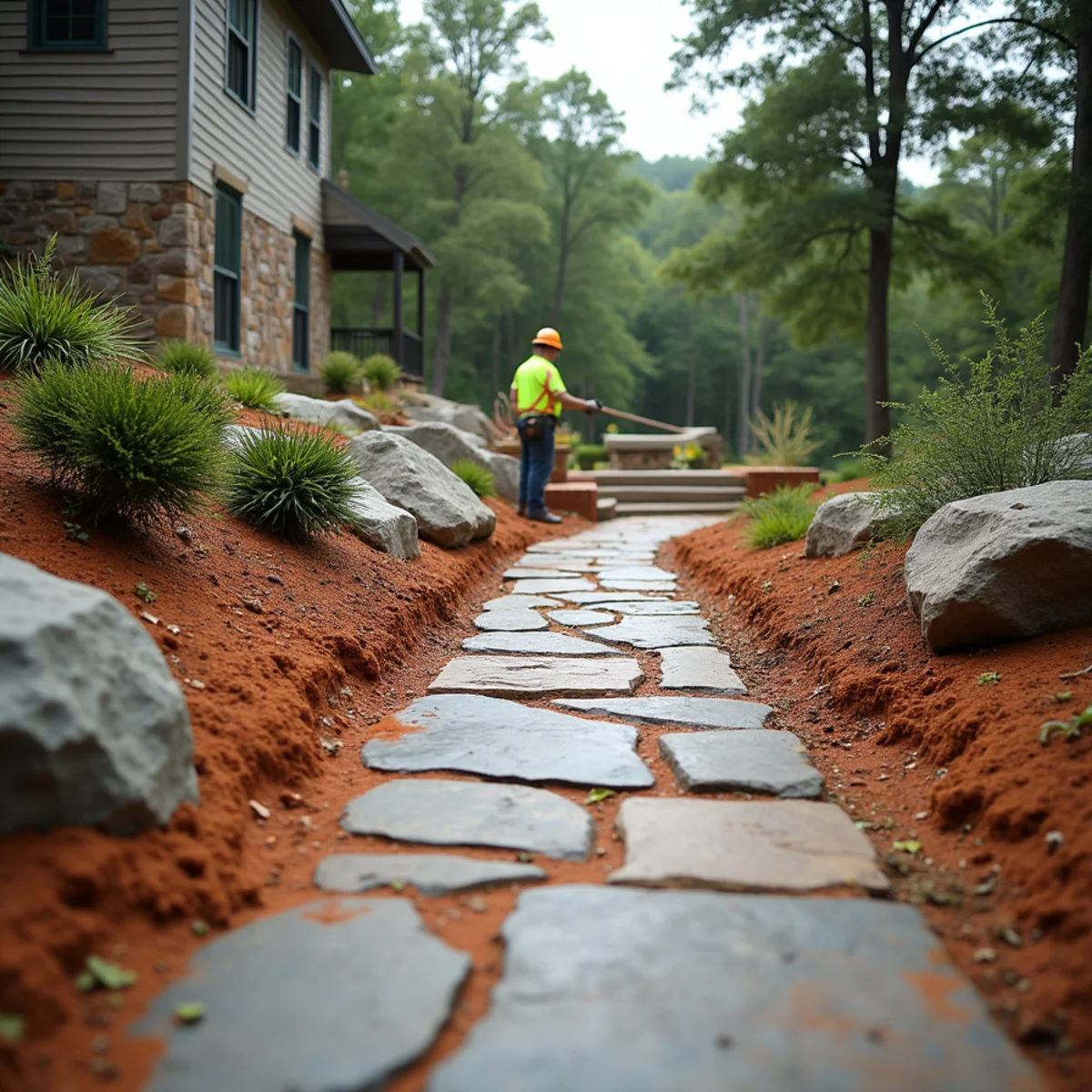
We build these as a graded, rock-lined channel, typically river rock ranging from 3 to 8 inches sized in a natural gradation, set over filter fabric with a excavated sub-grade that actually carries the design flow rather than just decorative rock laid on the surface with no engineered channel beneath it.
A properly built dry creek bed slows and directs surface flow visibly, which matters on a property near Cornelia or Mount Airy where a homeowner wants a landscape feature that also does real work, rather than a buried pipe with nothing to show on the surface.
The honest limitation is that a dry creek bed only manages what is visibly flowing across the top of the ground. It does nothing for water that is already saturating the soil below grade, which is a completely different problem with a different fix.
When a French Drain Is the Right Fix
A french drain is the correct tool when the problem is subsurface, a perpetually soggy patch of lawn with no visible flowing water, a wet basement or crawlspace wall, or water that seems to appear from nowhere on a slope with no obvious upstream source.
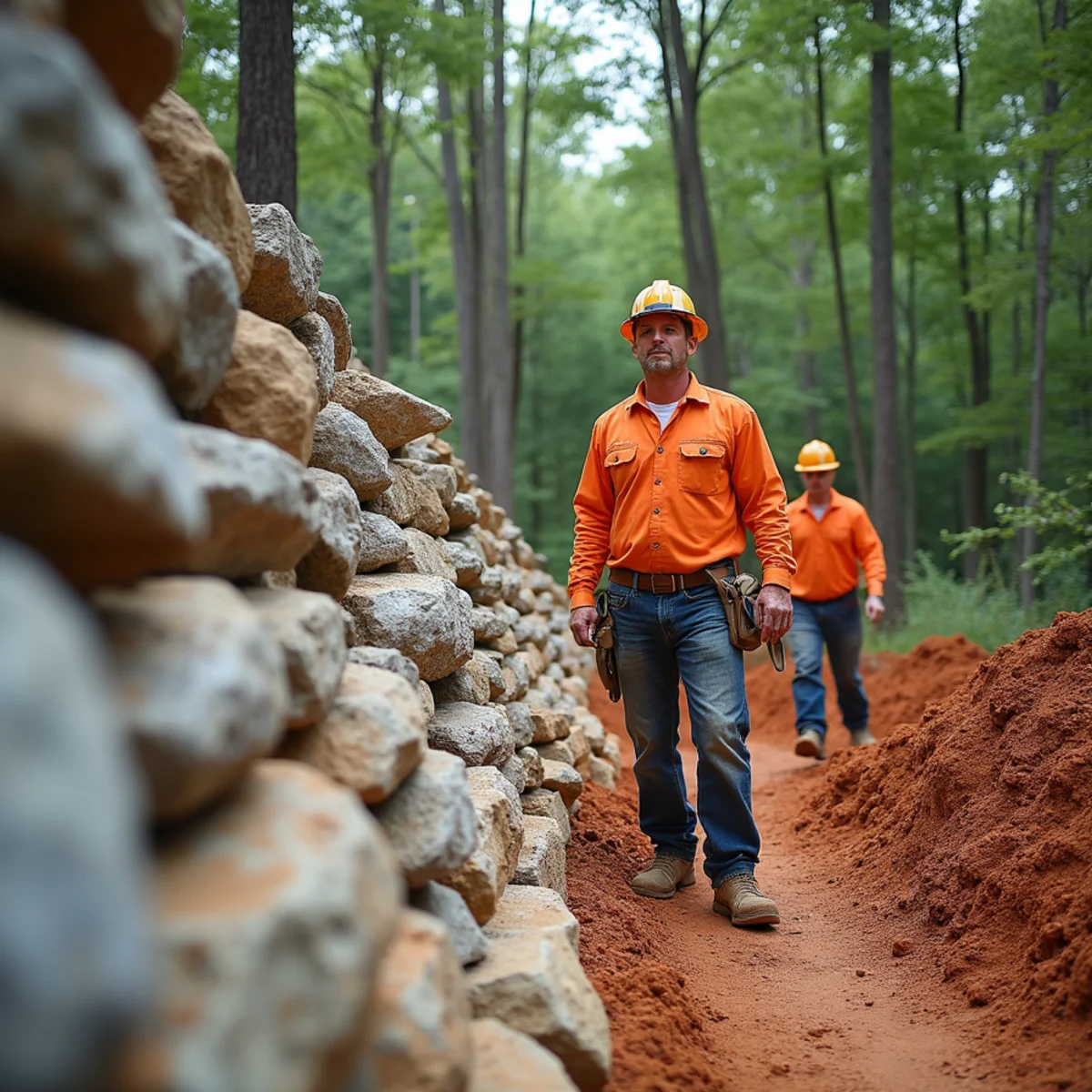
This is groundwater or interflow moving through soil, often along the interface between a permeable topsoil layer and the much less permeable red clay subsoil beneath it, which is extremely common in this region's geology. Water perches on top of the clay layer and moves laterally until it finds a low spot or a foundation wall to seep against.
A properly built french drain here needs to go well beyond the 12 to 18 inches a rented trencher typically reaches. We dig 24 inches or deeper with positive fall the entire run, wrap the gravel and pipe fully in non-woven geotextile fabric, and route the outlet to an approved discharge point rather than just wherever the trench happens to end.
Because the pipe is buried, a french drain leaves no visible feature on the surface once the trench is backfilled and the sod or mulch is restored, which some homeowners actually prefer for a section of yard where a rock channel would look out of place.
Why Most Mountain Lots Actually Need Both
A steep property around Clarkesville or Mount Airy commonly has surface sheet flow moving down the slope during a storm and a saturated subsurface layer sitting on top of the red clay year-round. Installing only a dry creek bed leaves the subsurface saturation problem untouched, and installing only a french drain does nothing to manage the visible surface flow during a heavy downpour.
In these cases, we design a combined system: a french drain intercepting subsurface water at the point where it perches on the clay layer, daylighting into a dry creek bed that carries both the drain's outflow and the surface runoff the rest of the way to an approved discharge point.
This combined approach is common practice on properties dealing with recurring gully or stormwater runoff erosion, where surface flow has already carved a channel that a purely cosmetic creek bed would not survive without the buried structure supporting it underneath.
The two systems working together also solve a design problem: a french drain outlet dumping raw, concentrated flow directly onto bare ground will erode a new gully at the exact point it exits the pipe. Daylighting that outlet into a properly graded, rock-lined creek bed gives the water somewhere engineered to go instead.
- Visible surface flow during a storm, no groundwater symptoms - dry creek bed alone may be sufficient
- Perpetually soggy lawn patch or wet crawlspace with no visible surface flow - french drain is the correct fix
- Both surface flow and subsurface saturation on the same slope - combined system with the drain daylighting into the creek bed
- French drain outlets should never discharge onto bare, unprotected ground - route into a rock apron or creek bed
- A site walk during or right after a rain event is the most reliable way to correctly diagnose which problem you actually have
Diagnosing Your Property Correctly
The most reliable diagnostic step is walking the property during or immediately after a rain event, since a dry-weather site visit misses exactly the information that determines which system is needed.
We look for visible flow paths, staining or moss patterns that indicate chronic surface wetness, and probe soil moisture at a few depths across the suspect area to confirm whether saturation is a surface or subsurface issue.
Getting this diagnosis wrong is the single biggest reason a homeowner spends money on a drainage fix that does not actually solve the problem, whether that is a decorative creek bed installed over a site with real subsurface saturation, or a french drain trenched through an area where the actual issue was concentrated surface flow the drain was never designed to intercept.
Schedule a Drainage Diagnosis
We assess drainage problems across Clarkesville, Cornelia, and Mount Airy with an eye toward diagnosing the actual water source before recommending a fix.
Call (323) 606-0255 for a drainage assessment, ideally scheduled after a rain event so we can see exactly how water is moving across and through your property.
Frequently Asked Questions
- Only if your problem is purely surface runoff with no subsurface saturation. A dry creek bed does nothing for groundwater or perched water sitting on top of the clay layer below grade, which needs a buried french drain instead.
Get Expert Help on Your North Georgia Property
Kipps Kustom Landscapes has spent 15+ years solving exactly these challenges across the Blue Ridge foothills. Call for a free on-site estimate.
Call (323) 606-0255
Written by
Hunter Kipps — Owner & Lead Craftsman
Hunter Kipps has spent 15+ years building and repairing mountain and lakefront landscapes across Northeast Georgia — boulder retaining walls, shoreline riprap, red-clay drainage, and estate stonework. He personally runs the heavy equipment and walks every site before quoting it.