Service Comparisons, ROI & Material Selection
Flagstone vs Concrete Pavers for Outdoor Mountain Patios
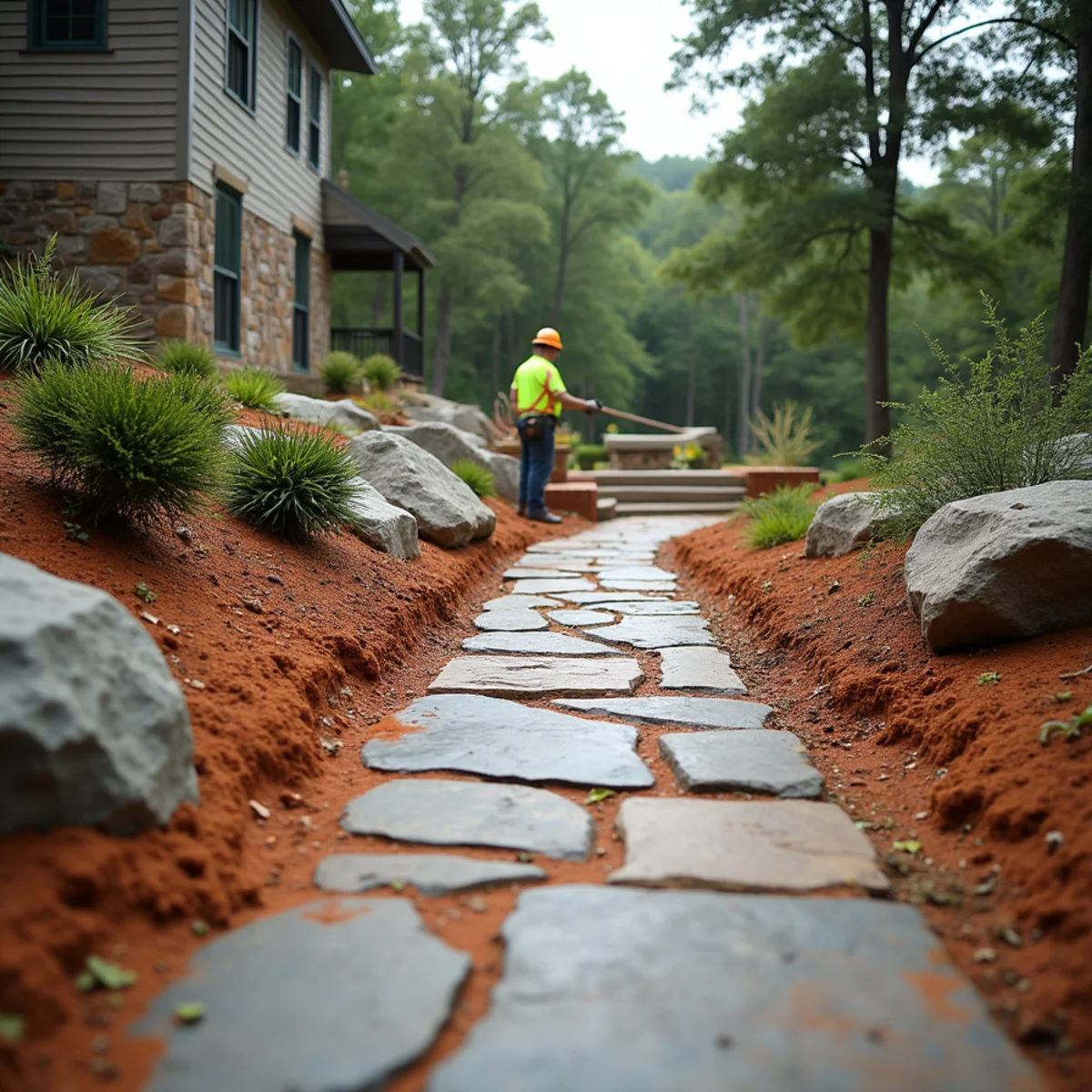
Natural Tennessee Crab Orchard Flagstone
Crab Orchard flagstone gives mountain patios a natural, one-of-a-kind look and stays cooler underfoot, while manufactured concrete pavers install faster, handle vehicle loads better, and cost less on large, flat areas. Base prep matters most either way on North Georgia's expansive red clay.
Crab Orchard flagstone, quarried in east Tennessee and trucked into the foothills, is the stone we lay on more mountain patios than anything else. Its tan, rust, and buff color range comes from iron content in the sandstone, and no two flags split exactly the same way, which is the whole appeal.
Because it is irregular, laying it well is a puzzle-fitting skill, matching thickness, spacing joints evenly, and orienting grain so water sheds off the surface rather than pooling in a low flag.
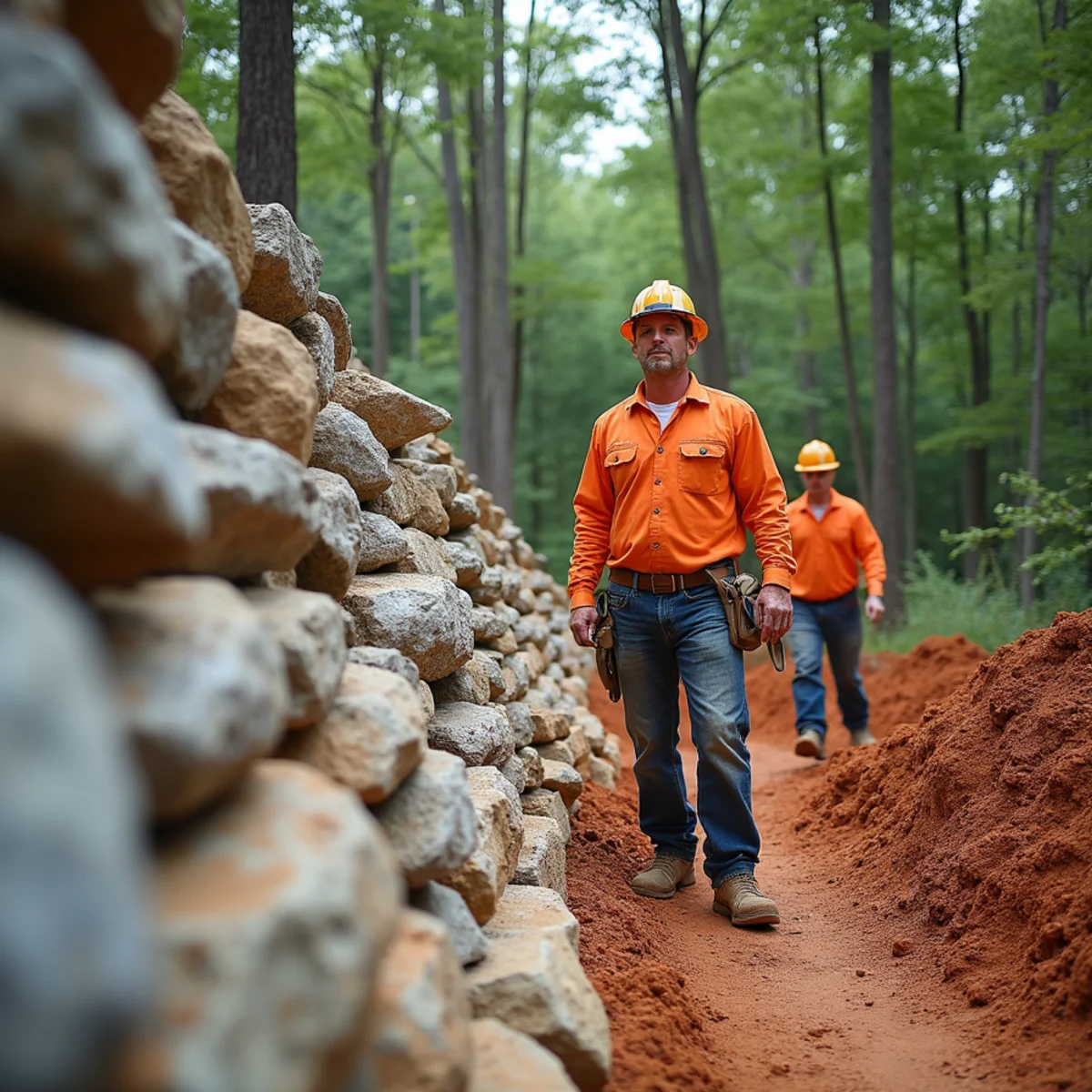
Set as part of a mountain landscape design-build project, flagstone patios and paths tie directly into the same stone we use on boulder walls and fire pits, giving the whole property one material language.
It is also forgiving of minor settling. A flag that dips slightly can be lifted, releveled, and reset without disturbing its neighbors, unlike a rigid poured surface.
We sort delivered pallets by thickness before laying, grouping 1.5 to 2 inch flags together on high-traffic walking surfaces and reserving thinner stock for stepping stone accents through a planting bed, so the finished surface does not have an unexpected trip hazard where thickness changes underfoot.
Sourcing consistency matters over the life of a project too. Ordering flagstone in one delivery for a full patio and any connecting walkway keeps the color lot consistent, since Crab Orchard stone pulled from different quarry sections months apart can shift noticeably in its rust-to-tan ratio.
We keep a small reserve of matching flagstone from every larger patio job on file, so a future repair or expansion years later can pull from the same lot rather than guessing at a match against weathered, sun-faded existing stone, which typically darkens slightly over its first year outdoors.
Concrete Pavers: Uniformity & Interlocking Strength
Manufactured concrete pavers give up the organic variation of natural stone in exchange for dead-consistent thickness and dimension, which lets them interlock tightly with narrow, uniform joints.
That uniformity is a real advantage on driveway aprons, motor courts, and anywhere vehicle loads will cross the surface, because the interlocking pattern distributes weight across multiple units instead of relying on one flag to bear a tire load alone.
Modern paver lines now offer textured, multi-tone finishes that narrow the visual gap with natural stone, though a trained eye still spots the repeating module pattern up close.
Pavers also install faster on a large, flat area since there is no fitting puzzle, which can offset some of the higher per-unit material cost versus flagstone on bigger jobs.
Polymeric sand swept into the paver joints locks the units together once activated with water, resisting weed growth and ant burrowing better than a loose sand joint, and it needs periodic reapplication every few years as normal traffic wears the joint sand down.
Manufacturers also offer permeable paver systems with wider, gravel-filled joints designed to let stormwater infiltrate through the surface rather than sheet off, which can be a genuine advantage on a mountain lot trying to manage runoff volume before it ever reaches a drainage system downhill.
Thermal Performance Underfoot
Around a pool deck or a fire pit seating area near Helen, surface temperature underfoot matters more than most homeowners expect until the first barefoot July afternoon.
Lighter-toned Crab Orchard flagstone reflects more solar heat than it absorbs, staying noticeably cooler than dark charcoal or graphite paver finishes that are popular in paver catalogs but can become genuinely hot to bare skin by midafternoon.
For a stone fire pit and flagstone patio that gets heavy pool or barefoot use, we steer clients toward lighter flagstone tones or lighter paver colors specifically for this reason, not just aesthetics.
Flagstone's natural surface texture also stays grippier when wet than a smooth-finish paver, which matters on a pool deck where a slick surface next to water is a genuine safety concern, not just a comfort preference.
Some paver lines now offer a tumbled or shot-blasted finish specifically to improve slip resistance and reduce surface heat gain, narrowing the gap with flagstone on these two points, though the lightest tumbled paver colors still tend to run warmer than an equivalently light flagstone tone in direct summer sun.
Sub-Base Prep in Shrink-Swell Clay
Neither surface survives long if the base underneath is wrong, and North Georgia's expansive red clay makes base prep the part of the job that actually determines whether a patio lasts 20 years or heaves apart in five.
We excavate to a compacted crusher-run base 4 to 6 inches deep for a patio, deeper under any area that will see vehicle weight, with a non-woven geotextile fabric separating the base from the native clay so fines cannot pump upward through freeze-thaw and wet-dry cycles.
Pavers demand a slightly more precise base grade since their rigid interlock will telegraph any dip or high spot, while flagstone's irregular shapes and mortar or sand joints hide minor base variation more forgivingly.
Skipping geotextile fabric to save a step is the single most common shortcut that causes both flagstone and paver patios to fail early on clay sites, and the base contaminates with clay fines within a couple of wet seasons.
We compact the base in lifts, typically 2 inches at a time with a plate compactor, rather than dumping the full depth and running the compactor over it once. Compacting in lifts is slower but produces a genuinely dense base instead of a top crust over loose material underneath, which is the difference that shows up as settling a year or two later.
On patios with any real grade, we also grade a slight fall into the base itself, generally a minimum of one-eighth inch per foot away from the house, so surface water moves off the finished patio deliberately instead of relying on the material joints alone to keep water from pooling against a threshold or a door sill.
- Excavate to a compacted crusher-run base 4 to 6 inches deep, deeper under any vehicle area
- Separate the base from native clay with non-woven geotextile fabric
- Compact in roughly 2-inch lifts rather than dumping the full depth and rolling it once
- Grade a minimum one-eighth inch of fall per foot away from the house
- Never skip the geotextile fabric - it is the most common shortcut that causes early clay-fine contamination
Cost Comparison
Flagstone's labor cost runs higher because every flag has to be selected, dry-fit, sometimes cut, and set individually, while paver installation moves faster once the base is compacted and screeded because the units are already uniform.
Material cost varies with sourcing and finish level on both sides, so a blanket dollar comparison is not honest. We price each job after seeing the square footage, base condition, and whether the surface needs a mortar setting bed or a compacted sand-and-gravel system.
Directional guidance only: expect flagstone to carry a labor premium and pavers to carry a slightly faster install timeline, with total cost landing close on many mid-size residential patios once both are done to code.
Long-term maintenance cost tends to favor flagstone slightly, since resetting an individual flag is a small, isolated repair, while a paver surface that has shifted along a wide front sometimes needs a larger section lifted and relaid to correct the pattern.
Schedule a Custom Hardscape Consultation
We have installed both systems across Clarkesville, Helen, and Cleveland, and the right answer depends on your traffic pattern, your budget, and how much you want the patio to look like it came out of the mountain itself.
Call (323) 606-0255 for an on-site consultation before you commit to either material.
Frequently Asked Questions
- It depends on the job. Flagstone carries higher labor cost due to individual fitting, while pavers install faster but can cost more in material on smaller or highly cut layouts. We price both after seeing the site.
Get Expert Help on Your North Georgia Property
Kipps Kustom Landscapes has spent 15+ years solving exactly these challenges across the Blue Ridge foothills. Call for a free on-site estimate.
Call (323) 606-0255
Written by
Hunter Kipps — Owner & Lead Craftsman
Hunter Kipps has spent 15+ years building and repairing mountain and lakefront landscapes across Northeast Georgia — boulder retaining walls, shoreline riprap, red-clay drainage, and estate stonework. He personally runs the heavy equipment and walks every site before quoting it.