Emergency Situations & Urgent Damage Mitigation
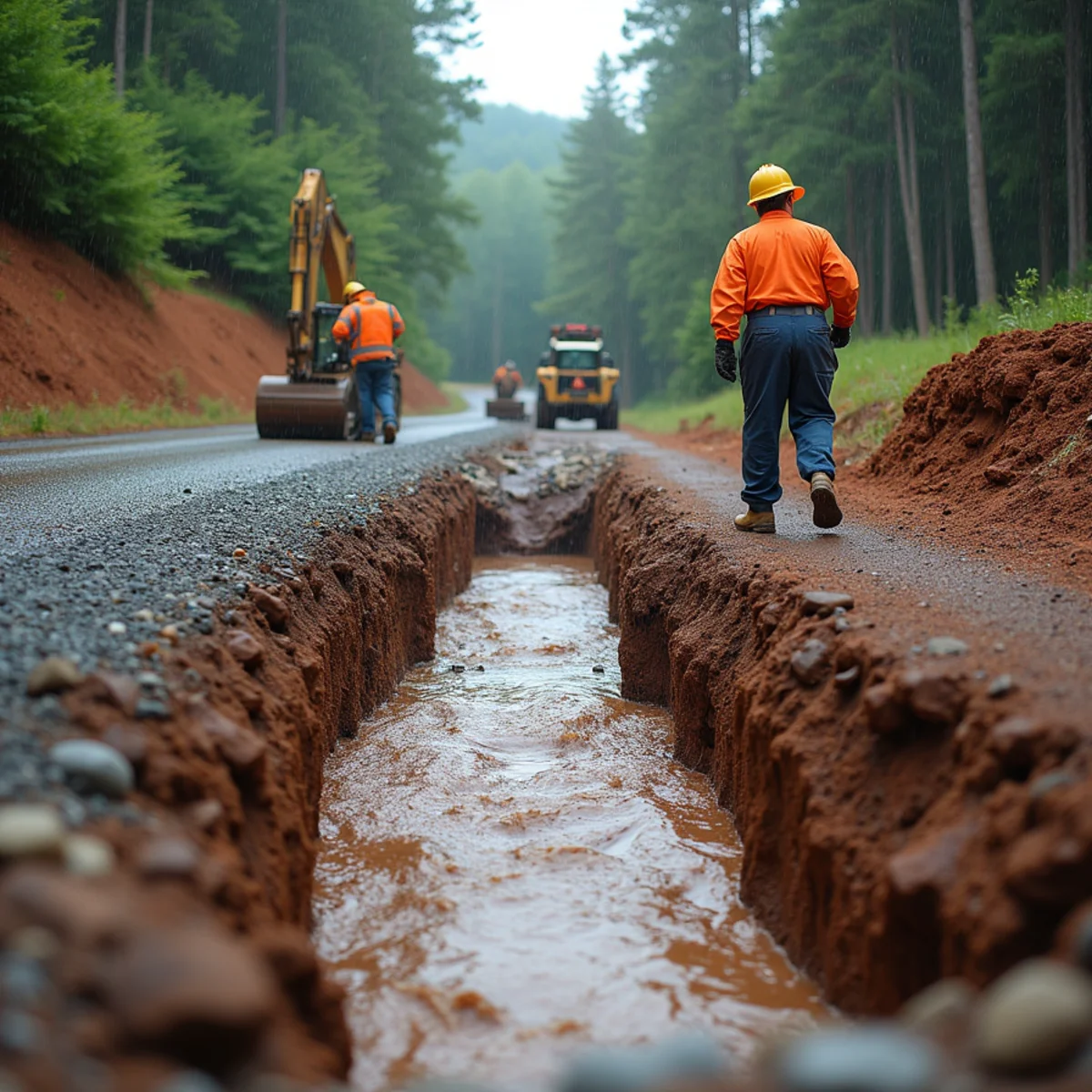
Hillside Washout Emergency: Stopping Mountain Mudslides Fast
Why Mountain Rains Trigger Sudden Red Clay Mudslides
Stopping a mountain mudslide fast means tarping the exposed scarp to block more rain, diverting the uphill runoff that is actually feeding the slide, and holding off on heavy equipment until the ground has visibly stopped moving - then transitioning to regrading, geogrid, and riprap or boulder terracing once the site is safe and the water source is controlled.
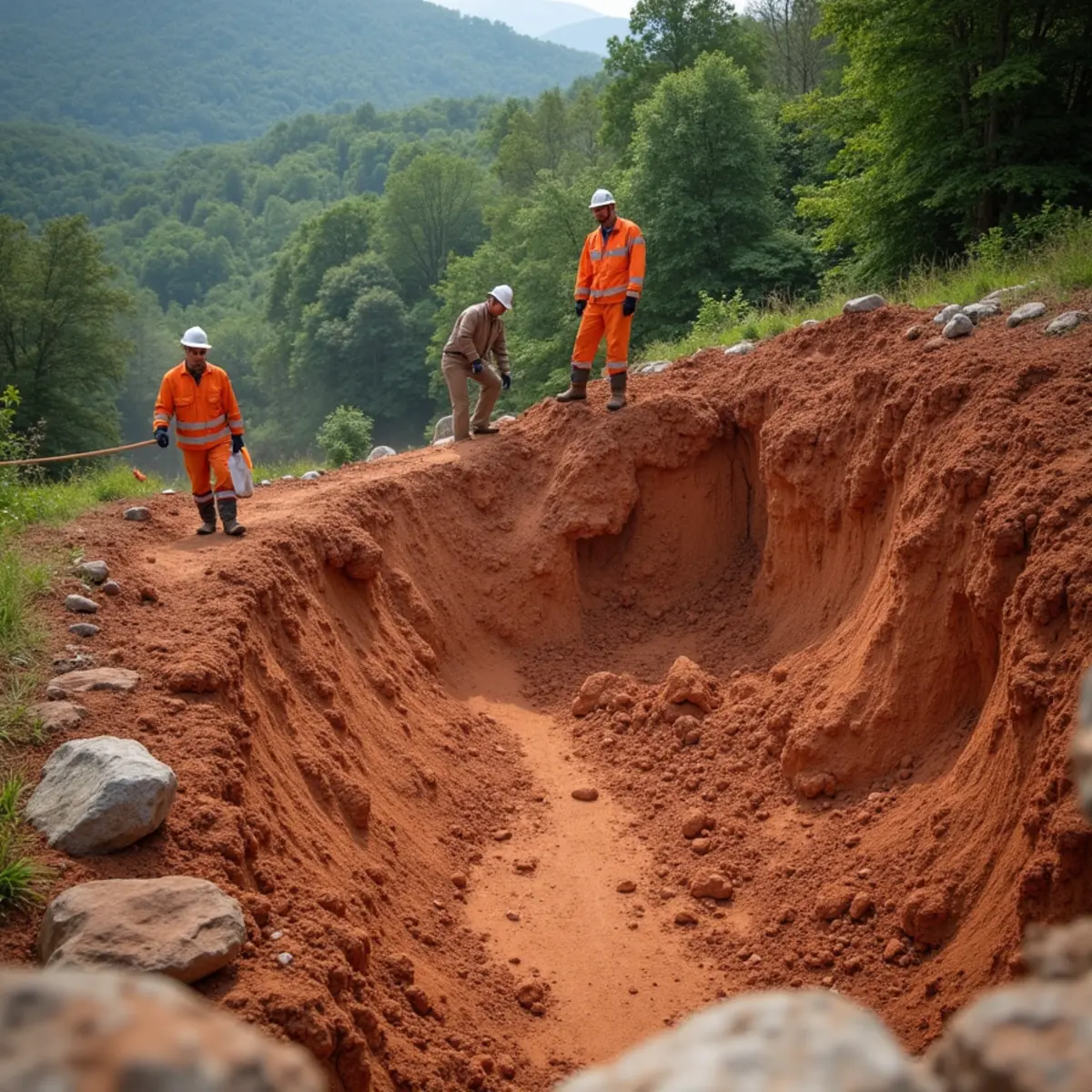
A mountain washout rarely comes from one storm. It usually follows days of steady rain that saturate the clay subsoil across a slope until the soil mass exceeds its shear strength and simply lets go, often with little warning beyond a widening crack at the top of a slope or a sudden bulge lower down. Because Habersham and Rabun county clay holds water and drains slowly, saturation can build for days even after visible rain has stopped.
Slopes that have been recently disturbed - a new driveway cut, cleared timber, or a hillside without established root systems - are at the highest risk because roots from mature trees and shrubs mechanically bind soil that bare or newly graded clay cannot hold on its own. A slide that starts small at the top of a cut slope can accelerate quickly as it undermines soil below it, turning a minor slump into a driveway-blocking or structure-threatening event within hours.
Slope angle plays directly into risk. Georgia's mountain topography includes many cut and natural slopes at grades of 30 percent or steeper, and geotechnical research consistently shows failure likelihood rising sharply once slope angle and soil saturation combine past a critical threshold - which is why the same rainfall total that a gentle slope shrugs off can trigger a slide on a steep cut nearby.
Emergency Stabilization: Tarping, Sandbags & Temporary Berms
The first priority on an active or recent washout is stopping additional water from entering the failure zone, not immediately rebuilding it. Heavy poly tarping staked and weighted across the exposed scarp keeps rainfall from re-saturating already-mobilized soil while a permanent plan is put together, and it can be deployed within an hour or two of arriving on site.
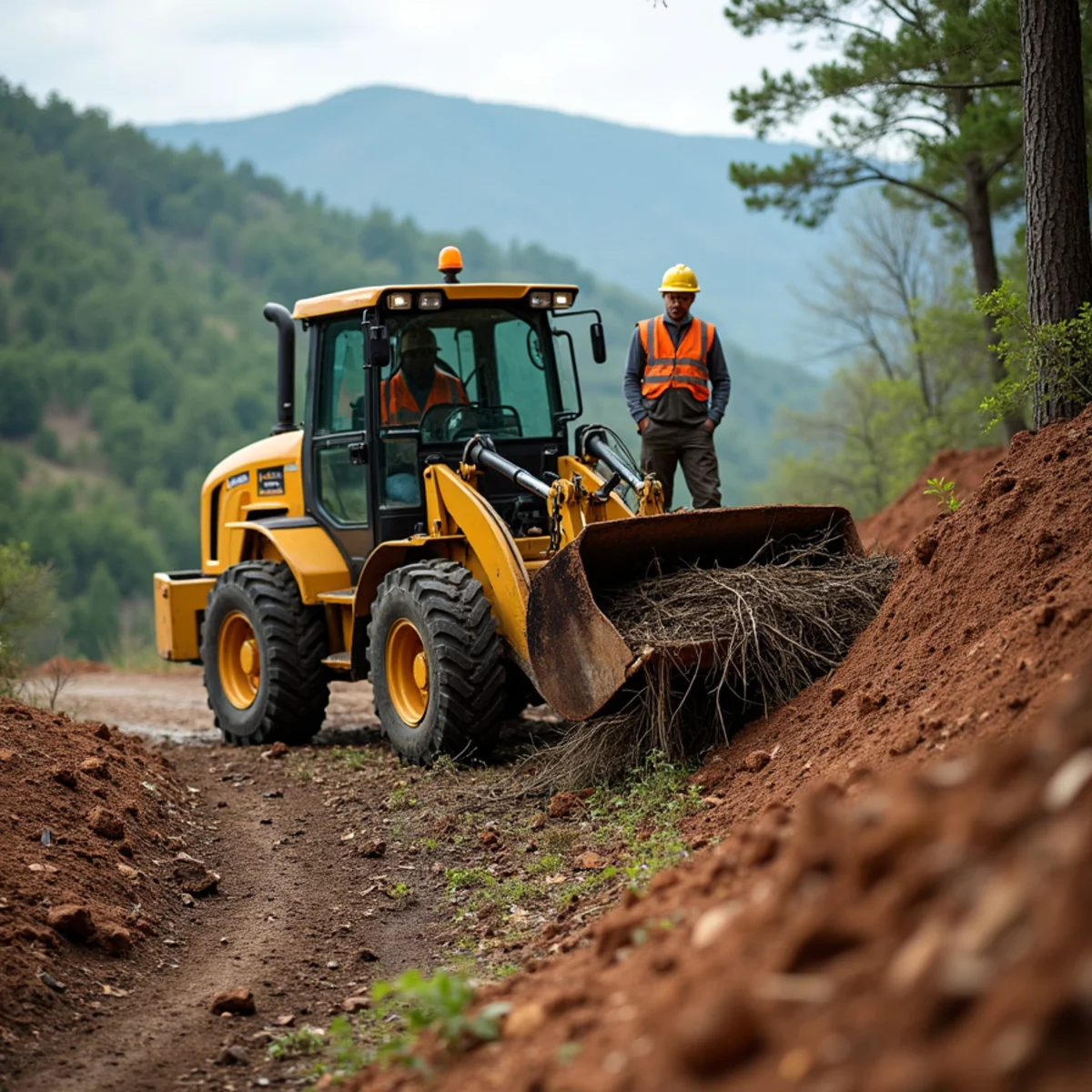
Sandbag berms and temporary diversion channels redirect surface water around the unstable area rather than letting it continue to flow across the slide face. On active slopes we also assess whether it is safe to place equipment on or near the failure at all - a slide that is still moving is not a place to run heavy machinery until it has been visually confirmed stable.
We also document the failure with photos and measurements before any stabilization work begins, both to guide the permanent repair design and because that documentation can matter for insurance claims if the washout is threatening a structure, driveway, or septic system.
Diverting Uphill Runoff Away from Saturated Slopes
Most hillside washouts are fed by water coming from higher on the property, not rain falling directly on the failure zone. Identifying and intercepting that uphill runoff - often from a driveway, a roof downspout, or a neighboring parcel - with a temporary swale or French drain is usually more effective at stopping continued erosion than anything done at the slide face itself.
This diagnostic step is critical and frequently skipped by crews rushing straight to rebuilding: if the water source feeding the slide is not addressed, a rebuilt slope will fail again in the next significant rain event regardless of how well the visible repair is built.
On properties where uphill runoff is coming from a neighboring parcel or a shared private road, resolving the immediate hazard sometimes requires a conversation with a neighbor or road association about long-term drainage responsibility, even while emergency work proceeds on your own property in the meantime.
Recognizing the Warning Signs Before a Slope Fails
A slope rarely fails without some warning, even if that warning is subtle. Watch for new or widening cracks running roughly parallel to the slope contour near the top of a cut or fill area, a noticeable bulge or hummocky ground forming lower on the slope, doors or windows in a nearby structure that suddenly stick as the ground beneath a foundation shifts slightly, and trees or utility poles on the slope that begin leaning in a consistent direction rather than growing naturally curved from years of prevailing wind.
Water behaving strangely is another early signal - a spring or seep appearing where one has not been before, or a driveway culvert running muddy long after visible rain has stopped, both suggest that subsurface water is moving through the slope in ways that could be undermining stability. Any of these signs, especially in combination, justify a same-day professional assessment rather than a wait-and-see approach, since the gap between visible warning signs and full slope failure can be very short once saturation reaches a critical point.
We keep a mental checklist when we walk a property after heavy rain: fresh cracks at the top of any cut or fill slope, soil that looks freshly disturbed or 'stepped' partway down a grade, muddy discharge from a spring or drain that normally runs clear, and any structure nearby - deck, shed, retaining wall - that has shifted even slightly from level. None of these signs alone proves a slide is imminent, but together they change the urgency of a site visit from routine to same-day.
- New or widening cracks running parallel to the slope contour near the top of a cut or fill
- A bulge or hummocky ground forming lower on the slope
- Doors or windows in a nearby structure that suddenly stick
- Trees or utility poles leaning in a consistent direction rather than growing naturally curved
- A spring or seep appearing where one has not been before
- A driveway culvert running muddy long after visible rain has stopped
Permanent Engineering: Geogrid Anchors, Riprap & Boulder Terraces
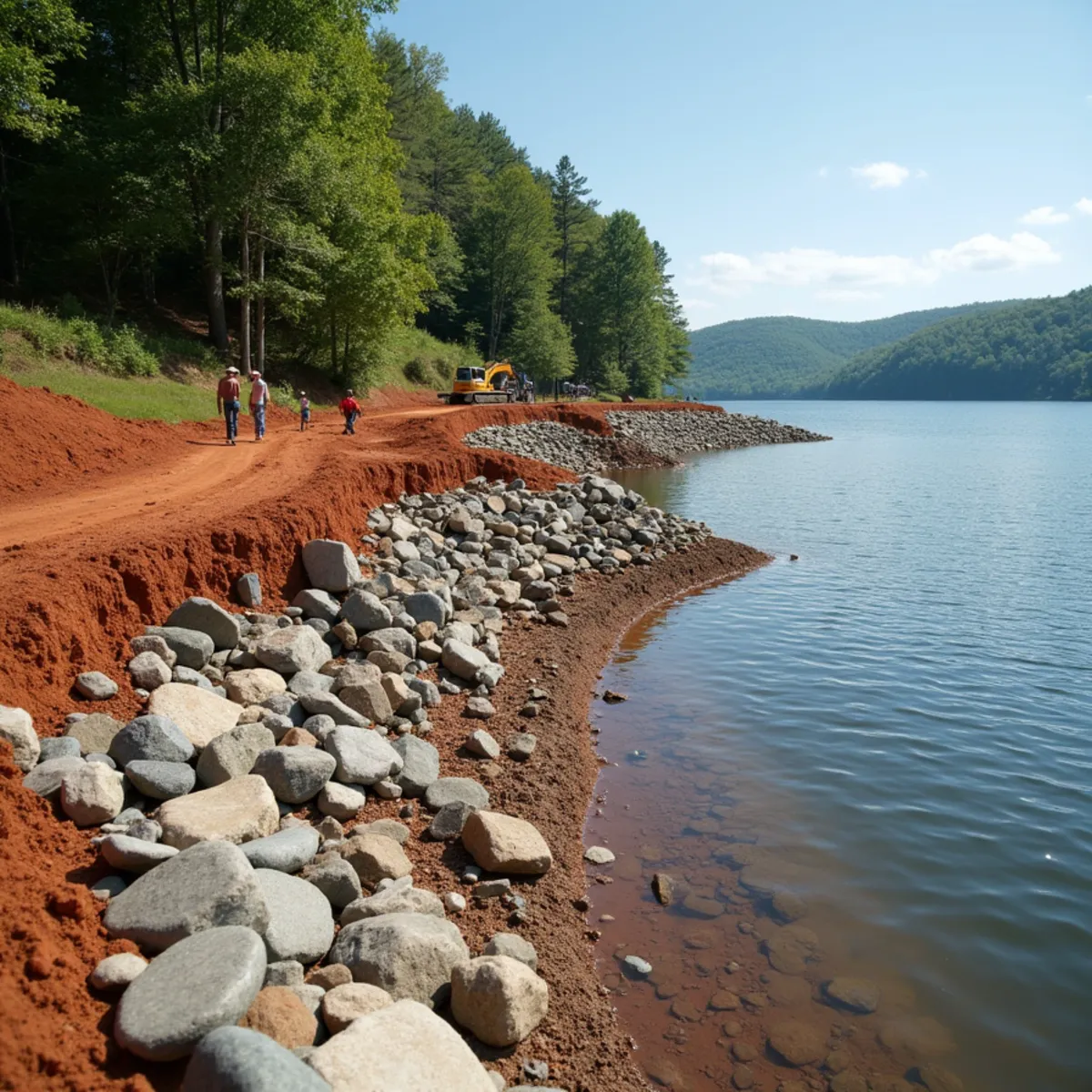
Once the site is stable and the water source is controlled, permanent repair typically involves regrading the slope to a stable angle, installing geogrid soil reinforcement on the steepest sections, and armoring vulnerable areas with riprap or boulder retaining walls built as terraces rather than one tall structure. Terracing a steep slope into a series of shorter walls distributes load more effectively than a single tall wall and often fits mountain terrain better.
On properties where the washout threatens a driveway, septic field, or structure, our emergency hillside washout repair crew coordinates temporary stabilization and permanent engineering as one continuous project rather than two separate mobilizations, which keeps the property protected through the transition.
Geogrid reinforcement works by mechanically interlocking with compacted soil layers, distributing load across a much wider area than unreinforced fill can manage on its own, which is why it is standard practice on any regraded slope steeper than roughly two-to-one (two feet of horizontal run per foot of vertical rise) in the permanent repair. Riprap or boulder terracing then armors the surface against the erosive force of future rainfall while the reinforced soil mass underneath does the structural work of holding the slope in place.
Protecting Driveways and Home Foundations
A washout does not have to reach a foundation directly to threaten it. Undermined soil beneath a driveway approach or a slope above a crawlspace can shift load paths and create settling cracks well before any visible slide reaches the structure itself, which is why we assess uphill and downhill exposure together, not just the visible failure.
We see this pattern regularly around Tallulah Falls and Helen, where steep gorge-adjacent terrain concentrates runoff into narrow drainage paths that can wash out a driveway approach quickly during a heavy summer thunderstorm.
Foundation-adjacent slides deserve particular caution because the visible damage - a crack in drywall, a door that will not latch - often shows up in the house well before the slope failure itself becomes visually obvious outside, which means indoor symptoms should prompt an outdoor slope inspection rather than being treated as a separate problem.
When to Evacuate vs. When to Call a Contractor
Not every hillside washout is a life-safety emergency, but some are, and knowing the difference matters. If a slope failure is actively undermining a home's foundation, threatening to block the only access road during continued heavy rain, or showing signs of rapid, ongoing movement rather than a settled slump, evacuating the affected structure and calling 911 or local emergency management takes priority over calling a landscaping contractor. Georgia counties in mountain terrain maintain emergency management coordination specifically for these events.
Once the immediate life-safety question is resolved - the structure is not actively threatened, or emergency responders have confirmed it is safe - a landscaping and grading contractor experienced in slope stabilization is the right next call for assessing and repairing the washout itself. We coordinate directly with property owners in both scenarios and can advise over the phone on which situation you are facing based on what you describe.
24/7 Emergency Hillside Erosion Response
An active hillside washout is not a wait-and-see situation. Every hour of continued rain adds saturated volume to a slope that is already failing, and the cost and difficulty of repair both climb the longer the slide is left unaddressed.
We keep crews and equipment positioned to respond quickly across our mountain service area rather than scheduling emergency work weeks out the way a general landscaping request might be scheduled, because a washout that is safe to stabilize today can become considerably more dangerous and expensive after another round of heavy rain.
Call (323) 606-0255 for emergency response across Habersham, White, and Rabun counties, including Clarkesville and the surrounding mountain communities. We assess the site, stabilize what can be stabilized immediately, and lay out a permanent repair plan once the emergency phase is under control.
Frequently Asked Questions
- We treat active washouts as emergencies and prioritize same-day or next-day site assessment across our North Georgia service area. Call (323) 606-0255 and describe what you are seeing so we can triage the response.
Get Expert Help on Your North Georgia Property
Kipps Kustom Landscapes has spent 15+ years solving exactly these challenges across the Blue Ridge foothills. Call for a free on-site estimate.
Call (323) 606-0255
Written by
Hunter Kipps — Owner & Lead Craftsman
Hunter Kipps has spent 15+ years building and repairing mountain and lakefront landscapes across Northeast Georgia — boulder retaining walls, shoreline riprap, red-clay drainage, and estate stonework. He personally runs the heavy equipment and walks every site before quoting it.