Emergency Situations & Urgent Damage Mitigation
Downed Trees & Slash: Clearing Mountain Storm Debris Safely
Assessing Storm Damage After Severe NE Georgia Thunderstorms
Clearing mountain storm debris safely starts with triaging hazard trees - leaners and hung-up trees first, then root-sprung trees - before processing downed timber and brush in place with a forestry mulching head, which eliminates the fire and pest risk of a piled slash heap and avoids running heavy equipment near an unstable hazard tree.
Severe summer thunderstorms and the occasional tropical remnant moving up from the Gulf can drop enough wind and rain on North Georgia ridgelines to snap or uproot large hardwoods within minutes, especially in already-saturated soil where root systems have less to hold onto. The immediate aftermath assessment has to look beyond the obviously downed trees to identify hung-up leaners and cracked but still-standing trees that pose an ongoing hazard.
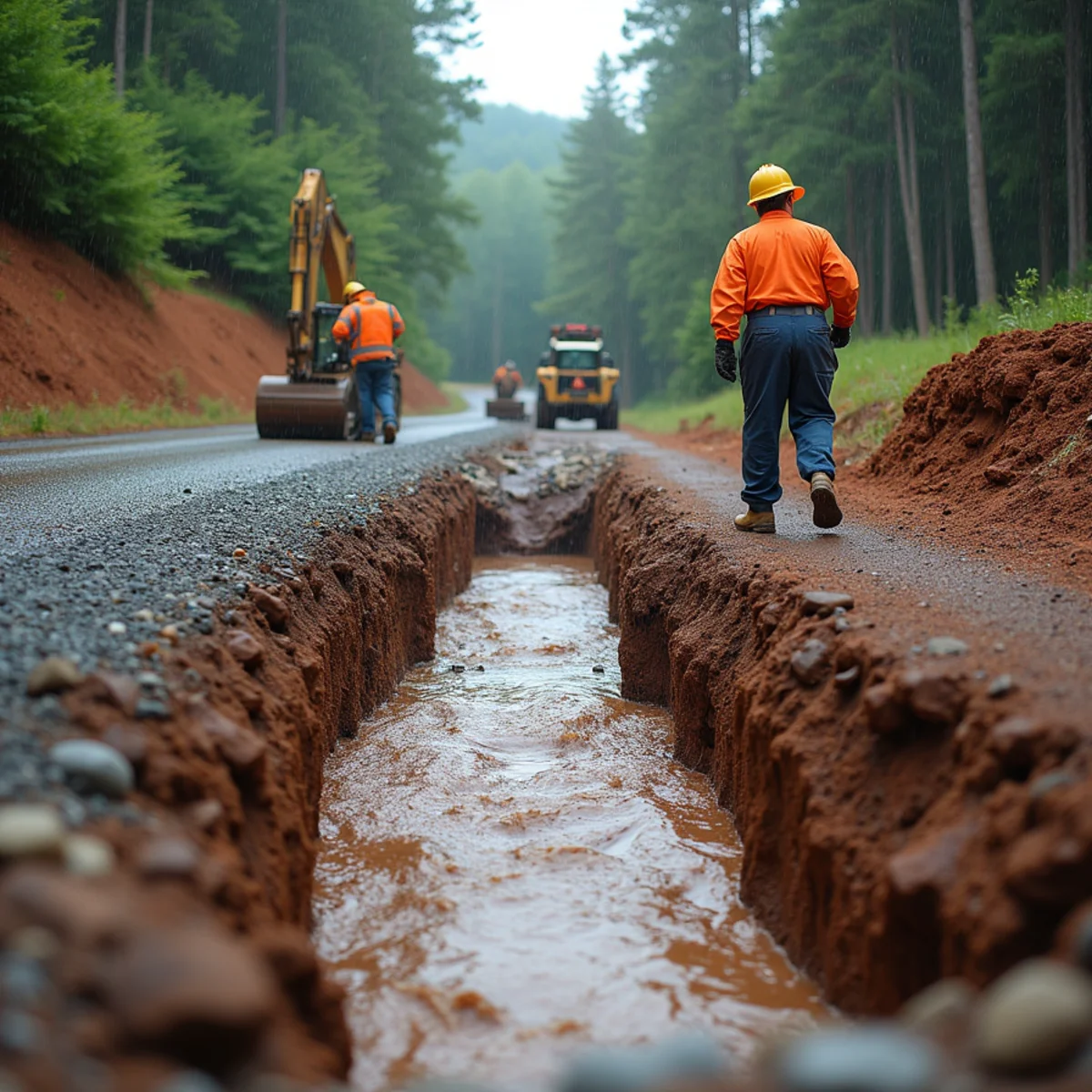
On steep terrain, a storm assessment also has to account for how downed timber is now interacting with drainage paths. A tree that falls across a natural swale or driveway culvert can dam water flow and redirect it somewhere it was never designed to go, turning tree damage into a secondary erosion problem within the next rain event.
Wind-thrown trees on saturated slopes often uproot with a shallow, disc-shaped root ball rather than snapping at the trunk, since wet clay loses much of its ability to grip roots once fully saturated, which is why storm damage on mountain lots frequently includes whole trees tipped over with roots and a slab of soil still attached rather than a clean break.
Species matters in this assessment too. Shallow-rooted species common on North Georgia ridgelines, including many pines and some poplars, are more prone to wholesale uprooting in saturated soil than deeper-rooted hardwoods like oak and hickory, which more often lose limbs or snap partway up the trunk instead. Knowing which failure pattern to expect from the tree species on a given property helps us anticipate where the next hazard is likely to show up as cleanup proceeds.
Why Piling Brush Creates Wildfire & Pest Hazards
The instinct to drag storm debris into a pile at the edge of the property is understandable but creates two new problems. Dried slash piles are highly combustible and, on a wooded mountain lot, sit close enough to structures and tree canopy to represent a real wildfire risk during dry autumn and winter periods when North Georgia sees its highest fire danger.
Piled brush and downed wood also become habitat for bark beetles and other pests that can then spread to healthy standing timber nearby. Leaving debris piled and slowly decomposing for months, rather than processing it promptly, extends both risks far longer than necessary.
Georgia Forestry Commission fire danger ratings climb notably during dry autumn stretches once fallen hardwood leaves and slash have had time to cure, and a pile of storm debris sitting untouched through that window represents avoidable fuel load close to structures on wooded mountain lots.
The Power of Forestry Mulching
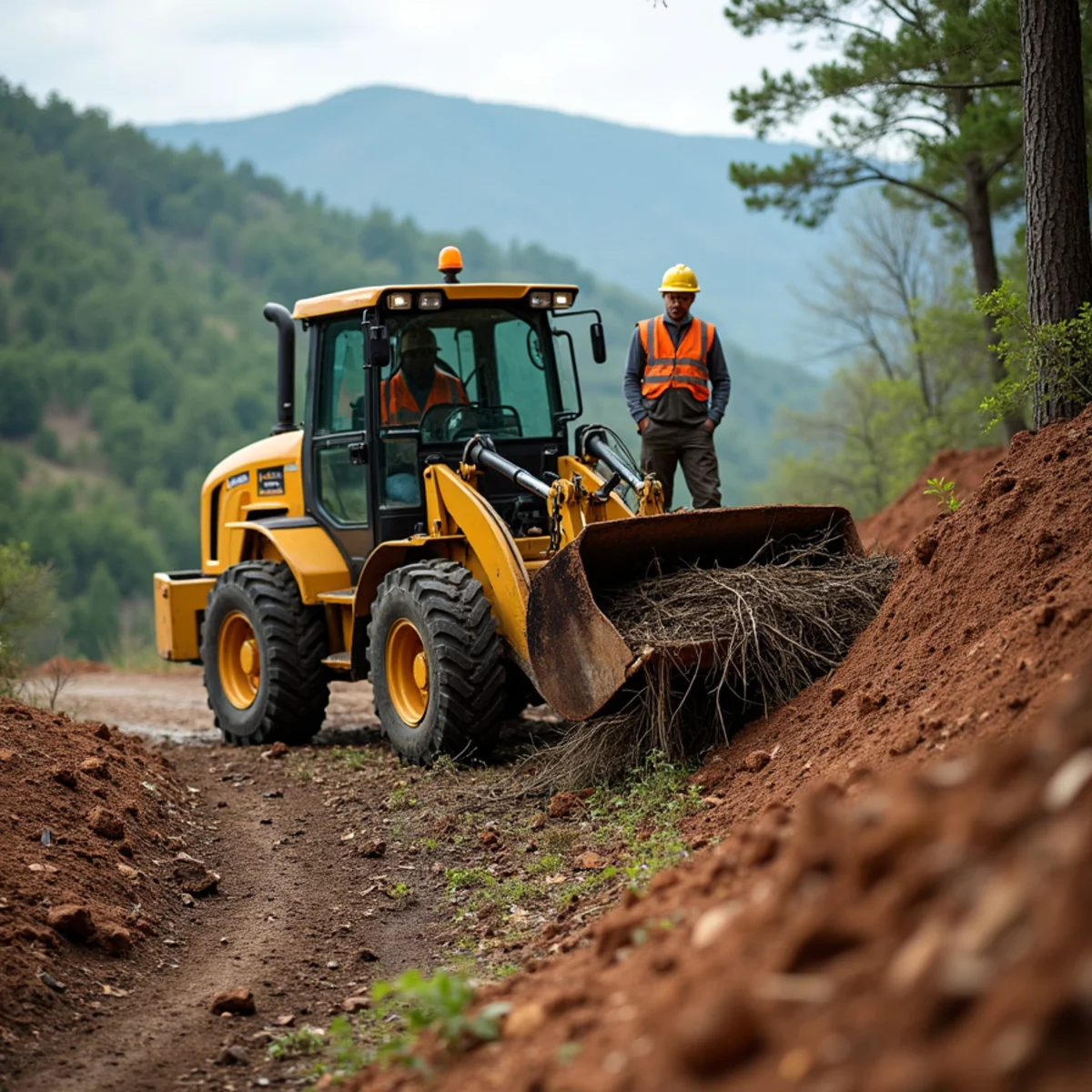
Rather than piling and burning or hauling debris off-site, our storm debris clearing and forestry mulching crew typically processes downed trees and slash in place with a mulching head mounted on a skid steer or excavator, grinding trunks, limbs, and brush into mulch that stays on-site. This eliminates the pile hazard immediately and puts organic material back on the slope where it helps with erosion control.
Forestry mulching also lets us clear damaged and hazard trees efficiently on terrain too steep or too tight for large log-hauling equipment, which makes it the practical choice for most mountain storm cleanup rather than conventional tree removal alone.
Mulched material left on-site also breaks down over time and contributes organic matter back into often nutrient-poor mountain topsoil, which is a genuine, if secondary, benefit compared to hauling debris away and losing that organic matter from the property entirely.
Hazard Tree Triage: What Gets Addressed First
After a storm, not every damaged tree presents the same level of risk, and triage matters for both safety and efficient use of crew time. Leaners - trees pushed over but still partially rooted or caught against a neighboring tree - are treated as high priority because they can fall with very little additional force, sometimes hours or days after the original storm event. Hung-up trees, caught in the canopy of a neighbor rather than reaching the ground, present a similar unpredictable-fall risk and are addressed early in any cleanup.
Root-sprung trees - still standing but with visibly heaved or cracked soil around the base indicating the root plate has partially lifted - can look stable from a distance while actually being close to failure, especially if additional wind or rain occurs before they are addressed. We assess the whole property for these less-obvious hazards before starting cleanup, rather than only processing the trees that are already fully down, since an overlooked hazard tree is often the one that causes injury or additional property damage after the initial storm has passed.
- Leaners - trees pushed over but still partially rooted or caught against another tree
- Hung-up trees caught in a neighboring tree's canopy rather than reaching the ground
- Root-sprung trees with heaved or cracked soil around the base
- Cracked but still-standing trees with hidden trunk damage
- Trees or limbs damming a swale, ditch, or driveway culvert
Clearing Blocked Private Roads and Switchbacks
Storm-felled trees frequently land across the only access road into a mountain property, which turns a landscaping problem into an access emergency. We prioritize clearing blocked private roads and switchbacks first on any storm response, particularly around Tiger and Dillard where some properties have a single narrow access route with no alternate way in or out.
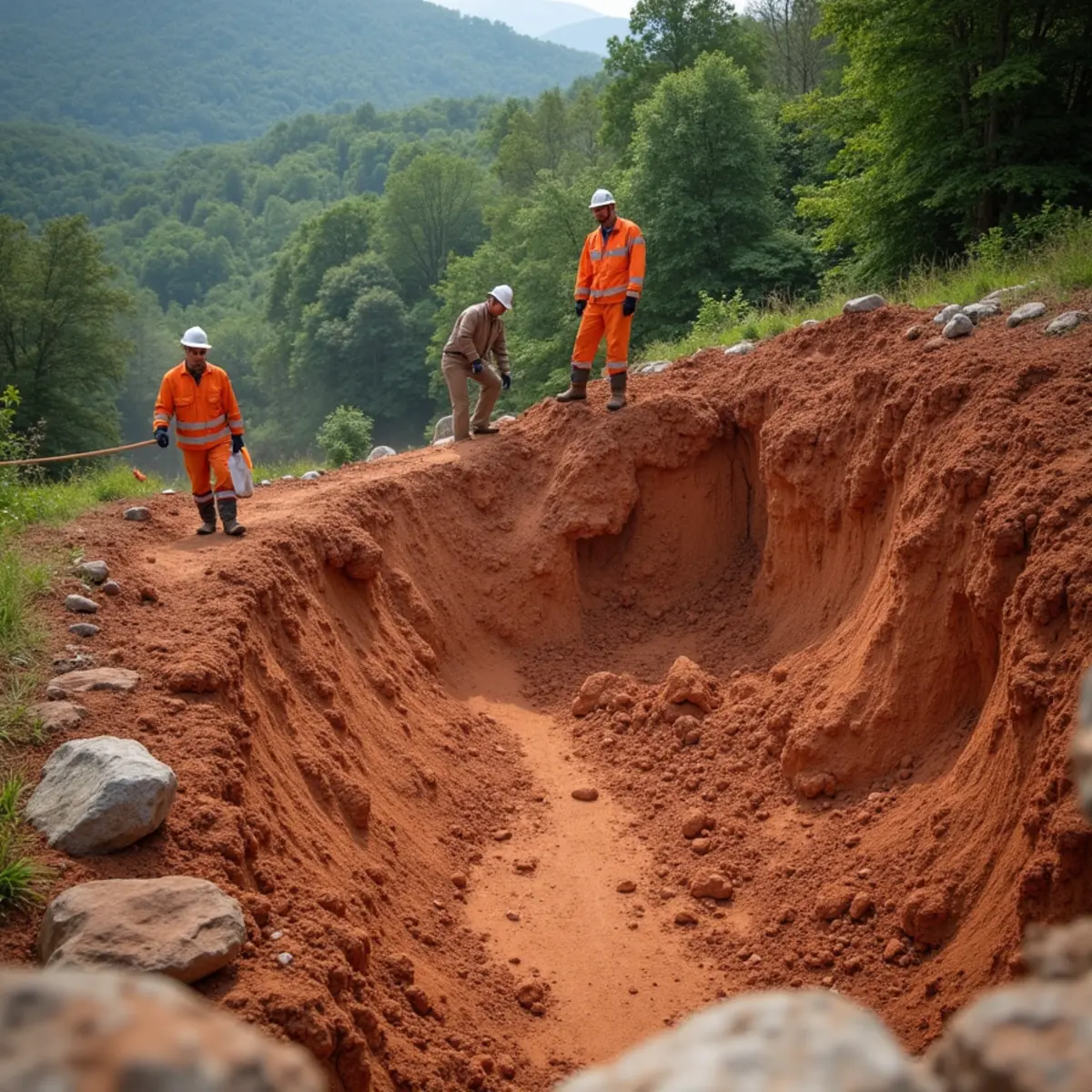
Once access is restored, we move to the broader cleanup of remaining slash and hazard trees across the rest of the property, coordinating with any emergency hillside washout repair needed if storm debris was also blocking drainage and contributing to erosion.
On a shared gravel road serving several mountain properties, clearing the access route sometimes requires coordinating with neighbors or a road association rather than working on a single parcel in isolation, since a tree blocking the road may have fallen from one property but is blocking access for several others. We handle that coordination directly when it comes up rather than leaving property owners to sort it out mid-emergency.
Preventing Erosion on Newly Cleared Slopes
Removing trees from a slope also removes the root structure that was helping hold that soil in place, which means a freshly cleared steep area can become an erosion risk if it is left bare through a rainy season. We evaluate whether newly opened slopes need temporary erosion control matting, seeding, or more permanent stabilization as part of the cleanup scope, not as an afterthought.
This is especially important on slopes where multiple large trees came down together, since the combined loss of root mass and canopy interception can noticeably increase runoff volume reaching that section of hillside during the next storm.
Erosion control matting - typically a biodegradable straw or coconut-fiber blanket staked across bare soil - is often the fastest practical measure on a freshly cleared slope ahead of establishing permanent vegetation, since it physically holds soil in place against rainfall impact while grass seed germinates or other stabilization is scheduled.
Chipping, Mulching, or Hauling: Matching Method to Debris Volume
The right debris processing method depends on volume and tree size as much as terrain. A handful of downed limbs and brush is often best handled with a chipper, producing usable wood chip mulch quickly with minimal ground disturbance. Larger volumes of mixed trunk, limb, and brush debris across a wide area are usually more efficiently processed with a forestry mulching head, which grinds material directly where it lies without the repeated handling a chipper requires.
Large-diameter trunk wood sometimes has salvage or firewood value that mulching destroys, so on properties with significant merchantable timber down, we discuss whether separating and hauling select logs before mulching the remaining slash makes sense, rather than defaulting to mulching everything without considering what might be worth keeping.
Book Emergency Forestry Mulching
Storm debris does not need to sit for weeks creating fire and erosion risk while you wait on a schedule. We run forestry mulching equipment capable of handling steep, wooded mountain terrain throughout Habersham and Rabun counties, including the areas around Clarkesville.
Call (323) 606-0255 to schedule emergency debris clearing, and we will assess both the immediate hazard and any follow-up erosion control the cleared slope may need.
We also carry the equipment to handle standing hazard trees that a storm left leaning or cracked but not yet down, not just the debris already on the ground, so a single visit can address both what fell and what is still likely to fall.
Frequently Asked Questions
- For most mountain storm cleanup, yes. Mulching processes trees and brush in place, avoiding the cost and truck traffic of hauling, and the resulting mulch helps with erosion control on the slope where it is left.
Get Expert Help on Your North Georgia Property
Kipps Kustom Landscapes has spent 15+ years solving exactly these challenges across the Blue Ridge foothills. Call for a free on-site estimate.
Call (323) 606-0255
Written by
Hunter Kipps — Owner & Lead Craftsman
Hunter Kipps has spent 15+ years building and repairing mountain and lakefront landscapes across Northeast Georgia — boulder retaining walls, shoreline riprap, red-clay drainage, and estate stonework. He personally runs the heavy equipment and walks every site before quoting it.