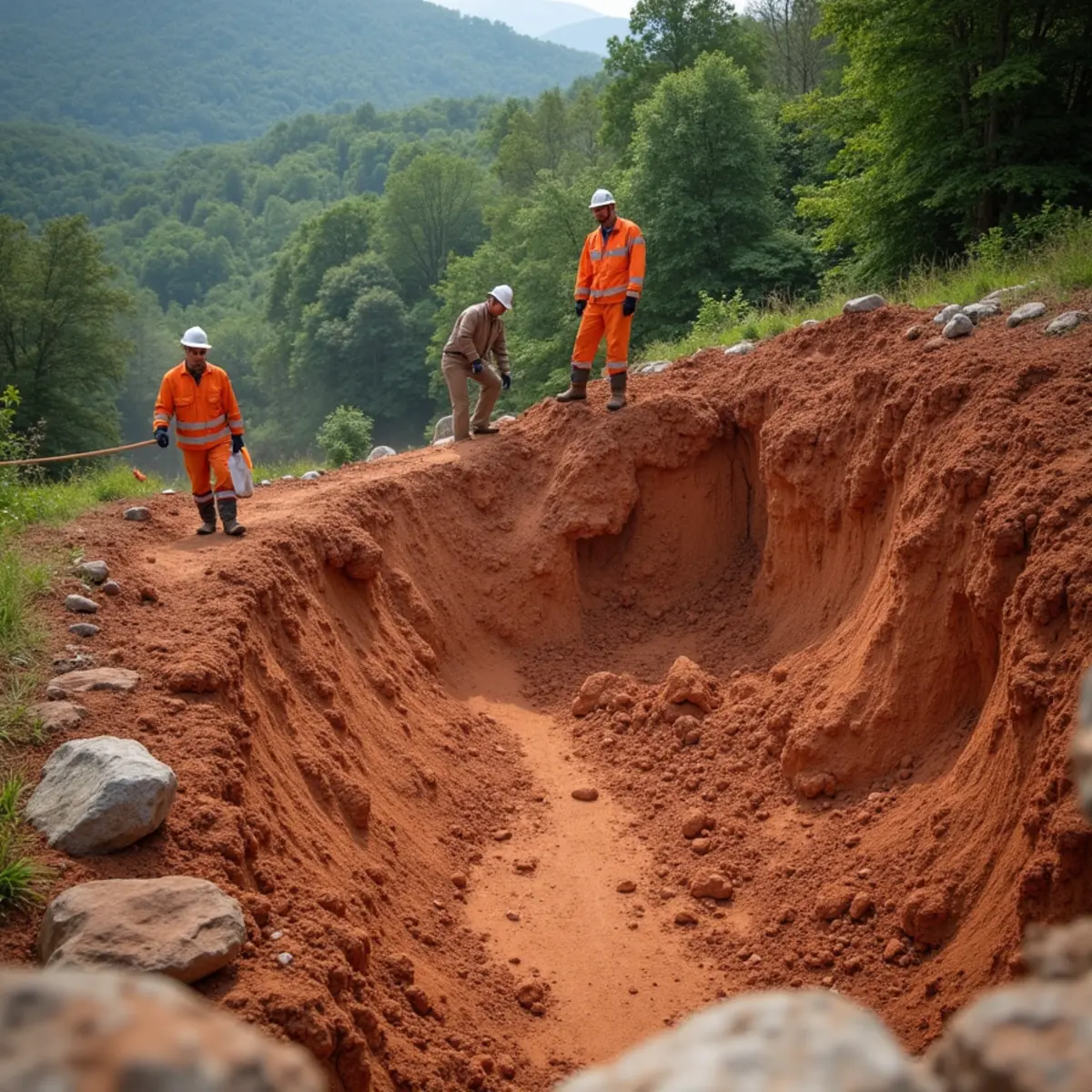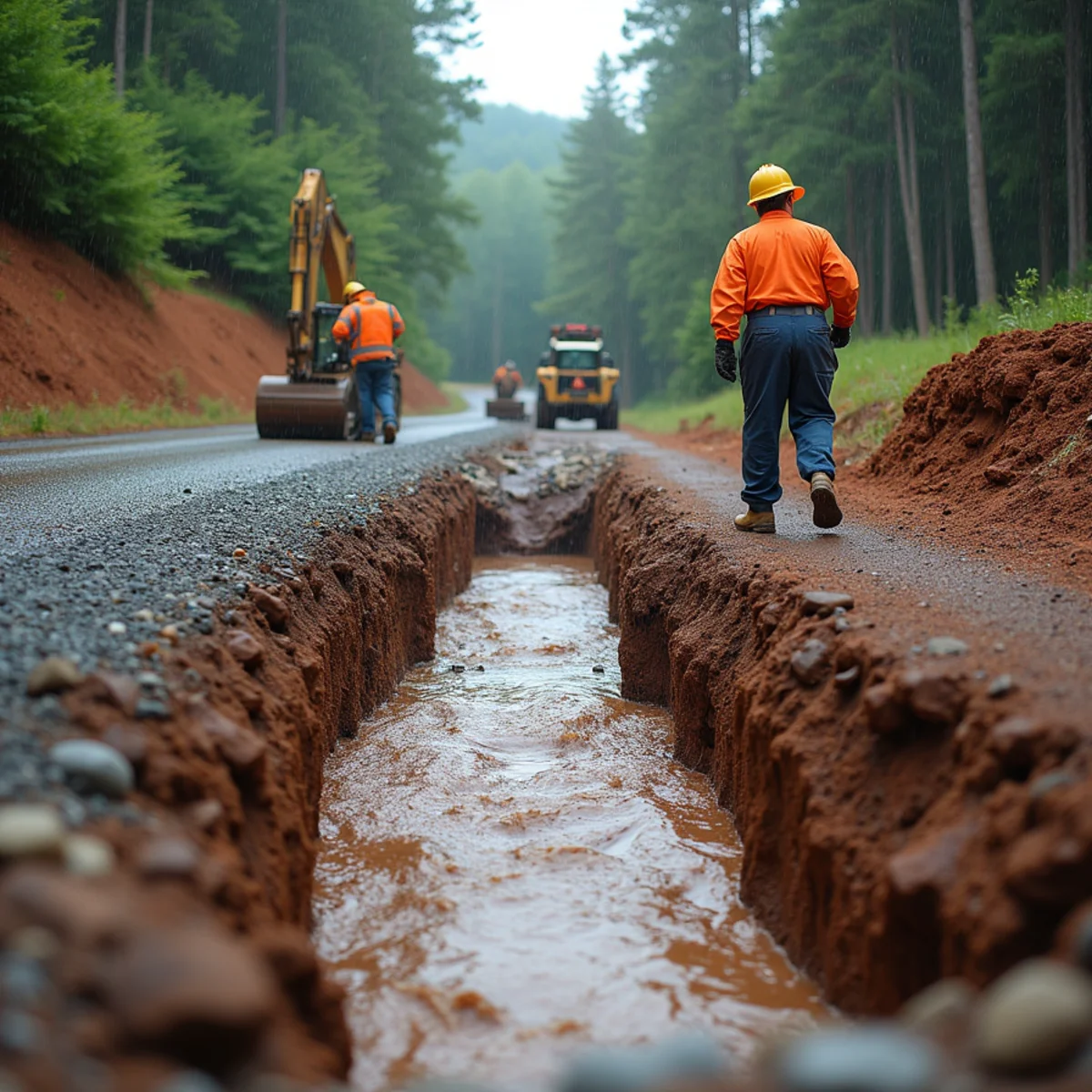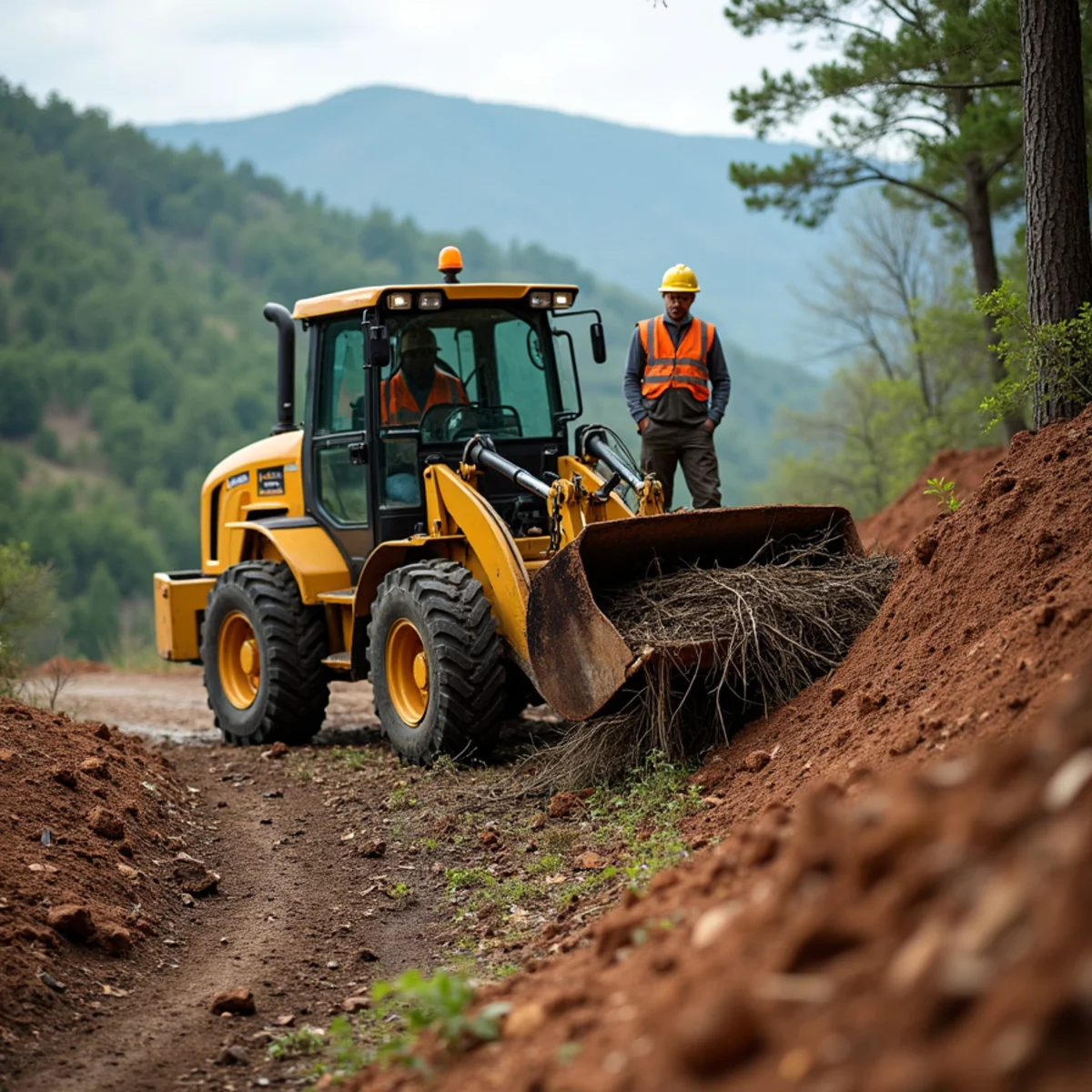
Emergency Situations & Urgent Damage Mitigation
Lakefront Bank Collapse: Emergency Shoring for Failing Shorelines
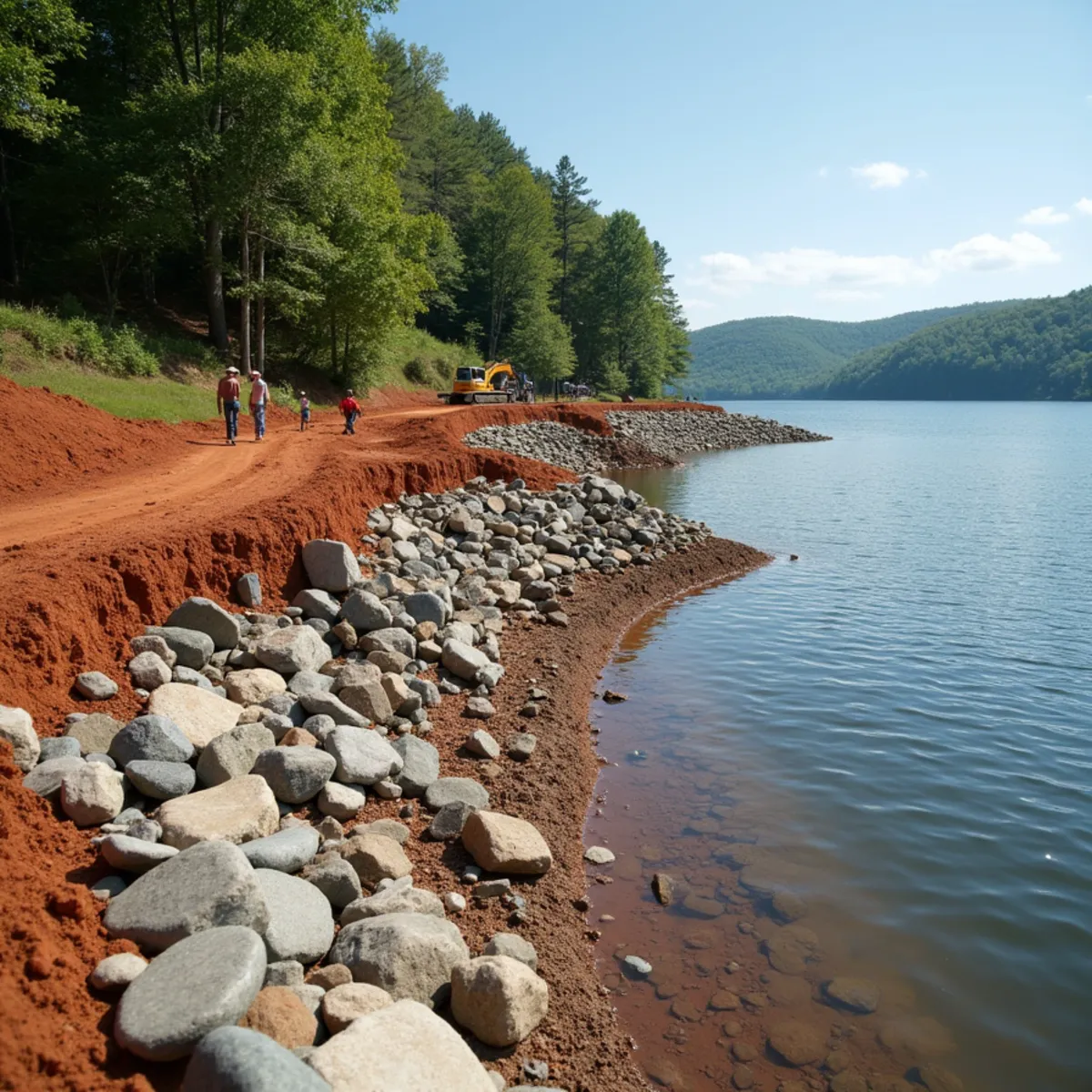
Warning Signs of Impending Shoreline Failure on Burton & Rabun
Emergency shoring stops an actively failing lake bank with temporary rock toe protection, erosion control fabric, and diversion of surface water reaching the failure - buying time before the bank is regraded, drained, and armored with permanent, permitted riprap once Georgia Power and EPD approvals are in hand.
Shoreline collapse almost always announces itself before the ground actually gives way. Watch for tension cracks running parallel to the water's edge, trees or shrubs along the bank leaning noticeably toward the lake, small slumps or steps forming in the bank face, and cloudy or discolored water near shore after rain that suggests active soil loss into the lake.
On Lake Burton and Lake Rabun specifically, seasonal drawdown by Georgia Power exposes and re-saturates the bank repeatedly through the year, which accelerates these warning signs compared to a static-level pond. A bank that looked stable at full pool can show real distress once water drops several feet for winter drawdown and removes the buttressing effect the water level was providing against the toe of the slope.
Drawdown magnitude varies by lake and by season - Georgia Power manages Burton and Rabun on different schedules than other reservoirs in the system - but the underlying mechanism is consistent: removing the buttressing effect of water pressure against the bank toe, even temporarily, can be enough to trigger a failure in a bank that was already close to its stability limit. Banks that survived previous drawdown cycles without visible distress are not guaranteed to survive the next one if erosion has been slowly narrowing the safety margin each year.
- Tension cracks running parallel to the water's edge
- Trees or shrubs along the bank leaning noticeably toward the lake
- Small slumps or steps forming in the bank face
- Cloudy or discolored water near shore after rain
- Noticeable distress after Georgia Power winter drawdown lowers the water level
How Saturated Red Clay Slumps into the Lake
Lakefront bank failure follows the same basic mechanics as a hillside washout, but with the added factor of water constantly undercutting the toe of the slope through wave action and drawdown cycles. As clay saturates from rain and wicking groundwater, its shear strength drops, and once the weight of the saturated soil mass exceeds what the remaining bank can support, a section slumps or slides toward the water in a rotational failure.
Once a slump exposes fresh, unvegetated clay, that new surface has no root structure holding it and becomes the next section to fail, which is why bank collapse tends to progress along the shoreline in stages rather than staying contained to its original footprint.
The specific failure mode matters for repair planning. A rotational failure, where a curved slip surface causes a block of bank to rotate downward and outward as a relatively intact mass, behaves differently during stabilization than a translational failure, where soil moves along a roughly planar surface, often a weaker clay layer or the interface between fill and native soil. We identify which failure type is occurring before finalizing a stabilization plan, since the wrong assumption about failure geometry can lead to a repair that does not address the actual slip surface.
Emergency Stabilization Before Permanent Riprap
Before permanent riprap can be engineered and permitted, an actively failing bank often needs emergency measures to stop further material loss: temporary rock toe protection at the waterline, erosion control fabric across the exposed scarp, and diversion of any surface water still reaching the failure from above. These steps buy time and protect the lakebed from continued sediment input while the permanent plan is arranged.
Our lakefront shoreline collapse shoring response is built around this two-phase approach: stop the bleeding first, then transition into permitted lakefront shoreline stabilization once the site is safe to work and permits are in hand.
Temporary rock toe protection is typically the fastest-deployable measure, since placing heavy stone at the base of the failure immediately increases the resisting force at the point where the slide is most active, buying time without requiring the full engineered design that a permanent installation needs. This is triage, not a finished repair, and property owners should expect a follow-up permanent scope even after emergency measures visibly stop further movement.
Rotational vs Translational Bank Failures: Why the Mechanism Matters
Understanding how a specific bank is failing changes both the emergency response and the permanent design. Rotational failures are common in relatively homogeneous, deep clay banks and tend to produce a curved scarp at the top of the slide with the failed mass rotating down and often bulging at the toe near the waterline. These failures can sometimes be arrested by reducing the load at the top of the slope - removing excess soil or vegetation weight - and adding resistance at the toe, without necessarily requiring a full excavation and rebuild of the entire bank.
Translational failures, by contrast, often occur where a weaker layer - a seam of looser fill, a buried old topsoil horizon, or the contact between disturbed and native soil from an old construction project - provides a plane along which the overlying soil can slide as a relatively intact block. These failures are harder to stop with toe loading alone because the slip surface itself remains weak, and permanent repair more often requires excavating down to or below that weak layer before rebuilding the bank profile with proper drainage and armoring.
Navigating Georgia Power Emergency Shoreline Approvals
Georgia Power maintains a process for addressing genuine emergency shoreline conditions on its reservoirs distinct from the standard shoreline management permit timeline, recognizing that an active collapse cannot always wait for a full standard review. We coordinate directly with the required approvals for emergency stabilization work while still following proper shoreline management requirements.
This is one of the most important reasons to call a crew experienced specifically with Lake Burton and Lake Rabun shoreline work rather than a general contractor unfamiliar with reservoir permitting - the wrong approach can create compliance problems on top of the physical emergency.
Emergency approval does not remove the need for proper design - it compresses the timeline for review while still requiring the stabilization work to meet reasonable engineering standards, which is why documenting the failure thoroughly at the outset (photos, measurements, description of active movement) supports both a faster emergency approval and a smoother transition into the permanent permitted scope.
Heavy Equipment Placement on Tight Lakefront Lots
Lakefront lots around Batesville and Lakemont often have limited equipment access: narrow lake-road frontage, steep drops to the water, and existing docks or seawalls that constrain where an excavator can safely operate. We plan machine placement carefully on every collapse response, since working too close to an already unstable bank edge risks worsening the failure.
In some cases stone has to be placed from a barge rather than the bank itself when land access is too limited or the remaining bank is too unstable to support equipment weight, which is assessed during the initial site visit.
Ground vibration from heavy equipment operating near an already-unstable bank edge is a real concern, not just a theoretical one - the added dynamic load and vibration from a large excavator can be enough to trigger further movement in a slope that is already at its stability limit. We often work with a smaller machine positioned farther back from the active scarp, extending its reach with a longer boom or working the material in smaller passes, rather than positioning heavy equipment directly at the edge of an unstable failure.
Protecting Docks, Seawalls, and Neighboring Property During Repair
A collapsing bank rarely stays neatly contained to its own footprint. Docks and boat lifts anchored into or near a failing bank can be undermined as the slope beneath their supports erodes, and an aging seawall adjacent to an active slide can lose the soil support it depends on even if the wall itself was not the original point of failure. We assess these adjacent structures as part of the initial site visit, not as an afterthought once the bank repair is underway.
Sediment control during the repair itself also matters, both for water quality compliance and out of consideration for neighboring shoreline. Turbidity barriers or similar controls are used during active in-water or near-water work to keep disturbed sediment from spreading along the shoreline to adjacent properties, which is both good practice and often an explicit condition of the emergency or standard shoreline permit.
Call for Rapid Lakefront Intervention
An active bank collapse near Clarkesville or anywhere on Lake Burton and Lake Rabun should not wait. Every additional rain event and drawdown cycle adds risk to the remaining stable bank and to anything built near it, including docks, seawalls, and the yard itself.
Call (323) 606-0255 for rapid shoreline assessment and emergency shoring. We will evaluate the failure, stabilize what can be stabilized immediately, and coordinate the permitted permanent repair from there.
Frequently Asked Questions
- Watch for parallel cracks near the water's edge, leaning trees along the bank, small slumps or steps in the slope, and discolored water after rain. Any of these warrant a professional assessment before the bank fails further.
Get Expert Help on Your North Georgia Property
Kipps Kustom Landscapes has spent 15+ years solving exactly these challenges across the Blue Ridge foothills. Call for a free on-site estimate.
Call (323) 606-0255
Written by
Hunter Kipps — Owner & Lead Craftsman
Hunter Kipps has spent 15+ years building and repairing mountain and lakefront landscapes across Northeast Georgia — boulder retaining walls, shoreline riprap, red-clay drainage, and estate stonework. He personally runs the heavy equipment and walks every site before quoting it.