Cost, Estimates & Pricing Guides
Lakefront Shoreline Riprap Pricing: Lake Burton & Lake Rabun
The Cost of Ignoring Shoreline Erosion on Mountain Lakes
Shoreline riprap pricing on Lake Burton and Lake Rabun is driven mainly by rock class (Type 1 vs heavier Type 3), whether stone can reach the bank by truck or has to be barged in, hauling distance from the quarry, and the Georgia Power/EPD permitting the project requires - which is why an accurate number requires a site walk rather than a phone estimate.
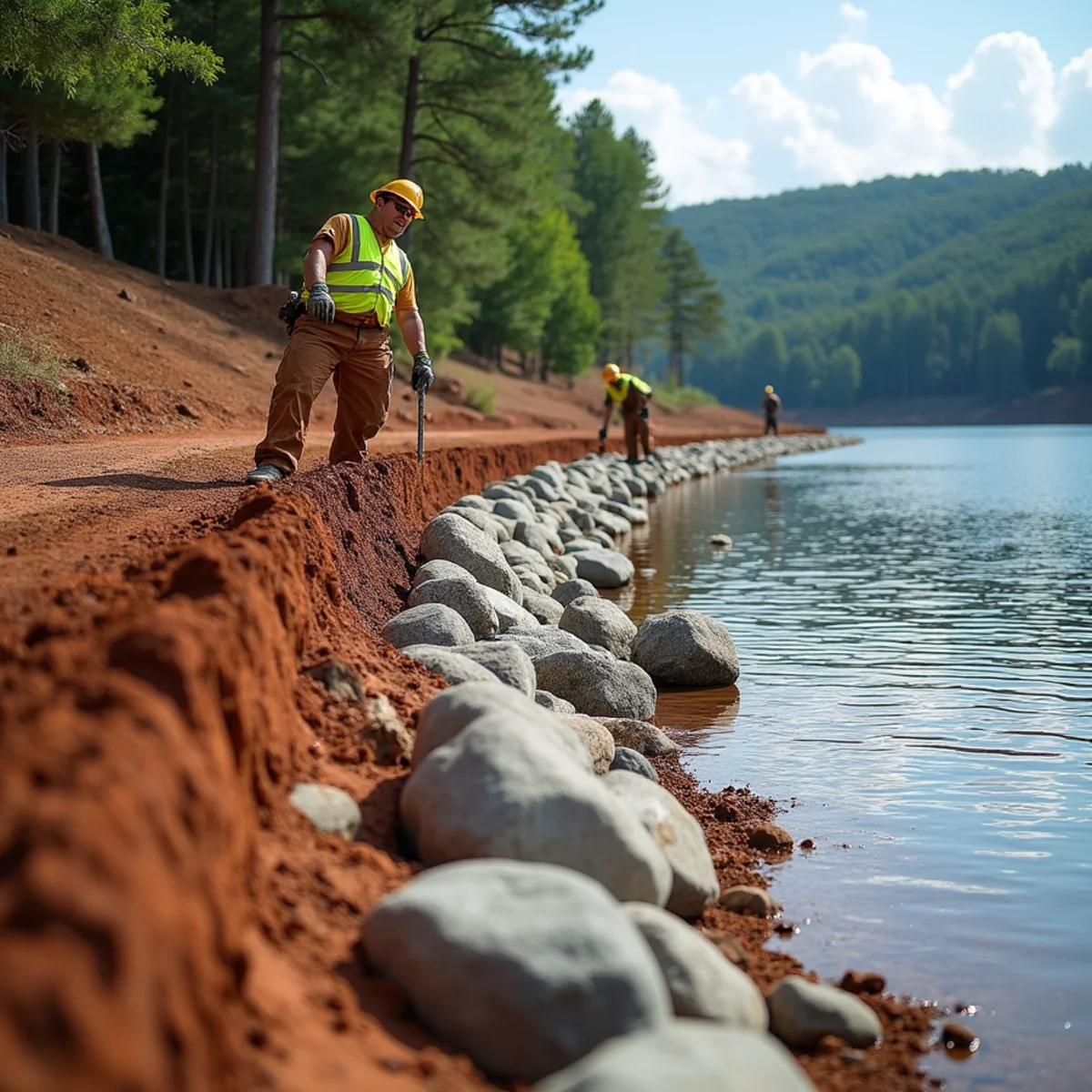
Lake Burton and Lake Rabun shorelines take a beating that flat-lake properties never see: seasonal drawdown by Georgia Power, wake from summer boat traffic, and heavy runoff pouring off steep mountain lots above the waterline. An unprotected bank erodes a little more with every drawdown and refill cycle, and what starts as a foot of undercut soil under the grass line can become a slumping bank that swallows a section of yard within a few seasons.
The real cost of doing nothing is not the erosion itself, it is what erosion takes with it: mature trees, seawalls, docks, and eventually the usable footprint of the lot. Once a bank starts actively failing, stabilization work becomes emergency shoreline collapse shoring instead of planned protection, and emergency mobilization on the water almost always costs more than a scheduled riprap installation.
Waiting also risks losing standing to permit a full repair cheaply. Georgia EPD and Georgia Power both view a proactively engineered shoreline very differently than an active slide that is depositing sediment into the lake, and the latter can trigger additional scrutiny and remediation requirements.
Erosion feeding sediment directly into the lake is not only a private property concern. Georgia EPD's water quality program tracks nonpoint sediment sources on reservoirs like Burton and Rabun, and a visibly failing, unpermitted bank can draw attention that a proactively stabilized shoreline never will. Homeowners who address erosion while it is still a localized bank problem, rather than after it becomes a visible plume of turbid water after every rain, generally have an easier permitting conversation and a smaller repair footprint.
Georgia Power & EPD Permitting and Inspection Fees
Any shoreline work below the full pond line on a Georgia Power reservoir like Burton or Rabun requires a Shoreline Management Permit from Georgia Power, and depending on scope, additional review may fall under Georgia EPD buffer regulations for work near state waters. Permit review timelines and application fees are set by Georgia Power and EPD directly and can shift, so we confirm current requirements at the time of your project rather than quoting a fixed figure here.
The permit application typically requires a site plan showing the proposed riprap footprint relative to the property line and full pond elevation, photos of existing conditions, and a description of the rock class and slope being proposed. Work within the state buffer measured from the water's edge - standard practice near Georgia waters under state erosion and sedimentation rules - gets particular scrutiny, and any land-disturbing activity in that zone needs to be justified as necessary shoreline stabilization rather than general landscaping.
Because permitting is tied to your specific parcel, existing shoreline structures, and lake elevation at the time of the request, this step has to happen before rock is ordered, not after. We handle preparing the permit packet - site sketches, photos, and proposed riprap specifications - as part of scoping the lakefront shoreline stabilization project.
Homeowners around Lakemont and Batesville should also budget time, not just money, into the schedule: permit review adds weeks to a project timeline, and rock cannot legally be placed below full pond until approval is in hand.
Tonnage Costs: Type 1 vs Type 3 Riprap Rock Delivered by Barge/Truck
Riprap is specified by class based on the rock size distribution needed to resist the wave and current energy at a given shoreline. Smaller Type 1 stone works for calmer coves with light boat traffic, while larger Type 3 stone is specified for open-water frontage exposed to heavier wake and wind fetch. Larger rock class costs more per ton and requires heavier equipment to place, which is a major reason two shorelines of the same length can price very differently.
As a general reference, Type 1 riprap is typically specified with a median stone size (D50) somewhere in the 9 to 12 inch range, while heavier Type 3 classes commonly run in the 15 to 24 inch range or larger for the most exposed frontage. The riprap layer itself is generally placed at a thickness of one and a half to two times the D50 stone size, meaning heavier stone classes require a noticeably thicker - and heavier - installed section, not just bigger individual rocks.
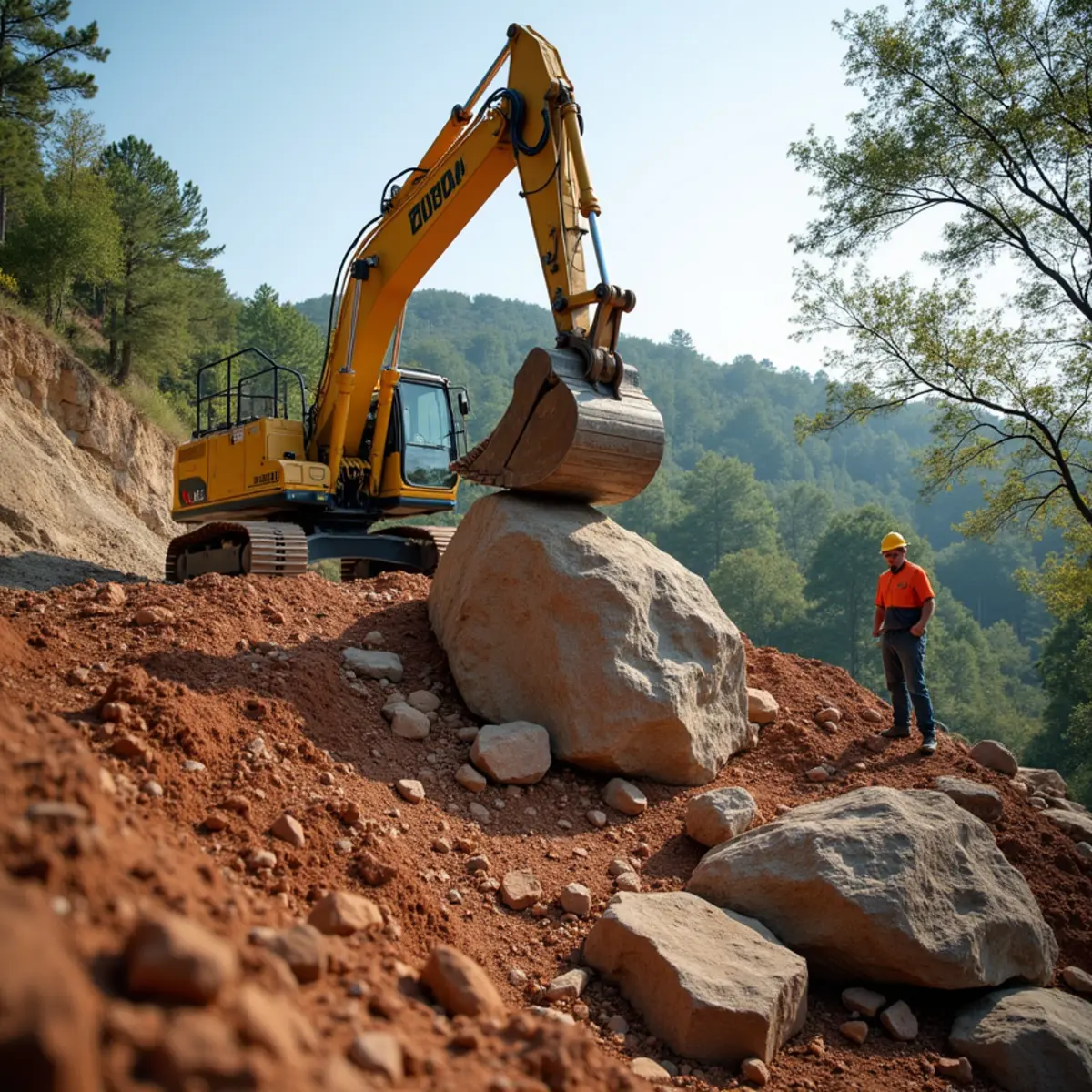
Delivery method changes the math too. Lots with road access can receive stone by dump truck and place it with a trackhoe working from the bank. Lots without usable road access to the water line, which is common on the steeper coves of Lake Burton, may require stone to be barged in, and barge mobilization adds cost that a truck-accessible lot never sees.
As a directional range, expect delivered and placed riprap to run from the low double digits to well over a hundred dollars per ton depending on class, hauling distance from the quarry, and whether barge work is involved - always confirmed on-site rather than quoted sight unseen.
- Rock class - Type 1 (9-12 inch D50) vs heavier Type 3 (15-24 inch D50 or larger)
- Delivery method - truck-and-trackhoe from the bank vs barge mobilization
- Hauling distance from the quarry to the specific cove
- Georgia Power Shoreline Management Permit and any EPD buffer review
- Geotextile underlayment and bank regrading before rock placement
- Wave and wake exposure (fetch) at the specific shoreline
Geotextile Underlayment and Bank Regrading Expenses
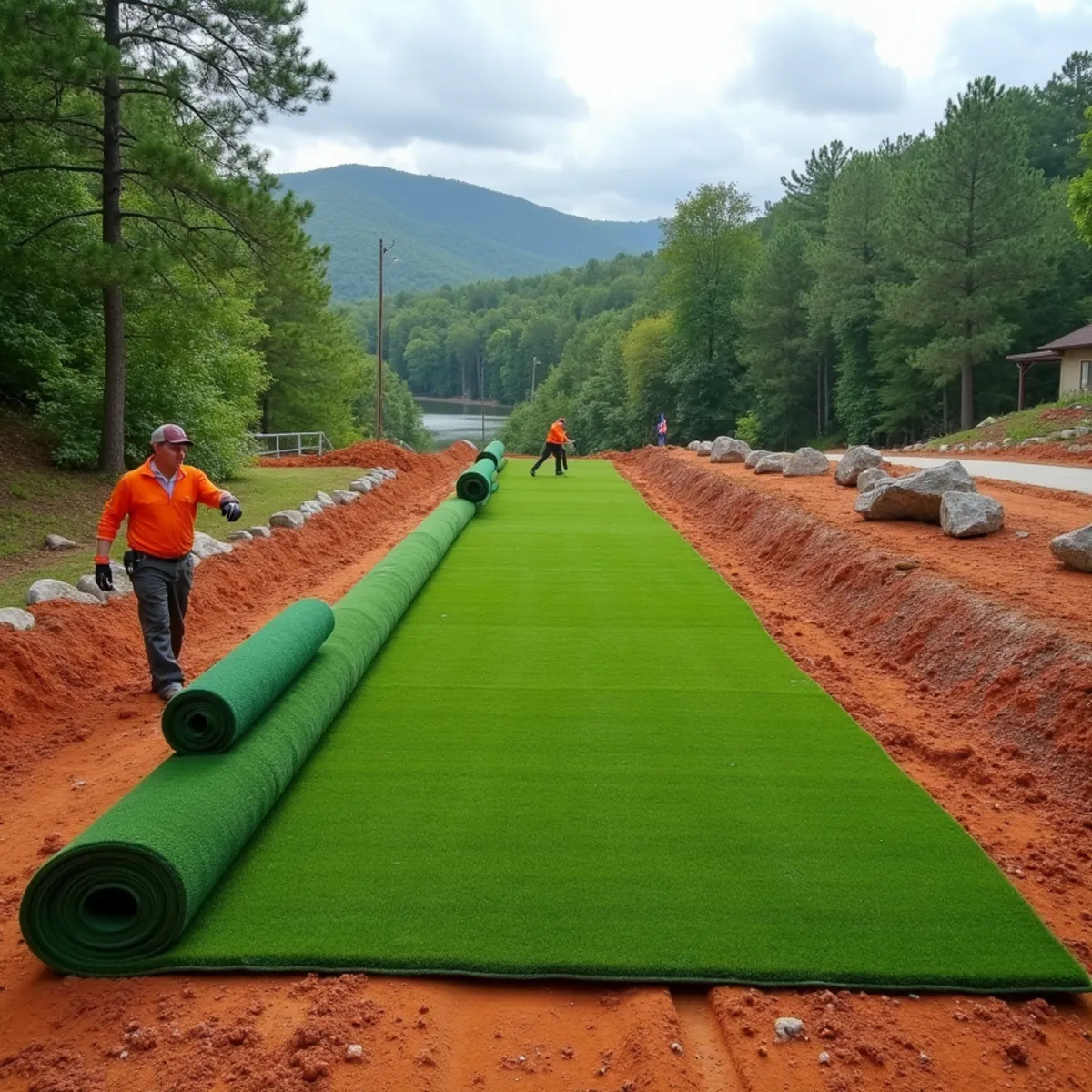
Riprap placed directly on bare clay will eventually settle unevenly as fine soil washes out between the stones under wave action. A woven geotextile fabric laid across the graded bank before rock placement keeps the underlying clay in place while still allowing the bank to drain, and it is standard practice on every properly engineered shoreline we build.
Many older Lake Burton and Lake Rabun lots have an undercut or vertical eroded bank rather than a stable slope, which means regrading - cutting the bank back to a stable angle before fabric and rock go down - has to happen first. Regrading adds excavation cost but is not optional on an actively eroding bank; riprap stacked against an unstable cut will slump the same way an unsupported wall would.
Most riprap-protected banks are graded to a slope somewhere in the range of two-to-one to three-to-one (two or three feet of horizontal run for every foot of vertical drop) rather than left near-vertical, since a flatter slope both distributes wave energy over more surface area and gives the rock a stable base to key into. Where lot depth is limited and a flatter grade would push the toe of the slope too far into the lake or too far up into the yard, a steeper design with a reinforced toe can sometimes be engineered instead, though it typically calls for heavier stone.
Long-Term Property Value Protection for Luxury Waterfront Estates
Lakefront footage on Burton and Rabun carries a premium precisely because usable, stable shoreline is limited. A properly engineered riprap bank protects that footage indefinitely with essentially no ongoing maintenance beyond periodic inspection after major storm events, which makes it one of the highest-return improvements available on a lake estate compared to interior renovations.
Buyers and their inspectors increasingly look closely at shoreline condition during due diligence on high-value lake properties. A documented, permitted riprap installation is a selling point; an eroding, unprotected bank is a negotiating liability that can cost far more at closing than the stabilization work would have cost years earlier.
A permitted riprap installation also comes with a paper trail - the Georgia Power shoreline permit and any EPD documentation - that a future buyer's attorney or lender can review directly, which is worth more at closing than a verbal assurance that repairs were made properly years earlier. Undocumented shoreline work, even if it looks fine above the waterline, can raise questions during a sale that a permitted project simply does not.
How Riprap Class Is Engineered: Wave Fetch and Rock Sizing
Riprap is not sized by guesswork. The rock class an engineer specifies for a given shoreline is driven primarily by fetch - the open-water distance wind can blow across before reaching your bank - since longer fetch builds larger waves and more wave energy hitting the shoreline. A cove tucked behind a point on Lake Rabun with a few hundred feet of open water in front of it experiences meaningfully less wave energy than a lot facing several thousand feet of open main-lake fetch on Lake Burton, and the two situations can call for different rock classes even at similar bank heights.
Boat wake adds another layer on top of wind-driven wave energy, particularly on narrower coves where wake reflects off both shorelines rather than dissipating across open water. Properties near marked channels or popular boating routes often need a heavier stone class than the fetch distance alone would suggest, which is one more reason a generic riprap spec pulled from a table is not a substitute for evaluating the specific shoreline in person.
Schedule a Shoreline Site Evaluation
Every shoreline on Lake Burton and Lake Rabun faces different wake exposure, bank height, and access conditions, so an accurate riprap estimate starts with walking the bank at current lake level and checking what permitting will require for your specific parcel.
We work regularly with lake homeowners around Clarkesville and the surrounding lake communities on both planned stabilization and urgent bank repair. Call (323) 606-0255 to schedule a shoreline evaluation and get a written scope before rock is ever ordered.
Frequently Asked Questions
- Yes. Any shoreline work below the full pond line on a Georgia Power reservoir requires a Shoreline Management Permit, and depending on scope, EPD buffer rules may also apply. We prepare the permit packet as part of project scoping.
Get Expert Help on Your North Georgia Property
Kipps Kustom Landscapes has spent 15+ years solving exactly these challenges across the Blue Ridge foothills. Call for a free on-site estimate.
Call (323) 606-0255
Written by
Hunter Kipps — Owner & Lead Craftsman
Hunter Kipps has spent 15+ years building and repairing mountain and lakefront landscapes across Northeast Georgia — boulder retaining walls, shoreline riprap, red-clay drainage, and estate stonework. He personally runs the heavy equipment and walks every site before quoting it.