Cost, Estimates & Pricing Guides
Paver & Flagstone Patio Cost in North Georgia (2026)
What Actually Drives Patio Pricing on a Mountain Lot
Paver and flagstone patio cost in North Georgia is driven mainly by base excavation depth, machine access to the site, and slope, not by the surface material itself. Directional industry ranges for a properly built patio here run roughly $18 to $35 per square foot depending on stone type, base condition, and drainage work, and every number moves with site access.
Homeowners calling us usually open with a per-square-foot number they found online, and we understand why, it is the easiest way to compare bids. But a flat number is close to meaningless on a hillside lot around Clarkesville or Cleveland, because the two biggest cost drivers, base excavation and equipment access, vary more from lot to lot here than almost anywhere in the flatter parts of the state.
A patio built on a graded, accessible backyard with a tri-axle truck able to dump crusher-run stone within twenty feet of the footprint costs meaningfully less than the same patio built on a lot where every ton of base material has to be moved by wheelbarrow through a gate or down a slope on a tracked buggy.
We give directional ranges, never fixed online quotes, because we have watched too many homeowners get burned by a national franchise's calculator price that assumed flat, easy-access suburban conditions that simply do not exist on a Blue Ridge foothill lot.
Base Excavation Depth: The Line Item That Actually Determines Longevity
North Georgia sits on expansive, high-kaolinite red clay that swells and shrinks noticeably with moisture. A patio built on a shallow, undercompacted base will heave, crack, and settle within a few winters, no matter how nice the surface stone looks the day it is installed.
We excavate to a compacted crusher-run base 4 to 6 inches deep for a standard flagstone or paver patio, deeper under any area that will see vehicle weight or sits in a low, wet part of the yard. That base gets compacted in roughly 2-inch lifts with a plate compactor rather than dumped and rolled once, which is slower but produces genuine density instead of a crust over loose fill.
A non-woven geotextile fabric separates the compacted base from the native clay underneath so fine clay particles cannot pump upward through freeze-thaw cycles and contaminate the drainage layer over the life of the patio.
This step alone, base depth and fabric, typically accounts for a larger share of total project cost on a mountain lot than the stone material itself, which surprises homeowners pricing a patio for the first time.
Skipping or shortcutting the base is the single most common way a discount bid undercuts an honest one, and it is also the reason so many five-year-old patios around the foothills already show heaving joints and rocking flags.
Access and Slope: The Hidden Multiplier
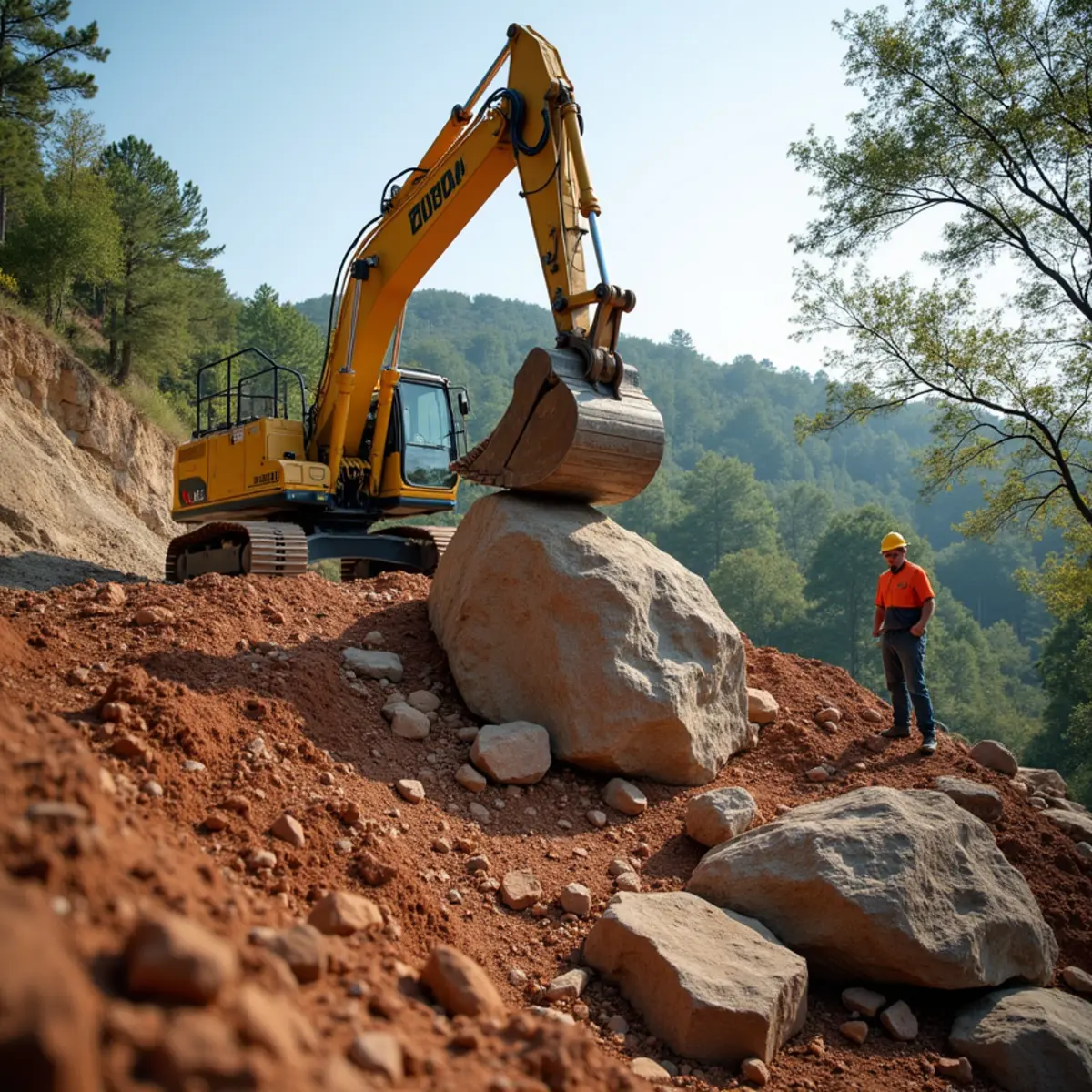
A lot where a dump truck and mini-excavator can reach the patio footprint directly keeps material costs efficient because stone and base aggregate get placed close to where they are used.
A backyard reachable only through a side gate, down a set of stairs, or across a finished lawn we cannot drive equipment over turns into hand-carried material and buggy runs, which adds labor hours without adding a single square foot of finished patio.
Slope compounds this further. A patio cut into a hillside needs retaining or a stepped design to create a level pad, which is really two projects layered together, excavation and grading first, then the patio itself.
We walk every site before quoting specifically to identify access constraints, because a generic per-square-foot number from a website calculator has no way to account for a lot where the only truck route in crosses a steep gravel drive that a loaded tri-axle cannot safely climb.
On some estate lots around Helen, we bring in a smaller tracked dumper to shuttle material from a staging area near the road down to the patio site in stages, which adds time but is still faster and less disruptive than hand-carrying every load.
- Direct truck and excavator access to the footprint keeps material delivery costs efficient
- Gated, stepped, or narrow-access lots shift material handling to slower hand or buggy labor
- Sloped patio sites often require retaining or terracing as a first phase before the patio itself
- Staging areas near the road for material drop, then shuttle equipment to the actual site, add a labor step on the steepest lots
- We confirm access on a walk-through before quoting, since it changes the number more than stone choice does
Flagstone vs Pavers vs Poured Concrete: Where the Cost Gap Actually Sits
Crab Orchard flagstone, the stone we set on most mountain patios, carries a labor premium because every flag is individually selected, dry-fit, and sometimes cut to close a joint properly. Read our full flagstone vs concrete paver comparison for a deeper look at how the two systems perform beyond price.
Manufactured concrete pavers have a more predictable per-unit material cost and install faster once the base is compacted and screeded, since there is no fitting puzzle, though the material line item itself often costs more than flagstone tonnage on a comparable footprint.
Poured, stamped concrete is generally the least expensive per square foot up front on a flat, accessible site, but it does not tolerate North Georgia's shrink-swell clay as gracefully. Control joints crack unevenly over time, and a cracked slab is a full-panel repair rather than an isolated fix.
We do not recommend chasing the lowest material cost on a patio that pairs with a stone fire pit and flagstone build, since mismatched materials on adjoining hardscape features read as two separate projects rather than one cohesive outdoor space.
Directional guidance only, and every job gets priced after we see the site: flagstone tends to run toward the upper end of the range due to labor, pavers land in the middle with faster installation offsetting material cost, and poured concrete sits lower up front but carries a real long-term maintenance tradeoff on this soil.
Drainage: The Cost Nobody Budgets For Until It Floods
A patio with no plan for where water goes once it hits the surface is a patio that will eventually pond, stain, or wash material out from under a low edge.
We grade a minimum of one-eighth inch of fall per foot away from the house into the compacted base itself, not just relying on surface joints to carry water where it needs to go.
On patios built near a slope or a low point in the yard, we sometimes tie in a short run of red clay drainage and french drain piping along the low edge to intercept water before it ever reaches the patio surface, which is a separate line item from the patio build but pays for itself the first time a summer thunderstorm dumps two inches in an hour.
Homeowners who skip this step to save money upfront almost always call us back within two or three seasons once standing water starts undermining a joint or migrating fines beneath the base.
Get an Honest On-Site Patio Estimate
We walk your lot in Clarkesville, Cleveland, or Helen, assess access, slope, and existing drainage, and give you a written, line-item estimate rather than a generic online number.
Call (323) 606-0255 for a free on-site patio assessment before you compare bids that may not be pricing the same base, access, or drainage work.
Frequently Asked Questions
- There is no single fair number that applies everywhere. Directional ranges run roughly $18 to $35 per square foot depending on stone type, base depth, and access, and a mountain lot with limited truck access or real slope will land toward the higher end regardless of material choice.
Get Expert Help on Your North Georgia Property
Kipps Kustom Landscapes has spent 15+ years solving exactly these challenges across the Blue Ridge foothills. Call for a free on-site estimate.
Call (323) 606-0255
Written by
Hunter Kipps — Owner & Lead Craftsman
Hunter Kipps has spent 15+ years building and repairing mountain and lakefront landscapes across Northeast Georgia — boulder retaining walls, shoreline riprap, red-clay drainage, and estate stonework. He personally runs the heavy equipment and walks every site before quoting it.