DIY vs Professional Risks & Safety Standards
Why Stacking Big Boulders Yourself Can Be a Catastrophic Mistake
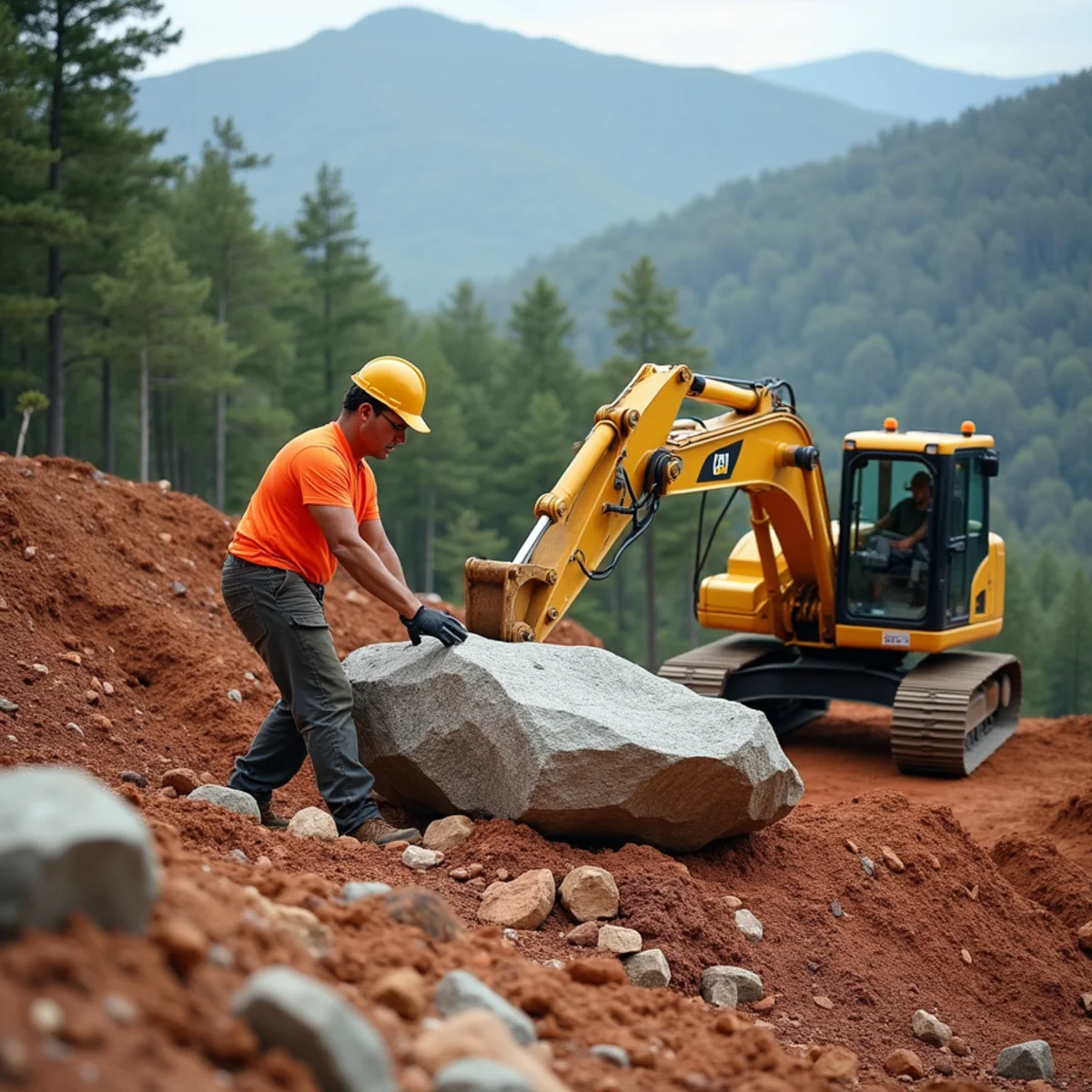
The Sheer Weight of Mountain Granite (1,000-3,000 lb Stones)
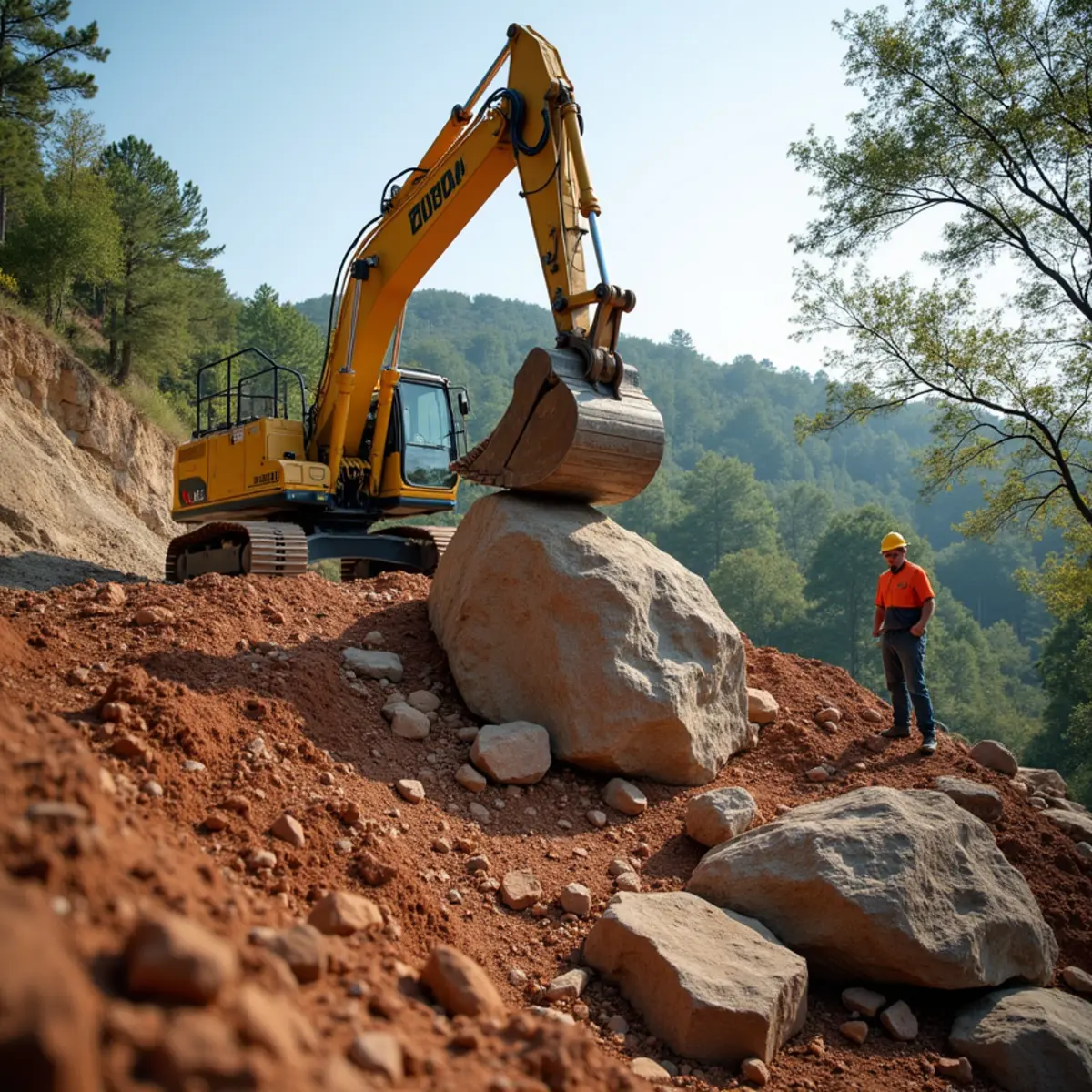
Stacking boulders yourself is dangerous because a single retaining-wall stone weighs 1,000 to 3,000 pounds, far beyond what a rented mini-excavator's rated lift capacity safely handles at full reach, and a wall stacked without proper batter or a trenched base can collapse or crush someone during placement. Professional equipment and technique are not optional here.
A single decorative-sized boulder for a mountain retaining wall typically weighs 1,000 to 3,000 pounds, and larger base stones on a tall wall can run heavier still, numbers that make hand-stacking simply impossible and put any DIY attempt squarely into heavy-equipment territory.
Homeowners around Mount Airy sometimes start with landscape rock the size a pickup truck can haul, not realizing that stones light enough to move by hand or with a tailgate lift do not have the mass to function as a real gravity retaining structure.
A wall built from undersized stone might hold for a season, but it lacks the tonnage to resist hydrostatic pressure once the clay behind it saturates in a wet North Georgia spring.
Weight also determines how a stone has to be handled at every stage, from the quarry pallet to the truck bed to final placement. A 2,000 pound boulder cannot be nudged into final position by hand the way a 200 pound landscape rock can, so the entire placement sequence has to be planned around the machine's reach and lift capacity before the stone ever leaves the truck.
We select stone by weight class for each course of a wall, using the heaviest boulders at the base where they anchor the structure and generally lighter, though still substantial, stones toward the top, a distribution that both improves stability and matches how the machine's lift capacity naturally tapers as the wall rises and the reach extends.
Even the delivery step carries real risk without the right equipment. Rolling a multi-hundred-pound boulder off a tailgate by hand, rather than unloading it with a grapple or forks rated for the load, is how many DIY injuries happen before the wall has even started.
Crush Injuries and Machinery Limitations
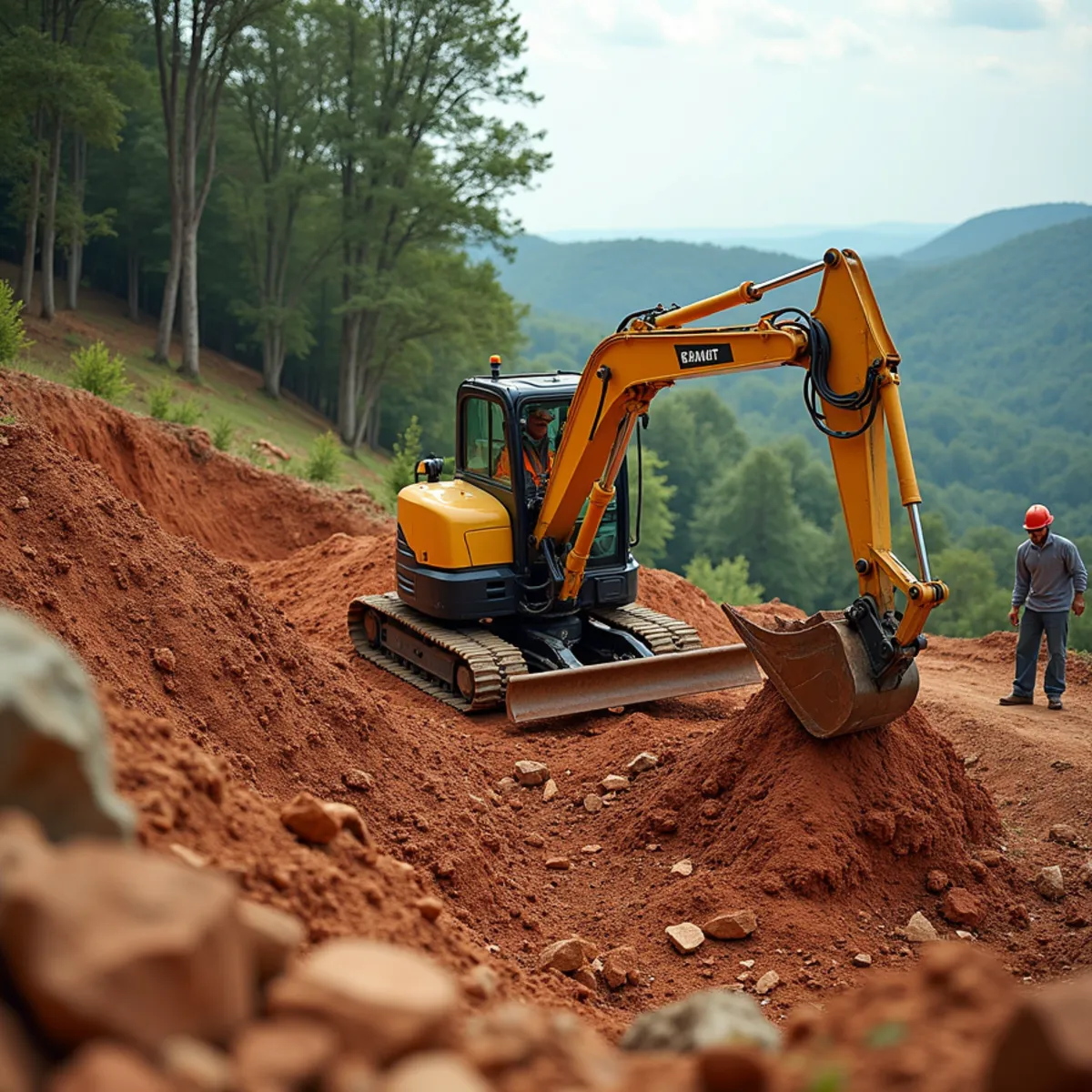
Rented mini-excavators and skid steers are rated for specific lift capacities at specific reach distances, and those numbers drop sharply the further the boom extends, a chart most rental counters hand over without walking through.
Attempting to place a boulder near the edge of a machine's rated capacity, or using chains and straps not rated for the load, is how crush injuries happen. A shifted or dropped multi-hundred-pound stone gives a person almost no time to react.
Our crews use excavators matched to the stone size being placed that day, with rigging rated well above the load, and operators who set each stone with the bucket rather than relying on hand-guiding a suspended boulder into final position.
We also keep everyone but the operator clear of the fall radius while a stone is in motion, a discipline that is easy to state and surprisingly easy for a DIY crew of friends and family to forget once several stones are placed without incident and the job starts to feel routine.
Ground stability under the machine itself is part of the safety picture too. We check that the excavator's own footing is on compacted, level ground before lifting a heavy stone, since a machine settling unevenly mid-lift on soft backfill can shift the load unexpectedly even with a rated, properly rigged boulder.
Failing to Batter: Vertical Stacks Collapse
A boulder wall has to lean back into the hill as it rises, typically about 2 inches of setback per foot of height, so gravity locks each course against the one beneath it. A wall stacked plumb, straight up and down, has nothing holding the upper courses against outward soil pressure.
We regularly get called to look at a DIY wall that just fell over within a year, and in nearly every case the stones were stacked vertically instead of battered, so the wall was never actually stable, it was just temporarily balanced.
Battering also has to increase with wall height and with the amount of soil the wall is expected to hold back. A short 2-foot garden wall can get away with a modest lean, but a wall approaching 5 or 6 feet, retaining a genuine surcharge load from a driveway or a graded pad above it, needs a steeper batter and often a wider base course to generate enough resisting force.
Interlocking the individual stones within each course matters just as much as the overall batter angle. Setting each boulder so it bears against its neighbors on both sides, rather than sitting as an isolated block with gaps, distributes load laterally across the wall face instead of concentrating stress on any single stone.
Lack of Base Trenching
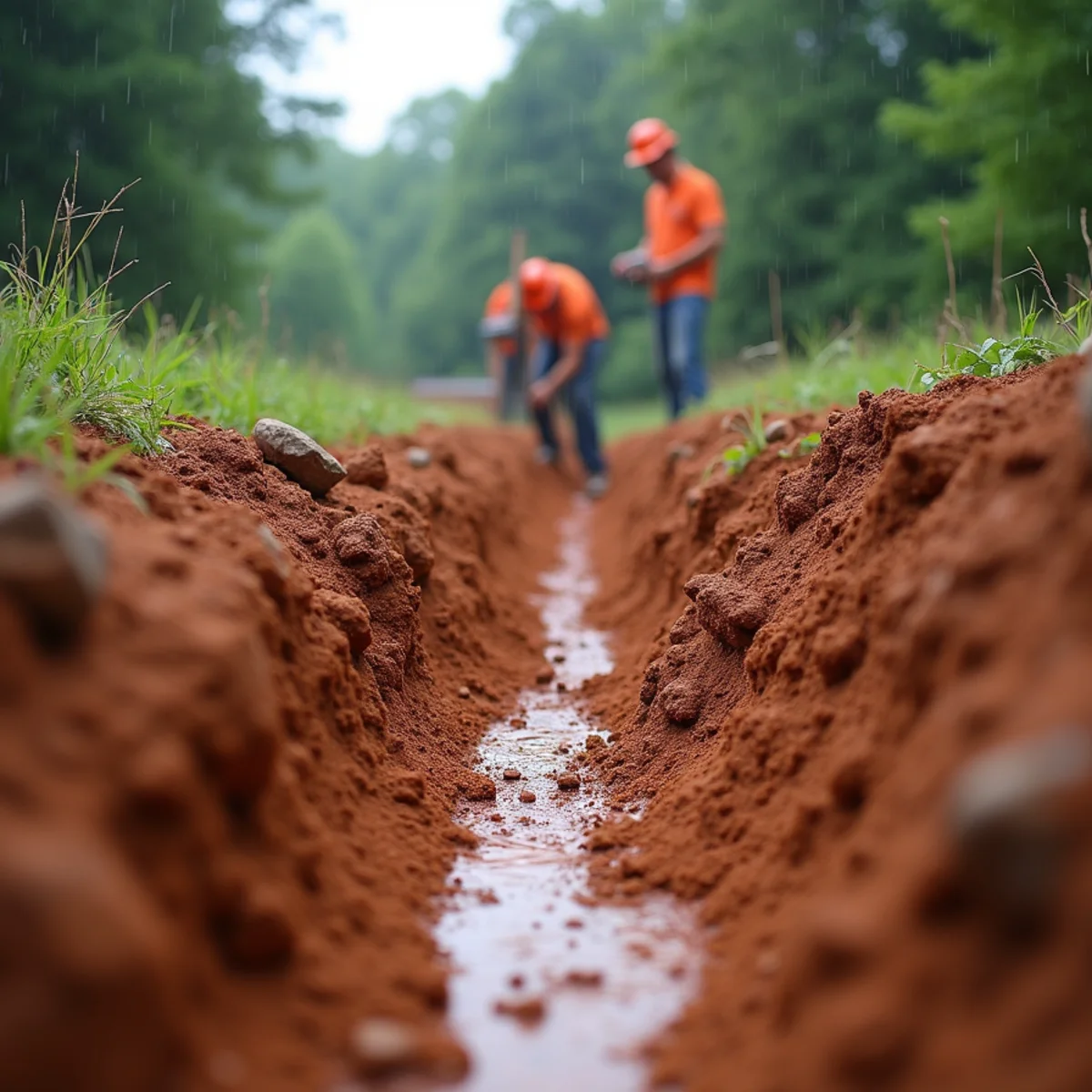
Every course above grade depends on the base course being buried and level. Skipping a trenched, compacted footing means the first course, and everything stacked on it, is sitting on undisturbed or loose surface soil that will settle unevenly.
We excavate a base trench below the frost line and the topsoil layer, compact it, and often add a gravel leveling pad before the first stone ever goes in, which is invisible in the finished wall but is the entire reason it stands.
We also build in a drain layer behind the base course as part of that same excavation step, connecting to weep gaps left between stones higher up the wall, so hydrostatic pressure never has the chance to build up behind the structure in the first place. A wall with no planned drainage is really just waiting for the first saturating storm to prove the point.
- Proper batter, about 2 inches of setback per foot of height, increasing on taller walls
- A trenched, compacted base below the frost line and topsoil layer
- Stones sized and rigged within the excavator's rated lift capacity at the actual reach
- Heaviest boulders placed at the base course, tapering to lighter stones upward
- A drain layer and weep gaps built in behind the wall as it rises
The Value of Experienced Machine Operators
Placing a boulder wall well is a skill built over hundreds of stones, not a technique you absorb from a video. It means reading how a stone wants to sit, matching faces for a tight fit, and building in drainage as you go rather than as an afterthought.
On taller or more technical walls, this is also where structural shoring expertise matters, especially when a wall is supporting a driveway, a structure, or a slope that has already shown signs of movement around Dahlonega.
An experienced operator also reads face grain and natural fracture lines in each stone before setting it, orienting the most visually interesting face outward and turning any weak fracture plane inward and downward where the load of the courses above will actually help hold it together rather than split it.
Get a Boulder Wall Built Right
A boulder retaining wall built without batter, base trenching, and properly sized stone is not a shortcut, it is a wall waiting to fail on someone's schedule instead of yours, and a failed wall almost always costs more to fix than it would have cost to build correctly the first time.
Call (323) 606-0255 and let our crews build it once, correctly, in Clarkesville, Mount Airy, and across the foothills.
Frequently Asked Questions
- A typical decorative retaining wall boulder weighs 1,000 to 3,000 pounds, with larger base stones on taller walls running heavier. This is why placement requires an excavator, not manual labor.
Get Expert Help on Your North Georgia Property
Kipps Kustom Landscapes has spent 15+ years solving exactly these challenges across the Blue Ridge foothills. Call for a free on-site estimate.
Call (323) 606-0255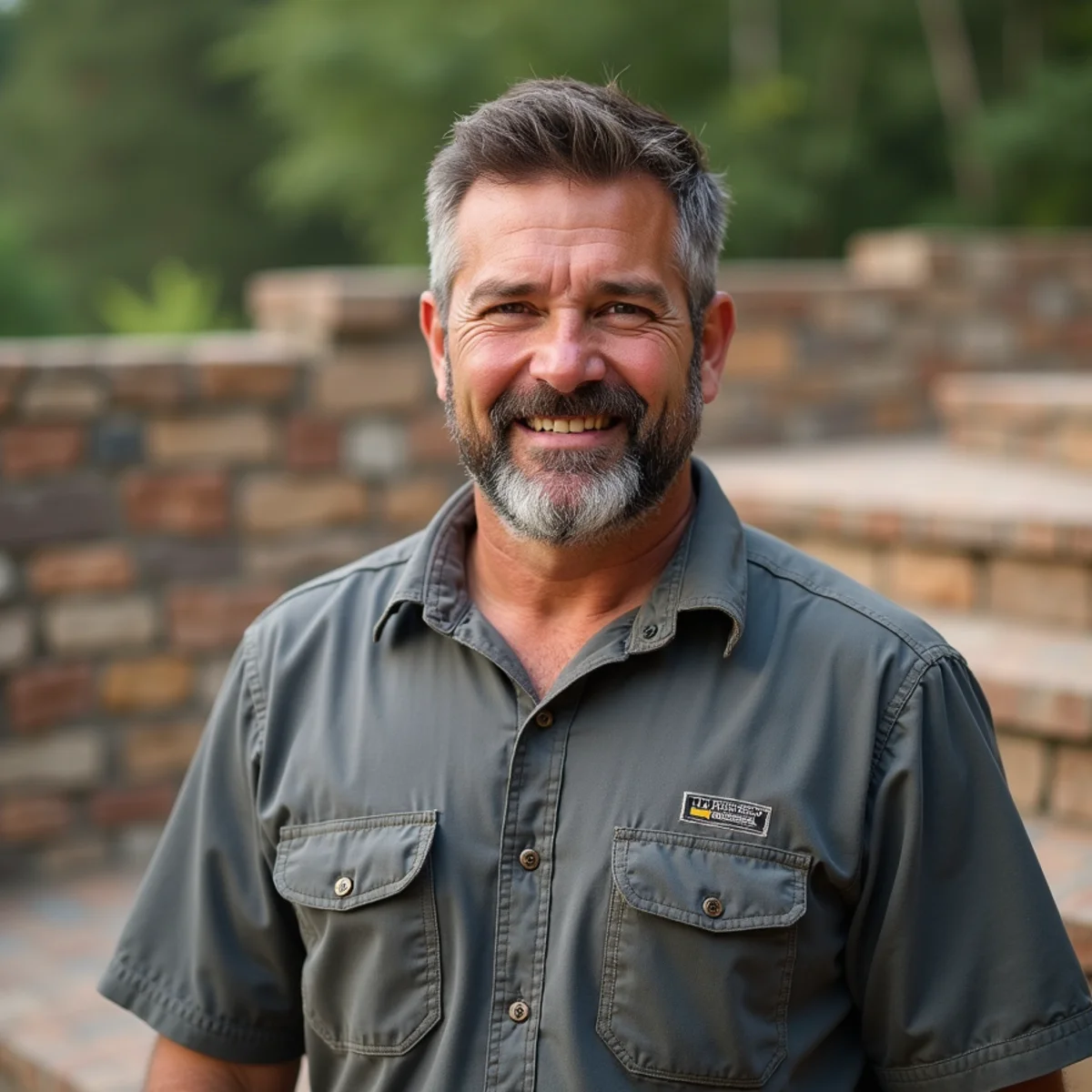
Written by
Hunter Kipps — Owner & Lead Craftsman
Hunter Kipps has spent 15+ years building and repairing mountain and lakefront landscapes across Northeast Georgia — boulder retaining walls, shoreline riprap, red-clay drainage, and estate stonework. He personally runs the heavy equipment and walks every site before quoting it.