DIY vs Professional Risks & Safety Standards
The Hidden Dangers of DIY Hillside Excavation in North Georgia
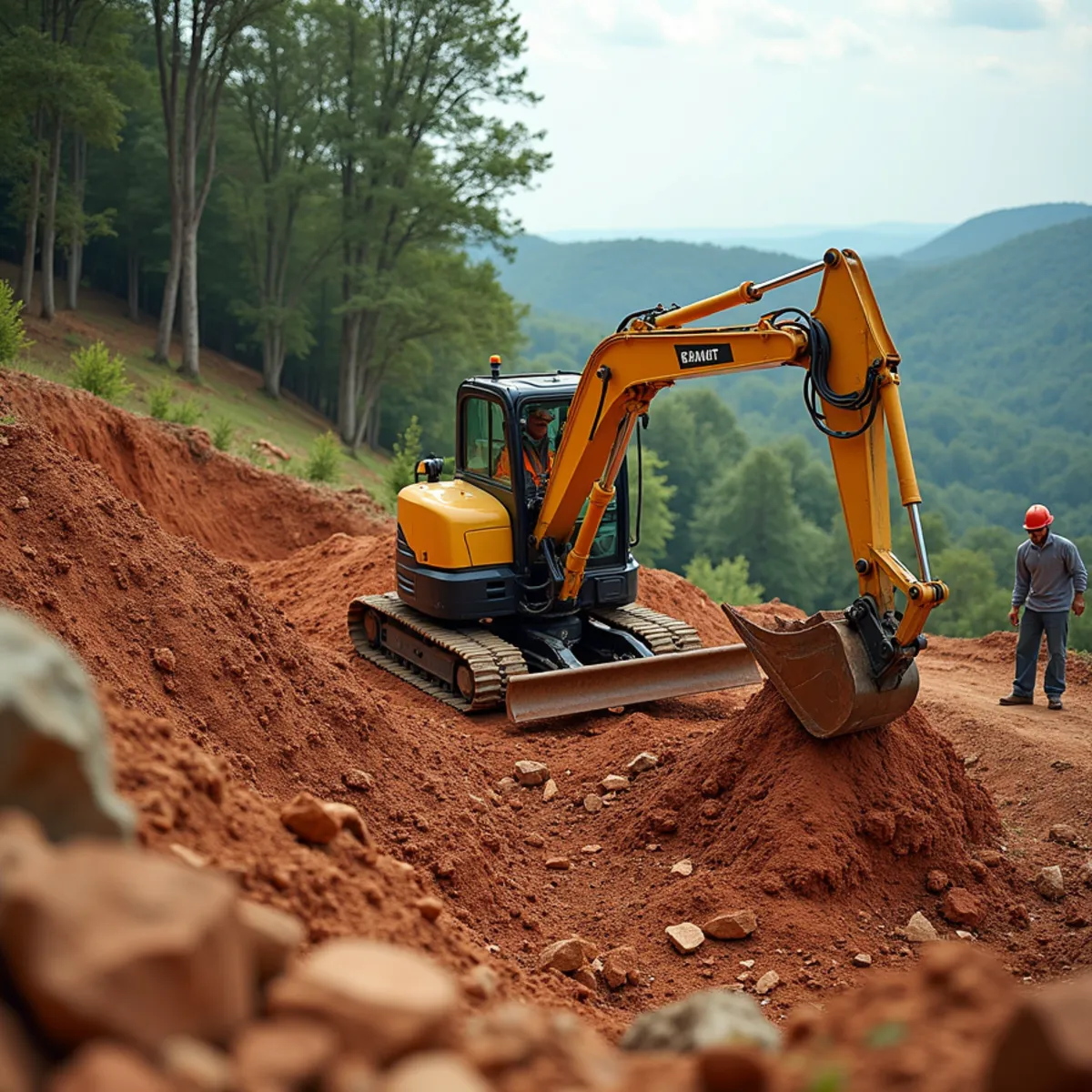
Equipment Rollover Hazards
DIY hillside excavation in North Georgia carries four serious hazards: equipment rollover on steep grades, undermining upper slopes and triggering landslides, striking unmarked buried utilities, and violating Georgia's EPD erosion and sedimentation rules. Any one can cause injury, property damage, or a stop-work order.
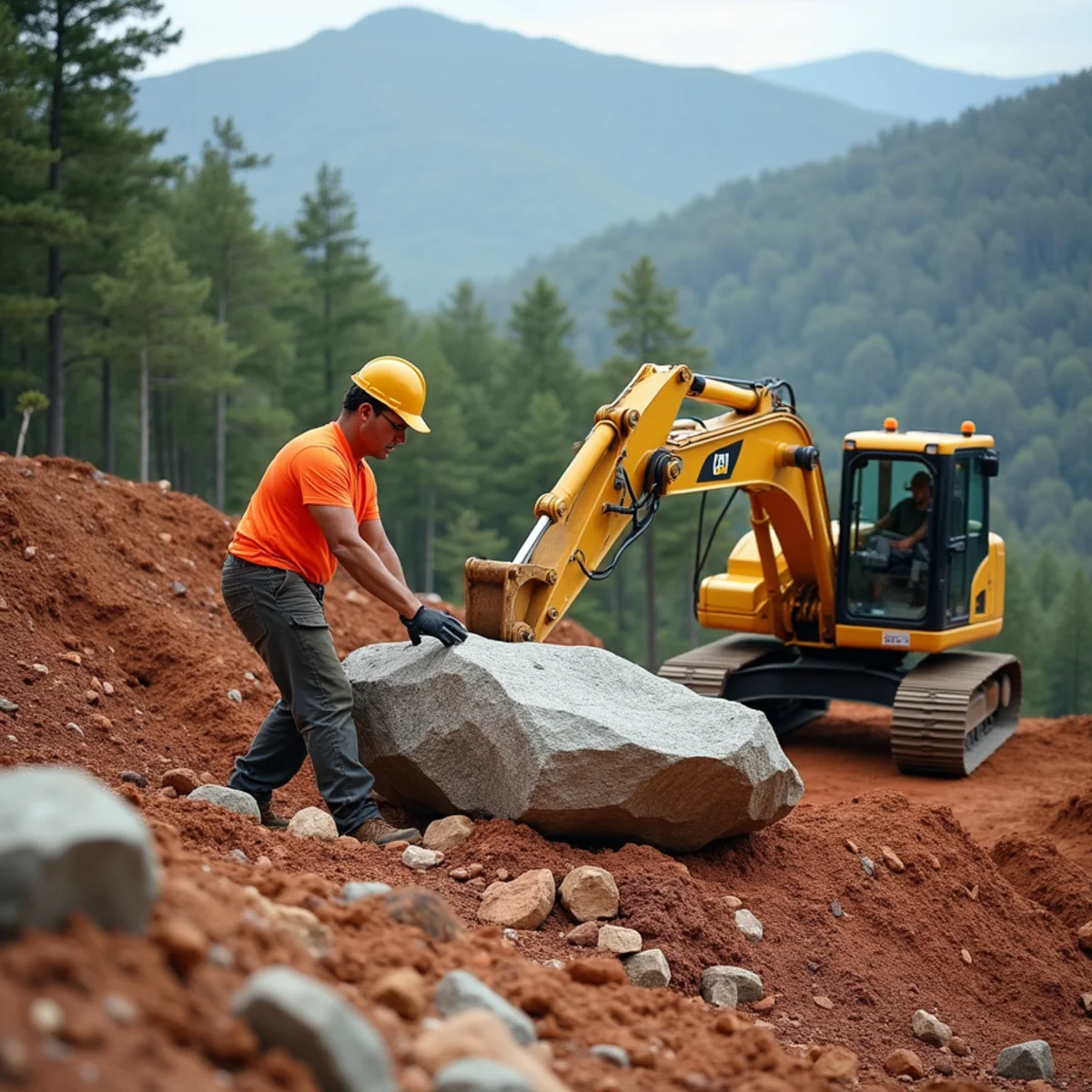
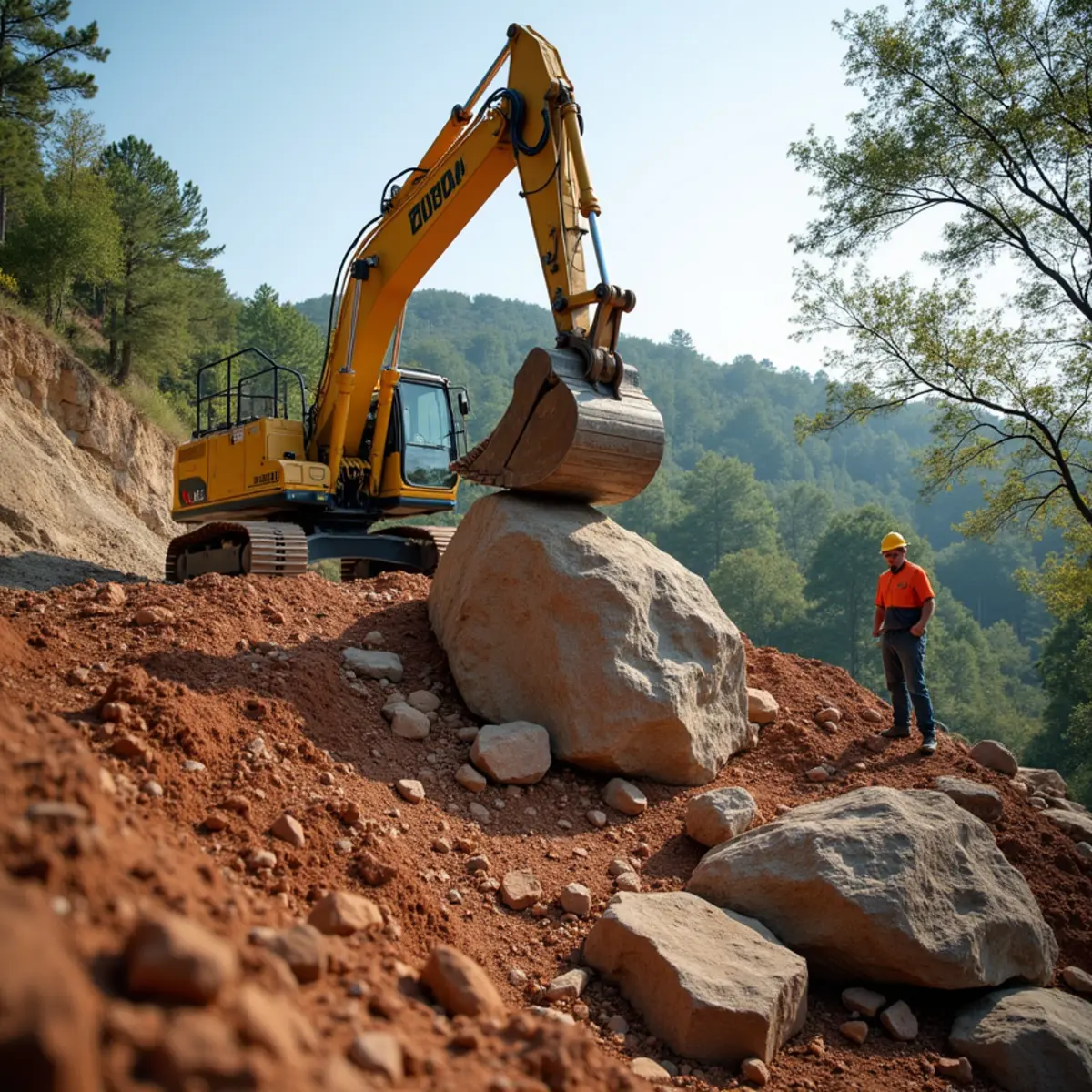
A rented mini-excavator or skid steer on a slope over roughly 15 degrees is operating in rollover territory, and North Georgia mountain lots routinely run steeper than that.
Machines are rated for operation on specific maximum grades, and those ratings drop further once the bucket is loaded or swung to the downhill side, a detail most rental counters never walk a first-time operator through.
We see rollover incidents on hobbyist excavation jobs almost every year around Clayton and Cleveland, usually on lots where the homeowner underestimated how much steeper the grade felt under a tracked machine than it looked walking it.
Professional operators run these machines daily, know how to read a slope before the bucket ever touches ground, and use spotter protocols and cribbing when a cut has to happen on a genuinely marginal grade.
We also match track width and undercarriage type to the specific ground conditions on a given cut. A wider, longer track pattern lowers ground pressure and improves stability on wet clay, while a narrower rental unit chosen for gate clearance can be exactly the wrong machine for the slope it ends up working.
Fatigue and unfamiliarity compound the risk further. A weekend DIY operator working a machine for the first time is making judgment calls about slope, bucket load, and swing radius simultaneously, decisions a professional operator makes almost automatically after thousands of hours, and that gap in reaction time is exactly where rollover incidents happen.
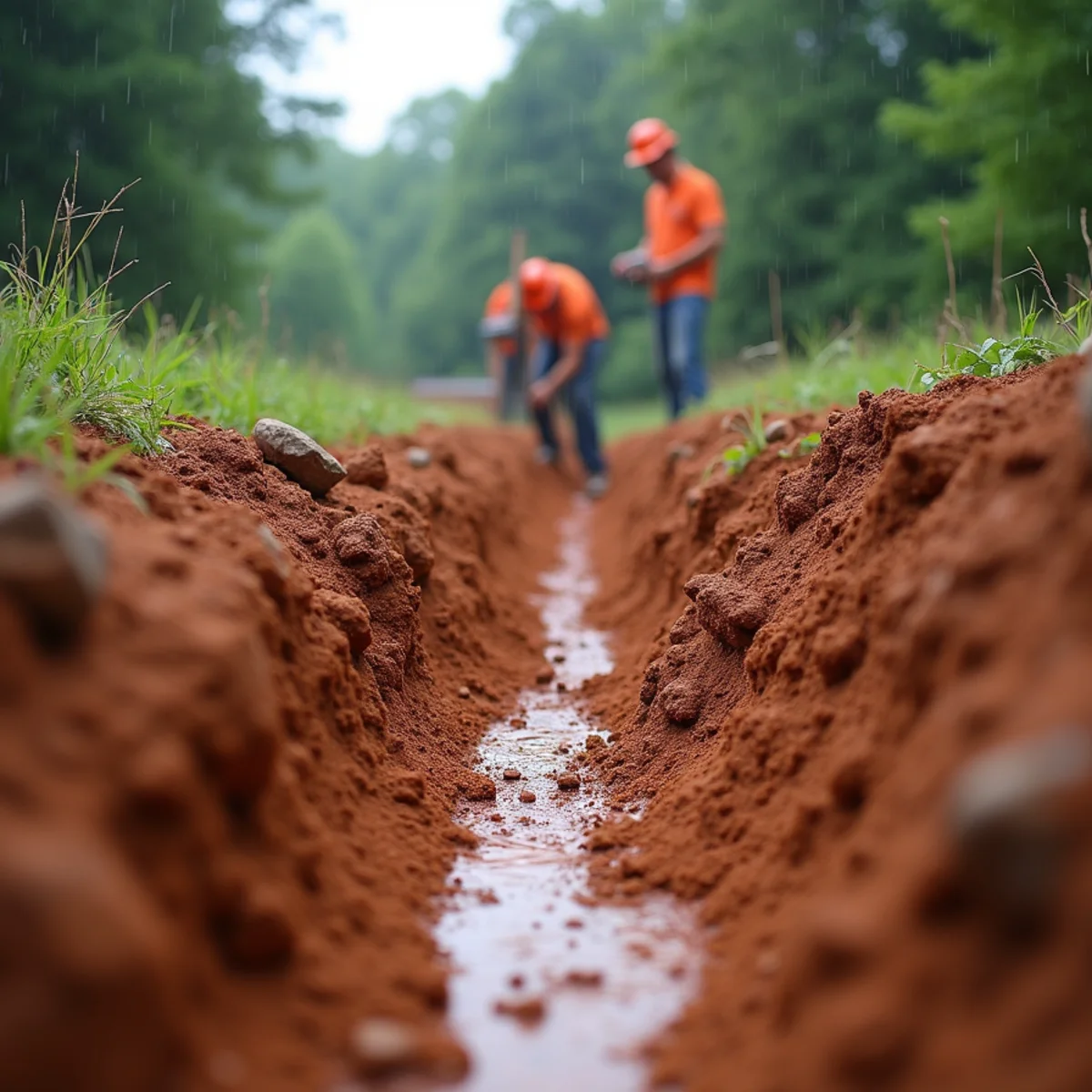
Weather compounds the equipment risk too. A slope that felt firm and stable on a dry Saturday morning can turn genuinely treacherous under track by afternoon if an unexpected mountain shower rolls through, since red clay loses traction fast once its surface film goes from damp to saturated, a shift that can happen in under an hour during a summer storm.
Undermining Upper Slopes and Triggering Landslides
Cutting into the toe of a slope to level a pad or widen a driveway removes the material that was physically holding the hillside above it in place, and on saturated clay that support can be the only thing standing between a stable yard and a slide.
We have responded to emergency hillside washout calls that trace directly back to a DIY cut at the base of a slope that looked fine for months until a heavy rain event saturated the newly exposed clay face and it let go.
A trained excavation crew evaluates the whole slope profile, not just the pad being cut, and benches or terraces the cut to keep the upper slope supported rather than creating a vertical face that clay simply cannot hold once wet.
Saturated red clay loses shear strength dramatically compared to dry clay, which is why the failures we respond to almost always follow a multi-day rain event rather than showing up immediately after the cut was made. The slope can look stable for weeks before it finally lets go.
The angle of repose for undisturbed North Georgia clay, the steepest slope it can hold on its own without support, is far shallower than most people assume, often well under 45 degrees once saturated. Cutting a vertical or near-vertical face into that same clay, even temporarily during construction, leaves it structurally unsupported the moment a hard rain arrives.
Buried Mountain Utilities
Water lines, septic fields, propane lines, and buried electrical service on rural mountain lots are often installed without the depth or marking consistency you would find in a subdivision, and older properties may have utility runs that predate any as-built drawing at all.
Georgia's 811 call-before-you-dig system marks known utilities, but private lines, such as a well line, a septic field, or a buried propane tank feed, frequently are not in that system and only show up when a bucket finds them.
We hand-expose known utility corridors before running heavy equipment through them and carry the insurance to cover a strike if an unmarked private line turns up anyway, something a weekend DIY project has no protection against.
A severed septic line or a struck propane feed on a rural mountain property is not just an expensive repair, it can be a genuine safety hazard, and the remote location of many of these lots means it may take longer for emergency services to respond than it would in town.
Older mountain cabins and second homes are particularly prone to undocumented utility runs, since additions, well replacements, or septic system upgrades over decades often were not recorded with the county, leaving whatever paperwork exists incomplete by the time a new owner plans an excavation project.
Violating Georgia EPD Erosion & Sedimentation Act
Georgia's Erosion and Sedimentation Act requires a sediment and erosion control plan for any land-disturbing activity over one acre, and many local governments in the foothills apply stricter thresholds on steep terrain even below that size.
Disturbing soil on a slope without silt fencing, a stabilized construction exit, or a plan for stormwater during construction can trigger a stop-work order and fines from the local issuing authority if sediment leaves the site into a stream or storm system.
We pull the required permits and install code-compliant erosion control before the first cut on any hillside excavation or slope terracing job, which is not optional paperwork, it is what keeps the county from shutting the job down mid-project.
Even projects that stay under the one-acre threshold can draw a complaint-driven inspection if sediment visibly leaves the property, and a first-time DIY excavator has no established relationship with the local issuing authority to work through a violation the way an established contractor does.
We maintain standing relationships with the building and planning offices across the counties we work in, which means an inspection is typically a routine check-in rather than an adversarial event, and any correction needed gets resolved on-site rather than escalating into a formal notice of violation.
How Professional Terracing Creates Safe Space
Terracing breaks a steep slope into a series of shorter, retained steps instead of one long unsupported cut, distributing the load across multiple shorter walls rather than betting everything on one tall, risky face.
Each terrace gets its own drainage plan so water is captured and directed at every level rather than sheeting down the whole hillside and concentrating force at the bottom, which is usually where the house sits.
Done correctly, terracing turns unusable steep ground into functional yard space, a level lawn pad, a garden terrace, a parking apron, while actually reducing the landslide risk that was there before any work started.
We tie the retained face of each terrace into a boulder retaining wall sized for its specific height and load, rather than one continuous wall trying to hold the entire slope at once, which is both safer to build and easier to maintain over the life of the property.
- Evaluate the full slope profile before cutting, not just the pad being leveled
- Bench or terrace the cut so the upper slope stays supported
- Give each terrace its own drainage plan instead of one long sheet-flow slope
- Tie each terrace's retained face into a boulder wall sized for its specific load
- Confirm erosion control and permits are in place before the first cut
Hire Licensed Excavation Specialists
This is not a job to learn on your own hillside. We bring insured operators, permitted erosion control, and slope engineering judgment to every excavation project across Clarkesville, Cleveland, and Clayton.
Call (323) 606-0255 before you rent equipment for a cut you are not sure how to grade safely.
Frequently Asked Questions
- Most compact excavators lose stability well before a 15 degree grade once the bucket is loaded or swung downhill, and many North Georgia mountain lots exceed that grade in the very areas homeowners want to cut.
Get Expert Help on Your North Georgia Property
Kipps Kustom Landscapes has spent 15+ years solving exactly these challenges across the Blue Ridge foothills. Call for a free on-site estimate.
Call (323) 606-0255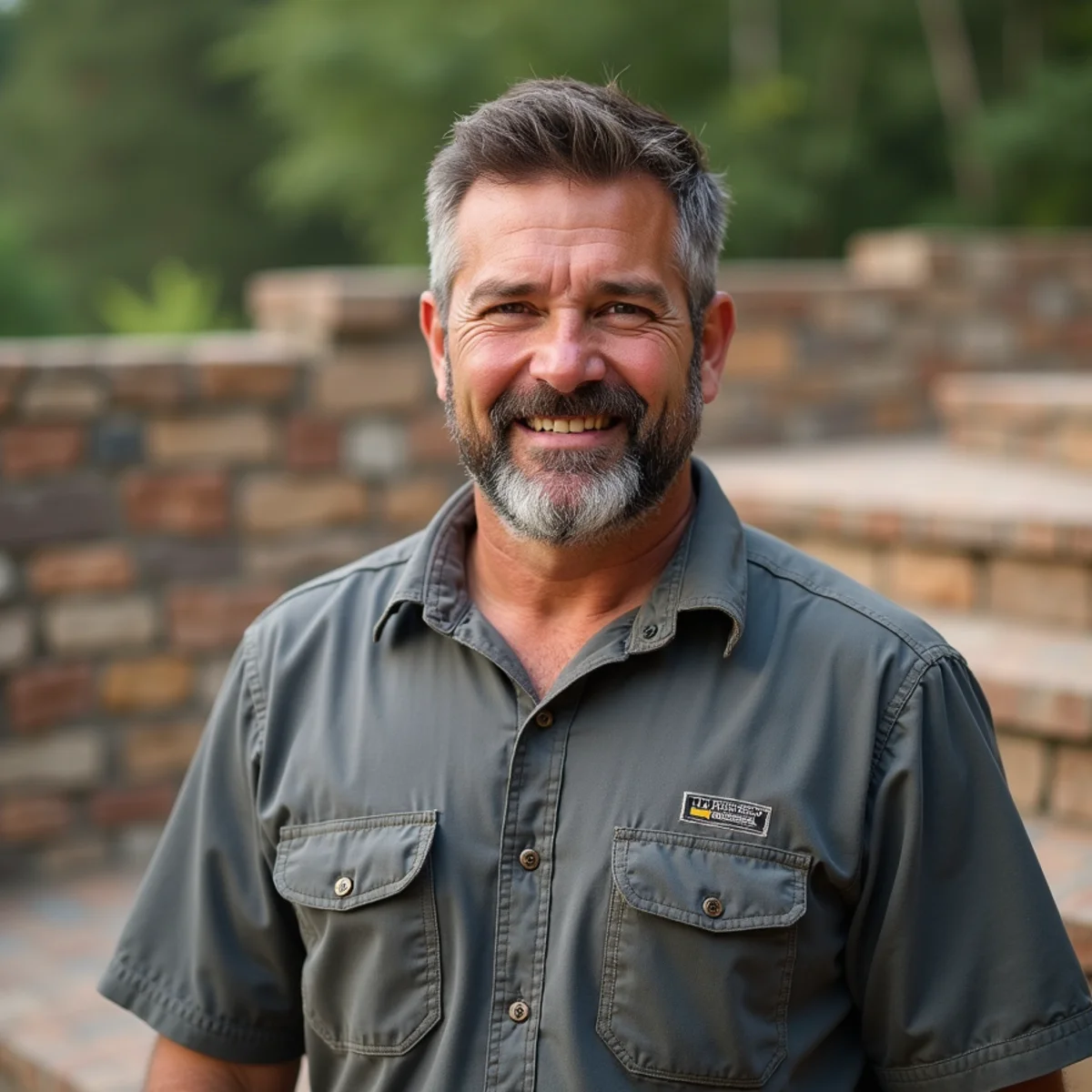
Written by
Hunter Kipps — Owner & Lead Craftsman
Hunter Kipps has spent 15+ years building and repairing mountain and lakefront landscapes across Northeast Georgia — boulder retaining walls, shoreline riprap, red-clay drainage, and estate stonework. He personally runs the heavy equipment and walks every site before quoting it.