
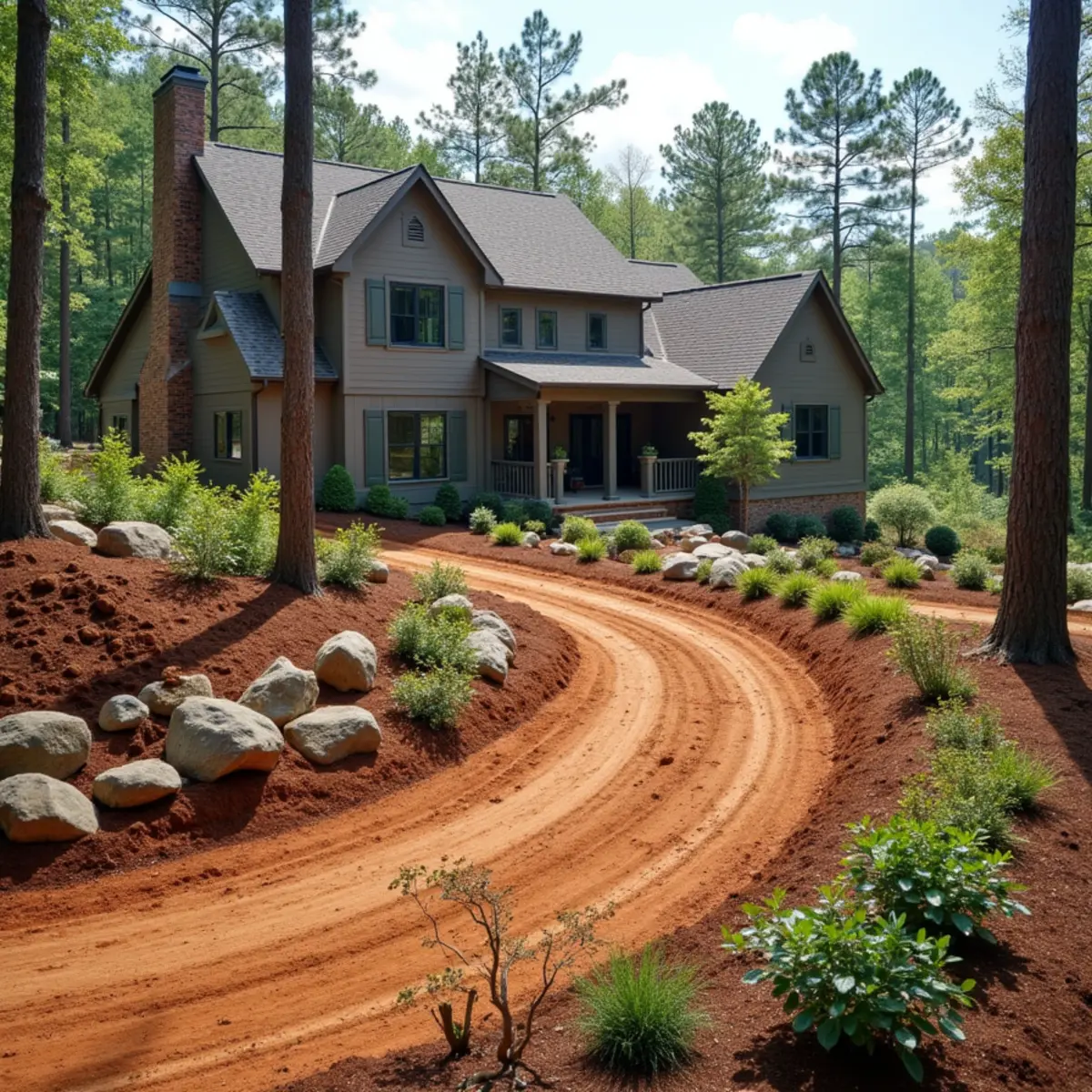
Agricultural Parcels Fighting Invasive Growth
Raoul's mix of pasture, small farms, and larger residential lots means a lot of ground sits at the edge of active management, mowed and maintained near the house, then increasingly overgrown toward the property line. Blackberry and multiflora rose briars spread aggressively into that unmaintained margin, along with privet and volunteer pine, and once established, they are nearly impossible to clear with a standard mower or hand tools without months of repeated effort.
We see this most along fence lines and property boundaries in Raoul, where briars have grown up into a dense, thorny wall that makes fence inspection and repair difficult and eventually starts encroaching on usable pasture or yard space.
Forestry Mulching as the Right Tool for Briars
For this kind of invasive growth, we run forestry mulching equipment rather than a bush hog, because forestry mulching heads grind briars, saplings, and root crowns down in a single pass instead of just knocking down the top growth the way mowing does. That matters specifically for briars, since a bush hog pass alone often leaves root crowns intact and ready to resprout within weeks, while mulching breaks down enough of the root structure to meaningfully set back regrowth.
Mulched material also gets left in place as a ground cover layer rather than hauled off, which helps suppress the next flush of briar seedlings and adds organic matter back into Raoul's clay-heavy soil as it breaks down.
Establishing Clean Perimeter Turf After Clearing
Once a fence line or pasture margin is cleared, we grade out the worst of the root debris, till and amend the exposed soil, and establish a clean perimeter turf using a durable, low-maintenance grass blend suited to Raoul's agricultural setting rather than a high-input residential lawn mix. Where the cleared margin runs along a slope, we add dry creek bed or French drain work as needed, since newly cleared ground with fresh, loose soil is especially vulnerable to erosion until turf establishes.
Raoul's agricultural character sits close to both Fairview and Alto, and we run forestry mulching and clearing jobs through this stretch of the county on a regular basis.
Timing Clearing Work and Post-Clearing Erosion Control
Forestry mulching in Raoul works best scheduled for late fall through winter, after the growing season has ended and briar and privet growth has stopped actively spreading, since clearing dormant vegetation sets back regrowth further than mulching the same ground mid-summer when everything is actively pushing new growth. That timing also avoids the wettest months for equipment access, since heavy mulching machinery on saturated Habersham County clay can rut ground that then needs its own repair before turf establishment can start. We plan most Raoul clearing jobs around that fall-to-winter window when a homeowner's timeline allows it, which sets up spring seeding to hit newly cleared ground exactly when conditions favor fast germination and steady root development through the mild weeks that follow.
Freshly cleared ground is at its most erosion-vulnerable in the weeks immediately after mulching, before any new vegetation has had a chance to root, so we do not treat clearing as a finished job on its own. On any slope, we follow mulching with temporary erosion control, straw matting or a fast-germinating cover crop, to hold the surface through at least one full rain cycle before permanent turf goes in. This staged approach matters most along fence lines that run downhill toward a drainage feature, where bare cleared soil can wash a season's worth of topsoil into a ditch or creek in a single storm if left unprotected. We apply the same staged clearing-to-turf process on the agricultural parcels we serve near Fairview and Alto.
Well water and septic systems are standard on Raoul's agricultural parcels too, so before any forestry mulching or grading job, we confirm drain field and wellhead locations with the property owner, since heavy equipment compacting soil over a septic drain field can cause a far costlier problem than the overgrowth we were called out to clear in the first place.
What a Typical Raoul Project Looks Like
A typical Raoul call starts with a fence line or pasture margin that has been overtaken by blackberry and multiflora rose briars for long enough that mowing alone cannot reclaim it. We walk the boundary, confirm well and septic locations with the owner, and run forestry mulching equipment that grinds root crowns down in a single pass instead of leaving them to resprout.
The second common project is establishing clean perimeter turf after that clearing, paired with French drain or dry creek bed work on any sloped margin, since freshly cleared ground with loose soil erodes fast until new turf takes hold.
Permits, Codes & Compliance for Raoul's Agricultural Parcels
Clearing and burning debris on Raoul's agricultural parcels typically requires a Habersham County burn permit for open burning outside certain exemptions, so we advise property owners to confirm the exact rule with the county or Georgia Forestry Commission before lighting a pile of cleared briars and privet.
Grading that disturbs a larger section of pasture can also fall under Georgia EPD erosion and sediment control requirements, a threshold we check before quoting any large-scale mulching or regrading job, the same review we apply on the acreage work we handle near Fairview and Alto.
Native Plant Palette & Microclimate Notes for Raoul
Once briars and privet are cleared off a Raoul fence line, the exposed clay underneath needs a durable, low-input turf blend suited to agricultural ground rather than a high-maintenance residential lawn mix, since most of these parcels are managing pasture or working acreage, not a manicured yard. We seed with that in mind and pair it with the same forestry mulching approach we use to keep regrowth suppressed while new grass establishes a root system strong enough to hold the ground on its own.
Raoul's mix of open pasture and wooded margins also means sun exposure varies sharply across a single property, so we check which sections actually get full sun before recommending turf versus a shade-tolerant groundcover, the same site-specific approach we apply on the agricultural parcels we serve near Fairview and Alto. That root-first approach is also why we recommend waiting for a full growing season before judging whether a cleared margin has actually taken, rather than reseeding prematurely at the first sign of thin coverage.
Our Services in Raoul
Every core Kipps Kustom Landscapes service is available to Raoul property owners:
Why Raoul Residents Choose Kipps Kustom
Ten Miles From Clarkesville to Raoul's Agricultural Parcels
Raoul sits about 10 miles out, close enough to Fairview and Alto that we run forestry mulching and clearing jobs through this stretch of the county on a regular basis.
15+ Years Running Forestry Mulching Equipment
Grinding briar root crowns rather than just knocking down top growth takes the right machine and the judgment to know when mulching beats a bush hog, refined over more than fifteen years of NE Georgia clearing work.
Own Equipment, No Rental Delay for Briar Clearing
We own our forestry mulching heads, so a Raoul fence line overtaken by blackberry and multiflora rose gets cleared on our schedule, not a rental yard's availability.
4.9-Star Rated, Licensed and Insured for Rural Clearing
Miller Landscaping Group LLC is fully licensed and insured for heavy equipment work on agricultural parcels, backed by a 4.9-star rating across 47 reviews.
Raoul Landscaping FAQs
- Not permanently. Mowing knocks down top growth but usually leaves briar root crowns intact to resprout. Forestry mulching grinds the growth and root crowns down in one pass, which sets back regrowth far more effectively.