Problem Diagnosis, Soil Health & Seasonal Recovery
Why Sod Fails on Mountain Slopes (And How Proper Grading Saves It)
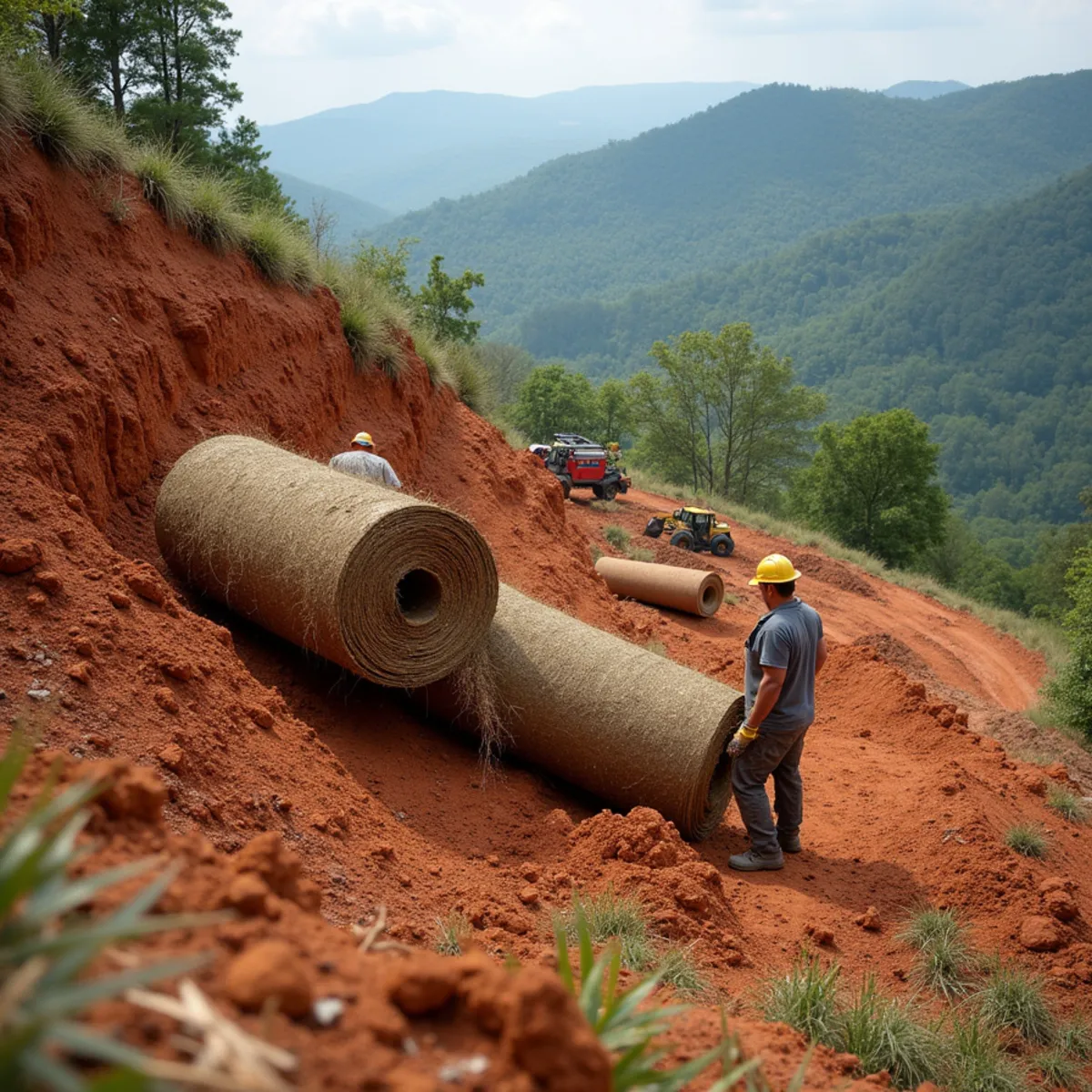
The Problem with Sod on Steep Untreated Red Clay
Sod fails on mountain slopes mainly because it is treated as a planting problem instead of a grading one: fast runoff lifts and shifts unrooted sod before it can anchor, and proper grading, upslope water diversion, staple technique, and terracing on the steepest grades are what actually hold it in place while roots establish.
Laying sod directly onto a steep, ungraded red clay slope treats a structural grading problem as if it were a planting problem, and that mismatch is the root cause of most slope sod failures we get called out to fix. Sod needs several weeks of consistent soil contact for its root system to knit into the ground beneath it, and on an untreated slope, gravity and runoff both work against that root establishment from day one.
Compacted, unamended clay beneath the sod also limits how well roots can penetrate downward even after the sod has technically "taken," leaving a shallow root mat that is much easier for water to lift and slide than a properly established root system reaching several inches into corrected soil.
Slope failure of sod also compounds visually in a way flat-lawn failure does not. On level ground, a struggling patch of sod just looks thin or brown. On a slope, that same struggling patch loses its ability to hold the soil beneath it, so a sod failure on a hillside often becomes an active erosion problem, not just a cosmetic one, within a single growing season.
Water Runoff Velocity Washing Away Roots
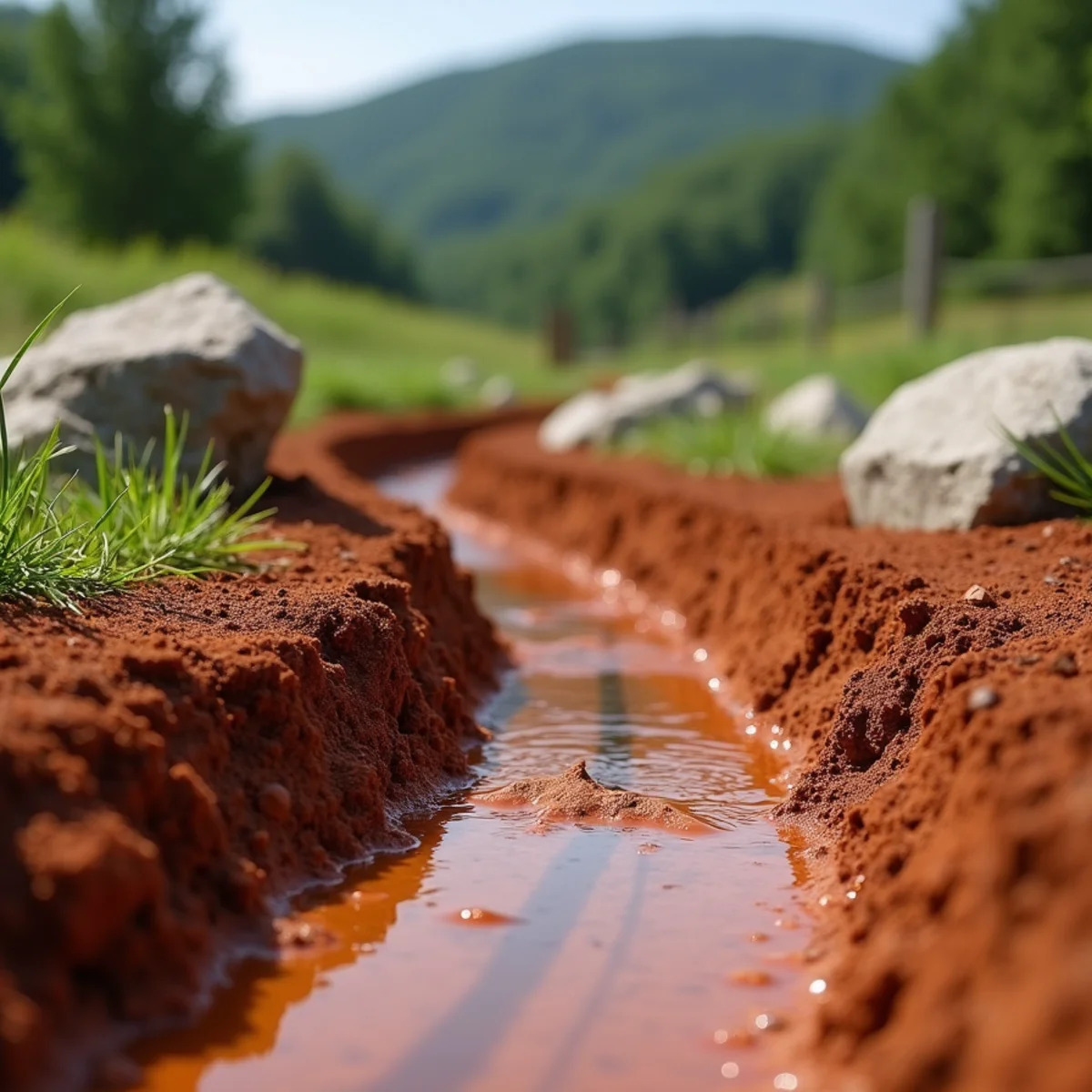
On grades above roughly 15 to 20 percent, rainfall runoff accelerates enough to physically lift and shift newly laid sod before roots have time to anchor it, particularly during the vulnerable first two to three weeks after installation. Water moving under a sod strip erodes a channel beneath it, and once that channel forms, entire strips can slide downhill in a single hard rain.
This is a velocity problem, not just a rainfall total problem - two lots receiving identical rainfall can see very different sod outcomes depending on how steep the grade is and whether upslope water has been diverted away from the newly sodded area during the establishment period.
Concentrated flow paths make this worse than distributed sheet flow. Water that would otherwise spread evenly across a slope instead channels toward low points - a wheel rut left from installation equipment, a slight depression between sod strips - and that channelized flow moves faster and carries more erosive energy than the same total water volume spread evenly across the surface.
Upslope water that has nowhere else to go compounds the problem further. A slope that receives runoff from a driveway, a roof without gutters, or a neighboring lot above it is effectively being asked to establish sod while absorbing more water than the rainfall on that slope alone would produce, which is why diverting upslope flow around a newly sodded area is often as important to establishment success as anything done to the sod itself.
Sod Stapling on 20%+ Grades
On slopes exceeding roughly 20 percent grade, biodegradable sod staples driven through each sod strip into the underlying soil are standard practice to hold sod in place mechanically while roots establish, rather than relying on soil contact and gravity alone. Staple spacing and pattern matter - a few staples per strip placed haphazardly will not hold against real runoff force the way a proper grid pattern will.
Staples alone will not save sod laid on an improperly graded slope, though. They buy time for root establishment; they do not correct an underlying erosion or drainage problem that will eventually undermine even well-stapled sod if the water source feeding the slope is not addressed.
Staple length matters as much as pattern. A staple too short to reach solidly into undisturbed soil beneath the sod and any loosened topsoil layer can pull free under load rather than holding, particularly on slopes where the top few inches of soil have been freshly tilled and are themselves less cohesive than settled, undisturbed ground.
- Drive biodegradable staples through each sod strip on grades above roughly 20 percent
- Use a consistent grid pattern rather than a few scattered staples per strip
- Choose staple length that reaches solidly into undisturbed soil, not just the loosened topsoil
- Divert upslope runoff around the newly sodded area before it reaches the slope
- Pair staples with erosion control blankets on the steepest, most exposed sections
Erosion Control Blankets and Netting: A Companion to Staples
On the steepest sod applications, biodegradable erosion control blankets - typically a straw or coconut-fiber mat held in a photodegradable or biodegradable netting - are sometimes installed either beneath the sod on bare soil ahead of seeding, or used in combination with sod staples on the most exposed sections of a slope, to add an extra layer of surface protection against runoff while roots establish.
These blankets work by absorbing rainfall impact energy directly, reducing the splash erosion that dislodges soil particles at the surface, and by physically slowing surface water velocity enough to let sediment settle rather than wash downhill. They break down naturally over a season or two as vegetation takes over the erosion control function, so they are a temporary tool rather than a permanent slope treatment, but on a difficult grade they meaningfully improve the odds of successful establishment.
Pre-Sod Terracing and Topsoil Blending
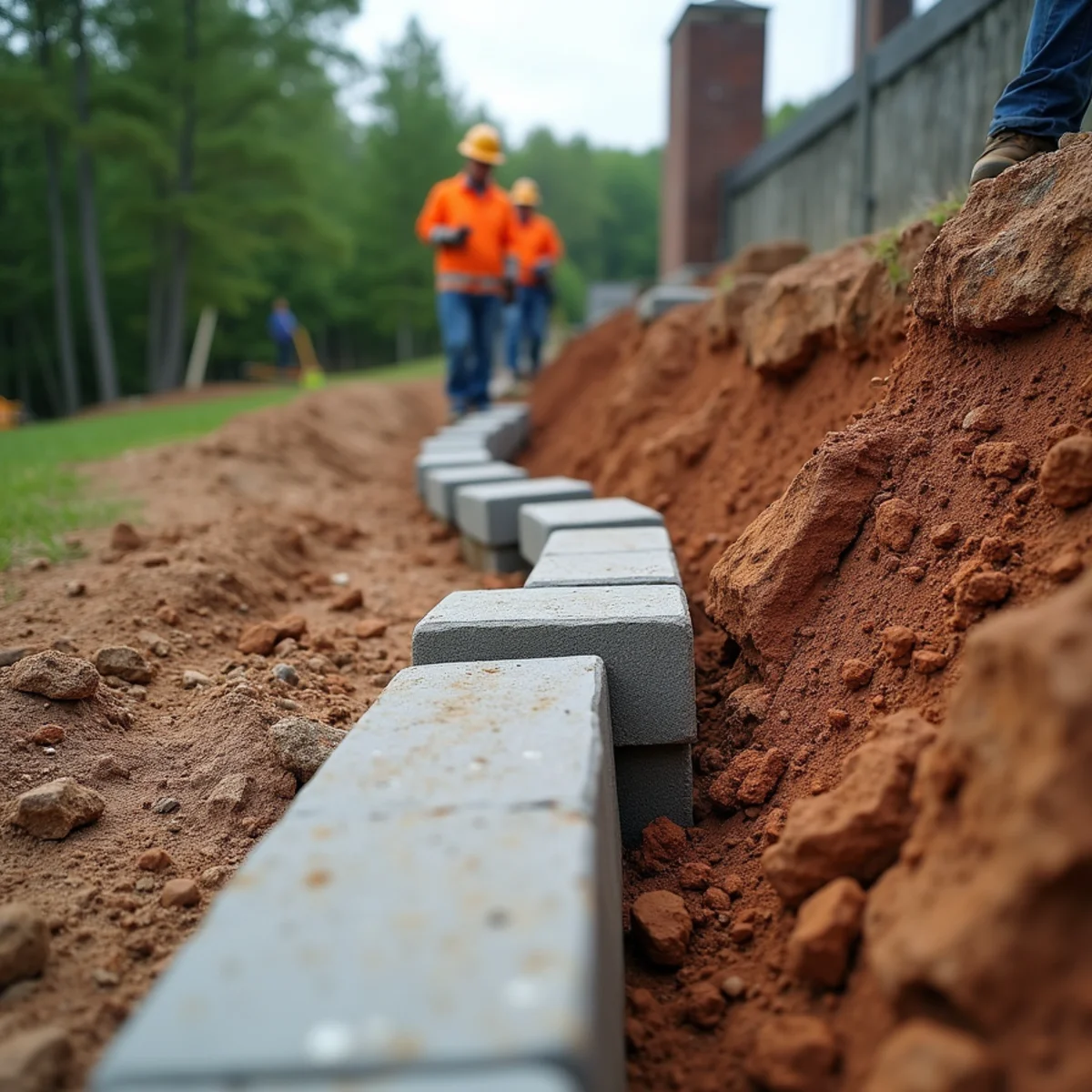
For the steepest mountain lots, particularly around Mount Airy where terrain often exceeds what sod alone can hold regardless of stapling, breaking a continuous steep slope into a series of shorter terraced sections dramatically reduces runoff velocity across any single section and gives sod a real chance to establish. This is the same principle behind hillside excavation and slope terracing work on larger grading projects.
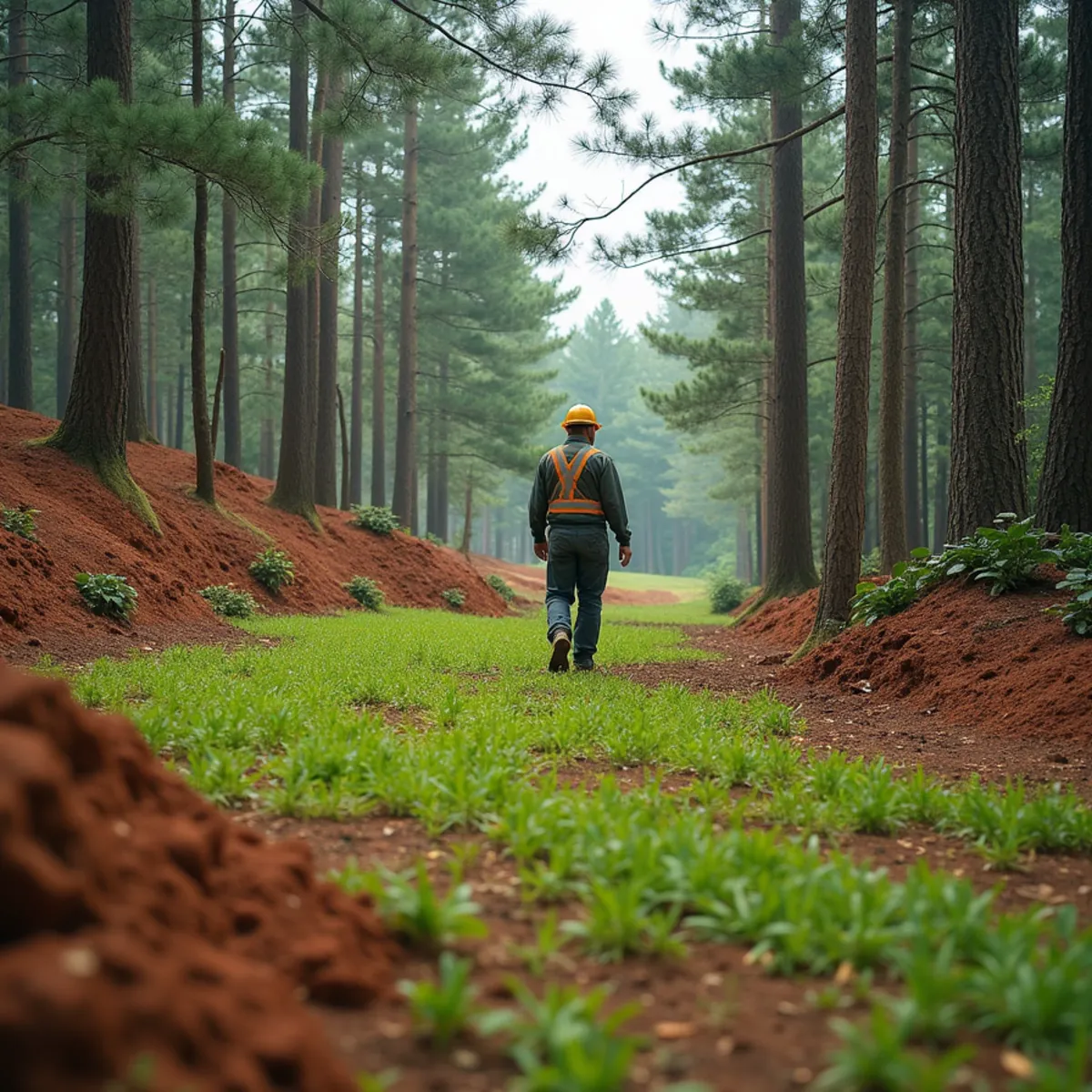
Blending quality topsoil into the top several inches of tilled, limed clay before sodding also gives roots a more hospitable medium to establish in quickly, which shortens the vulnerable window during which runoff can undermine the new sod - the same soil correction we build into every zoysia and fescue sod installation on a slope, not just the flat portions of a yard.
Selecting Deep-Rooting Grass Varieties
Grass species matter on slopes beyond just sun and shade tolerance. Varieties that develop deeper, more extensive root systems anchor more effectively into corrected soil and resist being lifted by surface runoff better than shallow-rooting varieties. This is one more factor, alongside proper grading and stapling, that a one-size-fits-all sod choice ignores.
We factor slope angle directly into species selection for properties around Cleveland and similar terrain, since the right grass for a flat backyard is not automatically the right grass for a 25 percent grade above a driveway.
Root depth differences between varieties are not usually visible at the sod farm and only become apparent after a season or two in the ground, which is one reason we lean on documented variety performance and our own installation history on comparable North Georgia slopes rather than marketing claims alone when recommending a specific grass for a challenging grade.
Timing Slope Sod Installation Around North Georgia's Rain Patterns
When sod goes down matters almost as much as how it goes down. Installing slope sod immediately ahead of North Georgia's heaviest rain periods - typically the more intense summer thunderstorm season - maximizes the risk that an unestablished root system will face erosive runoff before it has had time to anchor. Where the project schedule allows flexibility, timing installation for a milder rainfall stretch gives roots a better head start before the highest-risk weather arrives.
This is not always possible - slope sod sometimes has to go in on a construction timeline rather than an ideal weather window - which is exactly when the combination of proper grading, staple density, and erosion control blanket matters most. On a compressed schedule, we lean harder on the mechanical protections precisely because the natural establishment advantage of good timing is not available.
Trust Us for Flawless Slope Sodding
Sod failure on a mountain slope is almost always preventable with the right combination of grading, drainage diversion, stapling technique, and species selection addressed before the sod ever arrives on site, not after it has already slid.
Call (323) 606-0255 to have us evaluate your slope before installation, or to diagnose why a previous sod job failed. We handle the grading and terracing work alongside the planting so the whole system is designed to hold together through real North Georgia rain.
If sod has already failed on a slope at your property, we assess whether the underlying grade and drainage caused the failure before recommending a replant, since resodding the same slope the same way tends to produce the same result once the next hard rain arrives.
Frequently Asked Questions
- On steep grades, runoff can move fast enough to lift and shift sod before roots establish, especially in the first two to three weeks. Without proper stapling and grading, entire strips can slide downhill in a hard rain.
Get Expert Help on Your North Georgia Property
Kipps Kustom Landscapes has spent 15+ years solving exactly these challenges across the Blue Ridge foothills. Call for a free on-site estimate.
Call (323) 606-0255
Written by
Hunter Kipps — Owner & Lead Craftsman
Hunter Kipps has spent 15+ years building and repairing mountain and lakefront landscapes across Northeast Georgia — boulder retaining walls, shoreline riprap, red-clay drainage, and estate stonework. He personally runs the heavy equipment and walks every site before quoting it.