
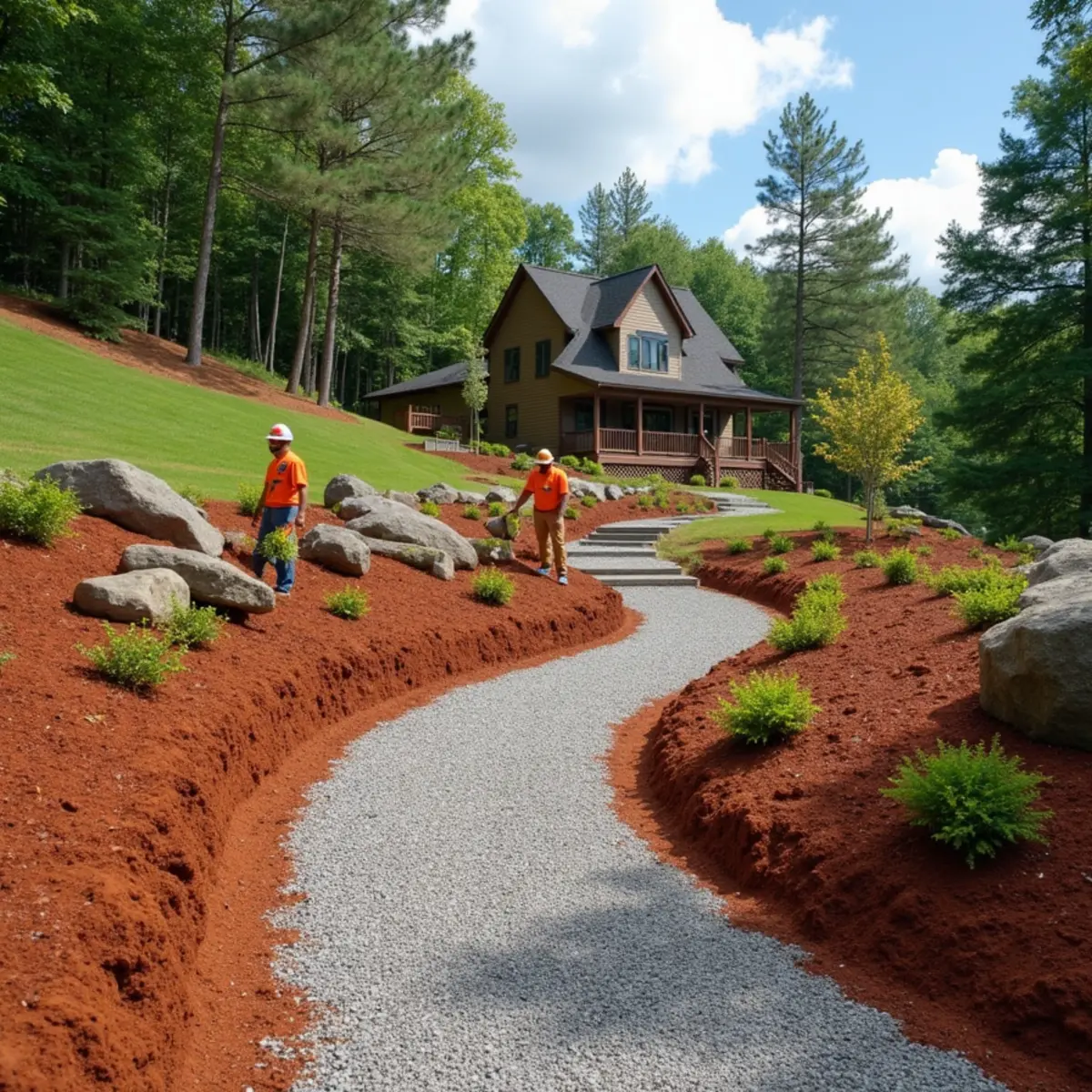
What a Vineyard Slope Teaches About Grading
Vineyards around Tiger Mountain get planted on specific slope aspects and elevations because the microclimate created by that grade, drainage, and sun exposure directly affects grape quality. Homeowners on similar hillside lots near US 441 benefit from the same logic, small differences in slope angle and drainage routing change how wet a planting bed stays, how much frost pocket forms in a low spot, and how well a lawn or ornamental bed will actually establish.
We grade hillside lots in Tiger with that microclimate awareness built in, reading where cold air pools on a still night, where a south-facing cut will dry out fast and need irrigation planning, and where a slight terrace break can turn an unusable steep bank into a productive planting shelf, much the way the working vineyards nearby use terracing to manage their own rows.
Crushed Granite for Well-Draining Paths
Standing water on a hillside path is both a slip hazard and a sign that the base was built wrong. We install crushed granite pathways compacted in lifts over a geotextile fabric base, which lets water percolate straight through the path surface into the ground below instead of sheeting across it toward a low corner of the yard. That same crushed granite base drains and compacts well on the kind of graded slopes common around Tiger's vineyard country, holding its shape under foot traffic without the rutting that mulch or loose gravel paths develop within a season or two.
We match granite color and size to the property's existing stonework where clients want the path to read as part of a cohesive hardscape rather than a utilitarian add-on, and we edge paths with buried steel or stone borders on sloped sections so the crushed granite does not migrate downhill after repeated rain.
Retaining Structure for Steep Rows and Beds
Where a hillside planting area needs a true level bench rather than just a graded slope, we build boulder retaining walls sized to the actual cut height, with drainage behind the wall so the bed above does not stay saturated and eventually slump the wall face. This comes up often on Tiger properties designed around ornamental grape arbors or terraced perennial beds inspired by the working vineyards nearby, where the owner wants the look of agricultural terracing without the structural risk of an unsupported cut.
Tiger and the Rabun County Ridgeline
Tiger sits between Clayton and Mountain City along the US 441 corridor, and we handle jobs across that whole stretch along with lake properties toward Wiley. A full mountain landscape design and build scope on a Tiger hillside typically combines grading, crushed granite paths, and targeted retaining structure into one coordinated plan.
Frost Pockets and French Drains Work Together
The same low spots that pool cold air on a still night also tend to pool water after a hard rain, since a suppressed pocket in a Tiger hillside collects both cold air drainage and surface runoff for the same topographic reason. We treat these microclimate pockets as drainage priorities, not just planting concerns, cutting French drains through the lowest sections of a graded slope so a frost-prone hollow does not also become a chronically soggy one that drowns whatever cold-hardy planting gets put there.
Homeowners drawn to Tiger for the same rolling, vineyard-adjacent scenery that put Tiger Mountain Vineyards on the map often want a lawn that reads as pastoral rather than a manicured suburban stand, and turf choice has to respect the frost pocket pattern too. We seed fescue blends in the lower, cooler sections of a graded lot where warm-season grass would green up late and brown out early, reserving bermuda or zoysia for the warmer, better-drained upper slopes, matching the grass to the same microclimate logic that shapes where the working vineyards plant their rows. For properties that pair a home site with ornamental vines or orchard rows, we also provide estate grounds maintenance and pruning timed to the same seasonal rhythm as the working vineyards nearby, since arbor and row maintenance follows a different calendar than typical residential shrub care.
Neighborhoods and Terrain Around Tiger
Tiger is small, but the ground varies sharply depending on which slope of Tiger Mountain a property sits on. South-facing lots near the working vineyards warm and drain fast, which is exactly why grapes were planted there in the first place, while north-facing lots and the low ground along US 441 hold moisture and cold air longer. A homeowner a half-mile from their neighbor can be dealing with a completely different frost and drainage pattern.
We grade and plant according to which side of the mountain a Tiger lot actually sits on rather than treating the whole community as one microclimate. That means checking slope aspect before recommending turf, before siting a French drain run through a suspected frost pocket, and before deciding whether a boulder retaining wall needs extra drainage capacity for a north-facing cut that stays wetter longer than a sunnier one nearby.
Permits and Grading Rules in Rabun County
Rabun County requires a grading or land disturbance permit for larger cut-and-fill work, and any retaining wall above roughly four feet of exposed face typically needs an engineered stamp before the county signs off, thresholds that come up regularly on Tiger's steeper vineyard-adjacent lots. We confirm the exact current thresholds with the Rabun County building department before finalizing a wall height or grading plan, rather than assuming a rule from a different county applies here.
Erosion and sediment control also matters more than usual on these graded hillside lots, since disturbed soil on a Tiger Mountain slope erodes fast into the same drainage that feeds the working vineyards nearby. We install and maintain sediment barriers per Georgia EPD guidance on any Tiger grading job of real scale, protecting both the neighboring agricultural land and our own finished work from washing out before it establishes.
We also flag septic system placement and well setback rules to property owners early in the process, since Rabun County and the Georgia Department of Public Health regulate both, and a retaining wall or graded terrace planned without checking those setbacks first can force an expensive redesign later. Confirming these boundaries with the county health department before finalizing site layout is a step worth taking on any Tiger property with septic service, particularly on smaller vineyard-adjacent lots where the buildable envelope between the septic field, the well, and a usable grading plan is already tight.
Our Services in Tiger
Every core Kipps Kustom Landscapes service is available to Tiger property owners:
Why Tiger Residents Choose Kipps Kustom
We Grade With a Vineyard Manager's Eye
Tiger Mountain's working vineyards prove how much slope aspect and drainage change a hillside's outcome. We read that same microclimate pattern, frost pockets included, before grading any residential lot nearby.
17 Miles From Clarkesville Along US 441
Tiger sits on our regular route between Clarkesville and Rabun County, so scheduling a free estimate for a hillside grading or crushed granite path project rarely means a long wait.
15+ Years Matching Turf and Terrain in Rabun County
We have spent well over a decade deciding where fescue belongs versus bermuda on Rabun County hillsides, the same judgment that shapes which crops thrive on the slopes above Tiger.
Licensed, Insured, and Rated 4.9 Stars
Miller Landscaping Group LLC carries full license and insurance on every Tiger project, backed by a 4.9-star rating across 47 reviews from homeowners across our North Georgia service area.
Tiger Landscaping FAQs
- The same microclimate factors that make certain Tiger Mountain slopes good for vineyards, sun exposure, drainage, and air movement, also affect how well lawns and planting beds establish. We grade with that in mind rather than treating every slope the same.