Orchard Ground Has a Compaction Problem
Generations of orchard use, along with the equipment traffic that comes with row-crop and orchard farming, has left a lot of Alto's clay subsoil heavily compacted a foot or so below the surface. Apple trees can push roots through that compaction over years, but a fresh sod installation cannot, and a compacted layer sitting just under a thin topsoil cap creates a perched water table that drowns new grass roots after every significant rain even though the surface looks dry within a day.
This is the single most common reason we get called out to Alto properties where sod installed by another company failed within a season: the crew laid sod on top of the existing grade without addressing what was happening a foot underground.
Deep Subsoil Ripping Before Anything Else Goes Down
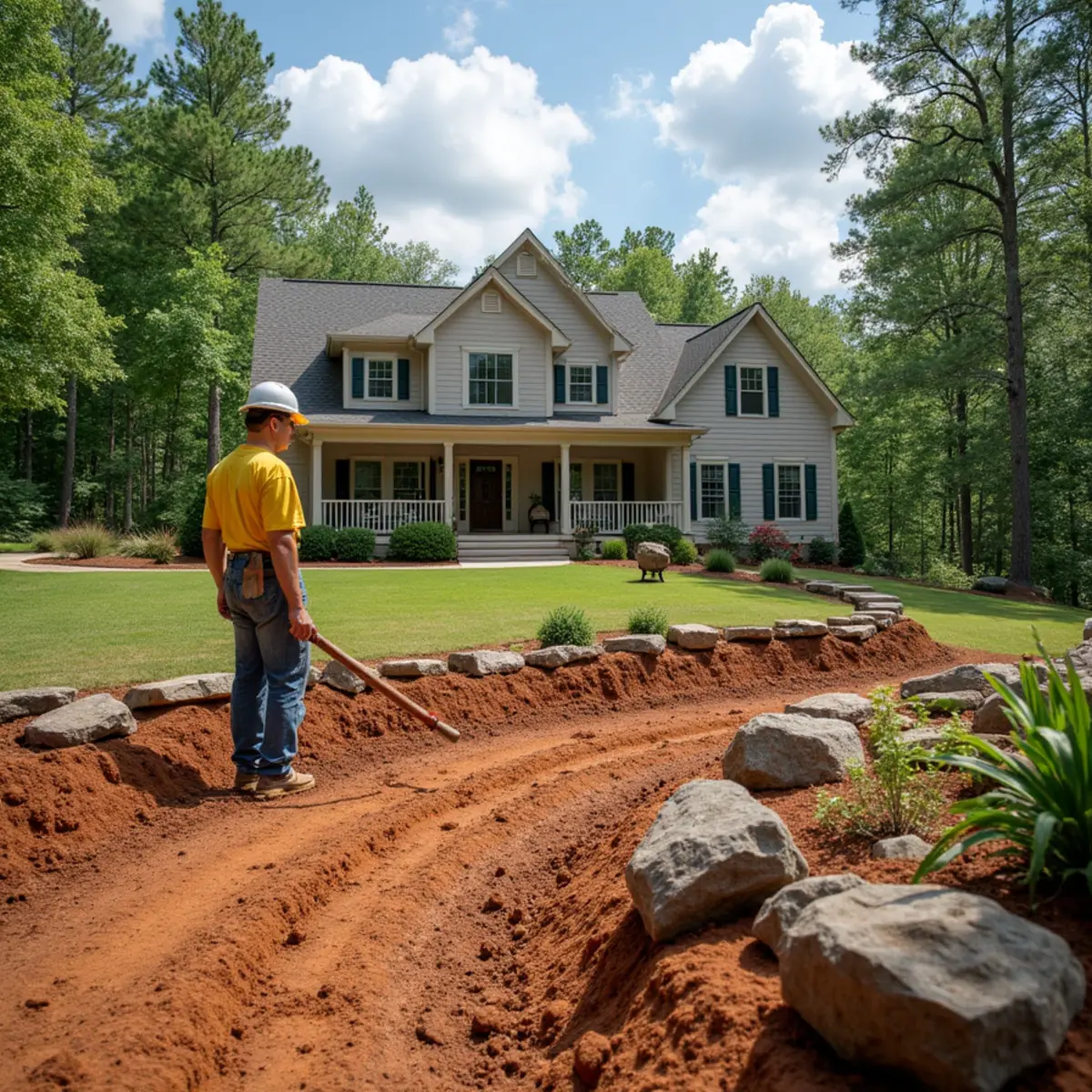
Before we install any new lawn area in Alto, we run deep subsoil ripping equipment across the site, breaking up the compacted clay layer well below normal tilling depth rather than just scratching the surface. This lets water actually move down through the profile instead of perching above the compaction and drowning new roots, and it gives grass and any new plantings a real path to root deeper than the top few inches, which matters during the dry stretches that follow Alto's wet spring seasons.
For steeper orchard-adjacent parcels, we combine subsoil ripping with hillside excavation and slope terracing so the improved soil profile actually stays in place on a grade instead of washing off before the lawn establishes.
Organic Compost Tilling and Sod Installation
After ripping, we till in a generous layer of organic compost rather than relying on a thin topsoil cap alone, which rebuilds the biological activity and structure that decades of orchard use and equipment compaction stripped out of the surface layers. Only after that soil work is done do we install sod, typically a zoysia blend suited to Alto's clay-heavy but now properly amended ground, or fescue where shade from remaining orchard rows requires it.
Alto's orchard country sits between Cornelia and Baldwin in our service area, and we handle soil remediation work across all three regularly.
Seasonal Timing for Soil Work and Orchard-Adjacent Drainage
Subsoil ripping in Alto works best done during a dry stretch, typically late summer or early fall, when the compacted clay layer is firm enough for the ripping equipment to fracture it cleanly rather than simply pushing through saturated ground without breaking it apart. Attempting the same work during Alto's wet spring season, when the ground is already soft, produces a weaker result and can leave equipment ruts that need their own repair before planting can even begin. We plan the ripping and compost-tilling phase around that seasonal window specifically, then time sod installation for early fall or spring so new roots get a full mild season to establish before summer heat or winter cold stresses the young lawn. Homeowners who insist on a mid-summer install against that recommendation see a noticeably higher failure rate even with the soil properly prepped.
Old orchard rows also leave behind their own drainage quirks, since decades of cultivated rows and access lanes between fruit trees often created shallow, informal channels that concentrate runoff differently than the surrounding natural grade would suggest. Before any new lawn or bed installation, we walk the site to identify where those old orchard-era channels still carry water, since building over one without addressing it just relocates the wet-spot problem rather than solving it. Where a channel needs to keep functioning, we formalize it into a proper swale or French drain route rather than grading it flat and hoping the water finds a new path on its own, the same soil-first standard we apply on the ridge properties we serve in Baldwin.
Deer pressure is heavier in Alto's orchard-adjacent ground than in more developed parts of the county, since the historic fruit trees and field edges still draw browsing wildlife, so we factor deer-resistant plant selection and young-tree protection into any new bed or specimen tree planting here rather than treating it as an optional add-on. We also recommend fencing or tree guards for the first two growing seasons on any newly planted specimen, since that is when browsing damage does the most lasting harm to root establishment.
Permits, Codes & Compliance in Habersham County's Orchard Country
Alto's ZIP 30510 sits under standard Habersham County plan review, but orchard-country parcels often carry old agricultural drainage channels and field-edge grading that predate current code, so we confirm with the county building department how existing informal drainage interacts with any new permitted work before we formalize a channel into a swale or French drain.
Land-disturbing work on a larger orchard-adjacent lot can also trigger Georgia EPD erosion and sediment control requirements once the disturbed area crosses the state threshold, particularly on sloped parcels where subsoil ripping exposes bare clay for a season before new turf establishes, the same threshold we track for hillside excavation and slope terracing on steeper orchard-adjacent ground.
Neighborhoods & Areas We Serve in Alto
Alto's orchard-country parcels are not uniform ground. Older orchard rows with decades of compaction sit differently than newer residential construction on the same clay subsoil, and we test infiltration and compaction depth on every site rather than assuming one Alto lot behaves like the last one we worked.
That soil-first approach is the same standard we apply on the ridge lots near Baldwin and the commercial corridor work near Cornelia, both of which sit in our regular Alto-area route.
Native Plant Palette & Microclimate Notes for Alto
Once Alto's compacted orchard subsoil is ripped and amended, it actually holds nutrients and moisture well, which is exactly why it grew fruit trees for generations, and that same corrected ground supports a wider range of ornamentals than the raw compacted clay ever could. We still steer homeowners toward zoysia or shade-tolerant fescue for turf, matching the sod and soil remediation work we do across Alto's orchard rows, but flowering shrubs and perennials do noticeably better here once the subsoil work is done first.
Deer pressure from the historic orchard edges also shapes what we plant close to a tree line, the same browsing risk we account for on the agricultural parcels we serve near Raoul.
Our Services in Alto
Every core Kipps Kustom Landscapes service is available to Alto property owners:
Why Alto Residents Choose Kipps Kustom
Eleven Miles From Clarkesville to Orchard Country
Alto sits about 11 miles from our shop, positioned between Cornelia and Baldwin in our regular route, so soil remediation calls here do not carry extra scheduling delay.
15+ Years Fixing Failed Sod Installs
We have diagnosed compacted orchard subsoil under failed sod jobs across Habersham County for more than fifteen years, which is why we rip and amend before we ever lay new turf.
Own Subsoil Ripping Equipment
We own the deep ripping equipment needed to break up Alto's compacted clay layer, rather than renting machinery that limits how deep we can actually go.
4.9 Stars From Sod That Finally Held
Many of our 47 reviews come from clients whose first sod job, installed by another company, failed within a season. Our 4.9-star average reflects the ones that held after we fixed the soil first.
Alto Landscaping FAQs
- Most likely a compacted clay subsoil layer beneath the surface, common in this old orchard ground, was never broken up before installation. That compaction perches water and drowns new roots even when the surface looks dry.