
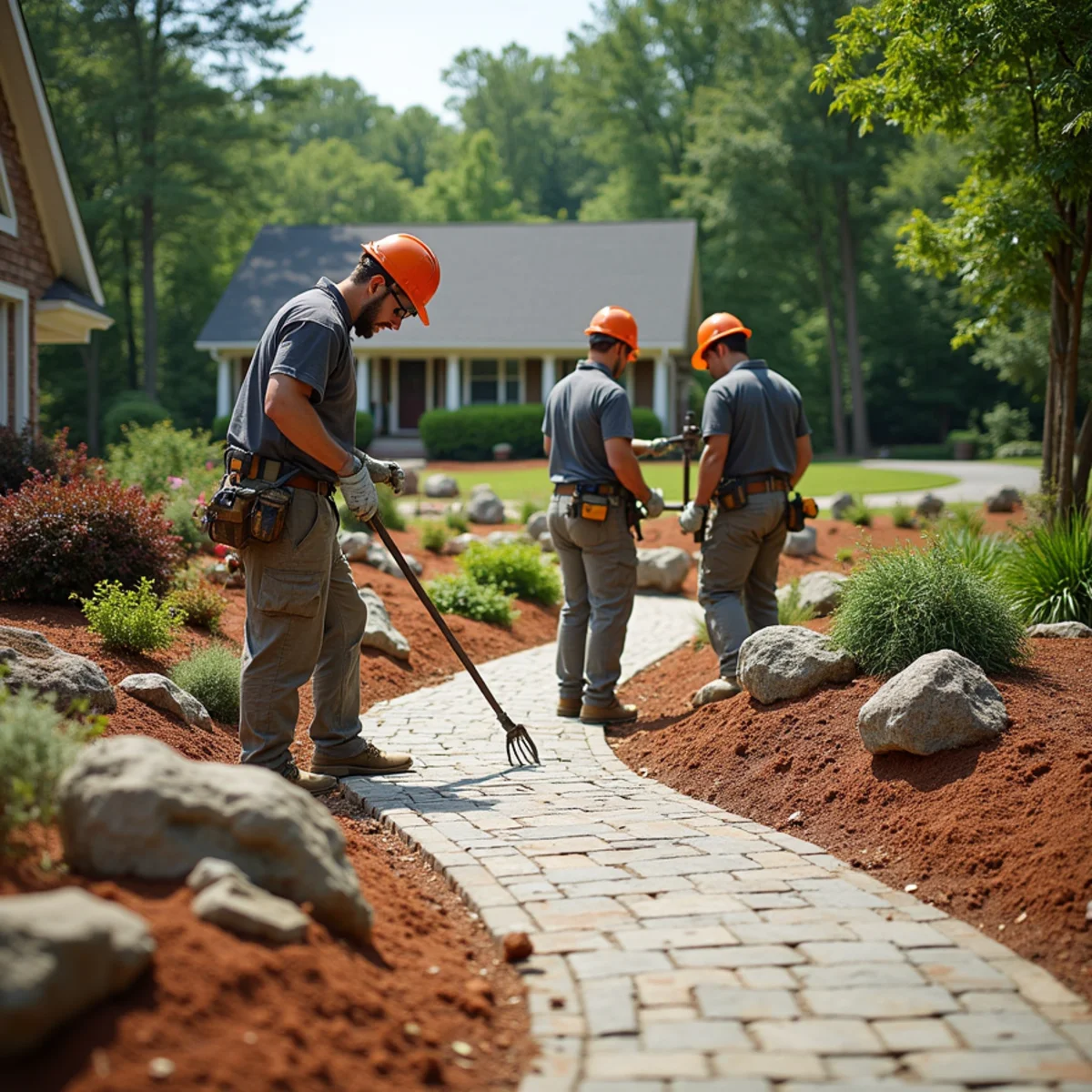
Designing for Small College Town Lots
Franklin Springs grew up around the mineral springs that gave the town its name and around Emmanuel College's campus, and the residential streets nearby carry smaller, older lots rather than the multi-acre parcels common in the surrounding countryside. A landscape plan sized for a rural Franklin County property does not translate to these lots, where a patio, a few defined planting beds, and efficient use of a narrow side yard matter far more than large-scale grading or acreage clearing. We design hardscape footprints that fit these tighter lot dimensions without making the yard feel cramped, often using a single well-placed paver patio rather than multiple disconnected features that would overwhelm a smaller lot.
Many homes near the campus and downtown core are older houses that have been renovated over the years, and their foundations and grading often predate modern drainage standards. We frequently correct grading on these older Franklin Springs lots where additions or driveway paving over the decades changed water flow toward the house rather than away from it.
Paver Patios Sized for Everyday Use
On a compact lot, a patio gets used constantly rather than sitting as an occasional feature, so we build these spaces with materials that hold up to daily foot traffic and Georgia's freeze-thaw cycles. A properly compacted gravel base and polymeric sand joints keep a smaller paver patio from developing the shifting and weed growth that plagues patios laid directly over unprepared soil. We also pay close attention to how a compact patio connects to the rest of a small yard, since on these lots the patio, a defined lawn area, and planting beds all have to work together rather than being spread across acreage where poor transitions matter less.
Low-Maintenance Perennial Beds
College town residents, whether faculty, staff, or long-time locals, often want a yard that looks intentional without demanding constant upkeep. We favor perennial plantings suited to north Georgia's Piedmont clay and Franklin County's climate, selecting species that return reliably each year and require modest pruning rather than annuals that need replanting every season. This approach pairs well with our native mountain plantings work, adapted here for a smaller-lot version using compact native and adapted perennial varieties rather than the larger rhododendron and mountain laurel plantings we install on bigger wooded properties.
Good drainage still matters even at this smaller scale. Franklin County's red clay compacts under foot traffic on tight lots just as it does on larger acreage, and we amend planting beds properly before installation so perennials establish real root systems instead of sitting in a compacted clay bowl that holds water after every rain.
Rental Properties and Landlord-Owned Lots Near Campus
A meaningful share of the housing near Emmanuel College and downtown Franklin Springs, including streets close to Royal Springs Park where the town's namesake mineral springs still flow, is landlord-owned rental property rather than owner-occupied. Landlords managing these lots want landscaping that survives student turnover and inconsistent day-to-day care, not a high-maintenance design that falls apart the first semester nobody waters it. We favor the same low-maintenance perennial and native plant palette we use elsewhere in Franklin Springs for these rental lots, paired with hardscape that does not depend on upkeep to stay functional, like a properly based gravel path instead of a mulch bed that needs annual refreshing.
We also work directly with several Franklin Springs landlords on a standing basis, handling seasonal cleanup between leases and correcting drainage issues that a tenant would never think to report until water is already inside a crawlspace. This kind of estate grounds maintenance style service, scaled to a rental lot rather than an estate, keeps a landlord's properties presentable without requiring constant oversight. We also help several campus-area landlords transition older foundation beds away from invasive English ivy, a common legacy planting on these older lots that traps moisture against mortar joints and siding if left unchecked for multiple seasons.
Neighborhoods Across Franklin Springs
Franklin Springs is small enough that its landscape character changes block by block rather than neighborhood by neighborhood. Streets immediately around Emmanuel College and Royal Springs Park carry the tightest lots and the oldest housing stock, much of it landlord-owned rental property as discussed above, while the edges of town loosen up into slightly larger lots with more room for a real planting bed layout. Franklin County's red Piedmont clay underlies all of it, but the amount of usable yard space, and therefore the design approach, shrinks the closer a property sits to the campus core.
We adjust our design footprint accordingly, favoring a single well-placed stone fire pit or flagstone patio on the tightest campus-area lots and a slightly more expansive planting bed layout on the properties toward the edge of town. Either way, the same red clay drainage correction applies, since Franklin County clay compacts the same way under foot traffic whether the lot is a quarter acre near campus or a larger parcel toward the county line.
Permits, Codes and Compliance in Franklin Springs
Franklin Springs is a small enough municipality that most residential landscape and hardscape projects fall under standard Franklin County permitting rather than a separate city code, though property owners should confirm with the town or county directly whether a specific project, like a patio addition close to a property line or a retaining wall over roughly four feet, needs its own permit or engineered stamp. Rental property owners near campus in particular should verify any setback or drainage requirement before adding hardscape, since landlord-owned lots sometimes carry easements or shared drainage arrangements with a neighboring property that a single-owner lot would not have.
We confirm these details on a lot-by-lot basis before finalizing a Franklin Springs design, rather than assuming every campus-area lot follows the same setback pattern, and we handle this kind of ongoing coordination as part of standing estate grounds maintenance contracts for several campus-area landlords. Our boulder retaining walls crews scale footing depth and engineering appropriately for whatever a specific small lot's permit actually requires.
Serving Franklin Springs and Nearby Franklin County Towns
We work Franklin Springs alongside the larger-acreage properties in nearby Royston and Carnesville, scaling our approach to whichever lot size and setting the job calls for. Call (323) 606-0255 to talk through a patio, planting bed, or drainage project for your Franklin Springs home.
Our Services in Franklin Springs
Every core Kipps Kustom Landscapes service is available to Franklin Springs property owners:
Why Franklin Springs Residents Choose Kipps Kustom
Designs Scaled to a College-Town Lot
We size hardscape and planting footprints for Franklin Springs' tighter in-town lots, not a plan built for the multi-acre parcels common elsewhere in Franklin County.
35 Miles From Clarkesville
Franklin Springs sits toward the edge of our regular Franklin County route, and we schedule its smaller-lot jobs alongside the larger-acreage work we already do nearby.
15+ Years, 4.9 Stars, 47 Reviews
Property owners and landlords near Emmanuel College can check our record before hiring us for a patio, planting bed, or standing rental maintenance contract.
Free On-Site Estimates, Even for Small Lots
A compact college-town yard gets the same in-person walk-through as a larger acreage property, since drainage and grading issues on an older lot are just as easy to misjudge from a photo.
Franklin Springs Landscaping FAQs
- Yes. We regularly scale our design approach down for compact college-town lots, focusing on a single well-placed patio and defined planting beds rather than the larger-acreage features common elsewhere in Franklin County.