
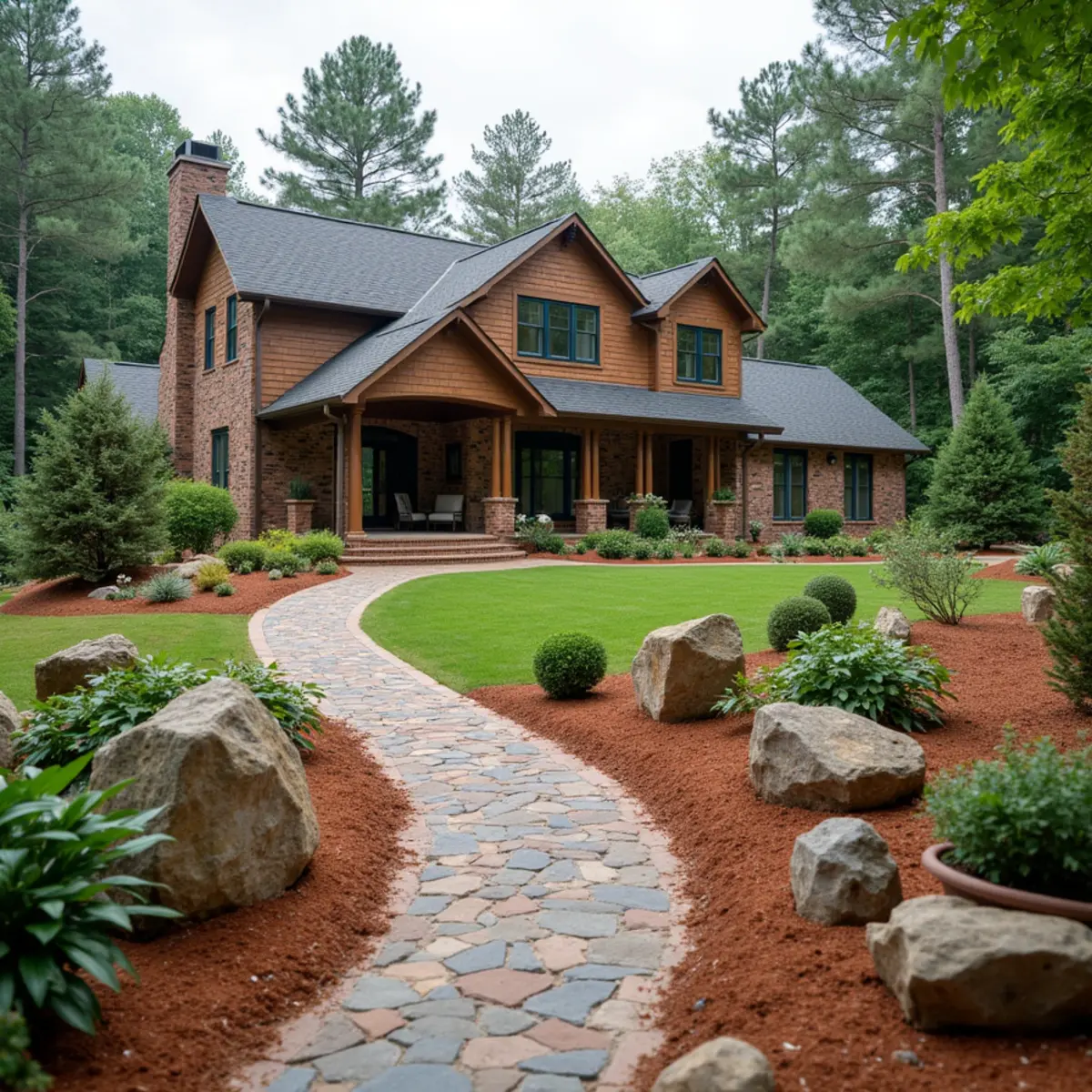
Elevation Changes Everything About the Growing Season
Suches sits in a high mountain bowl surrounded by some of the tallest peaks in Georgia, close to where the Appalachian Trail crosses near Woody Gap, and that elevation shortens the growing season noticeably compared to Clarkesville or the lower foothill towns we serve. Last frost dates here run later into spring and first frost arrives earlier in fall, which compresses the window for establishing new sod, seed, or transplanted shrubs. We plan Suches projects around that shorter window rather than applying a standard North Georgia planting calendar, because a sod install that would establish fine in April at lower elevation can still get hit by a hard freeze up here.
Cold-Hardy Fescue Over Warm-Season Turf
Zoysia and Bermuda, the warm-season grasses that thrive in most of our lower-elevation service area, simply do not perform reliably at Suches elevation. Warm-season turf needs a longer, hotter growing season to establish deep roots and recover from winter dormancy, and Suches does not consistently provide that. We specify turf-type tall fescue blends bred for cold tolerance for almost every Suches lawn, selecting cultivars with strong winter color retention and disease resistance suited to the cooler, often shadier conditions found in a mountain valley ringed by tall ridgelines that block afternoon sun on many lots. Overseeding fescue lawns here also happens on a different calendar than lower elevation, timed to Suches's compressed fall window rather than a generic statewide schedule.
Durable Stone Built for Freeze-Thaw Cycles
Harsh winter freezes at this elevation are hard on hardscape, not just lawns. Repeated freeze-thaw cycling can heave pavers, crack improperly cured mortar joints, and push loose-fit stone out of alignment over a few winters if the base work underneath was not built for it. For Suches patios, walkways, and boulder-retaining-walls, we go deeper than standard base depth on compacted stone and make sure every drainage detail behind a wall or under a paver base actually works, since trapped water that freezes and expands behind a wall face is the single most common cause of hardscape failure we see called in from this elevation. Natural stone selections for Suches projects also favor dense, low-porosity granite and fieldstone over softer, more porous stone that absorbs water and is more prone to spalling through repeated winter freezing.
Serving the High Country Around Suches
We handle full mountain-landscape-design-build projects for Suches cabins and mountain homes, and we regularly serve nearby Blairsville and Dahlonega, where elevation drops and the plant and turf calculus shifts back toward our standard mountain palette.
Bear Activity and Garden Protection at High Elevation
Suches sits close enough to the Blood Mountain and Springer Mountain wilderness corridor that black bear activity is a routine part of life here, more so than almost anywhere else on our service map, and it changes how we plan vegetable gardens, compost areas, and even ornamental plantings around a cabin. A raised garden bed or fruit tree planted without any thought to bear traffic is likely to get raided at some point during the growing season, and homeowners who only visit their Suches cabin on weekends often do not find out until the damage is already done.
For food gardens and orchard plantings at this elevation, we build in real fencing, sturdy woven wire at a height and burial depth that actually deters a determined bear rather than a decorative border that a deer would respect but a bear would simply push through, and we site compost and fruit-drop cleanup zones well away from the cabin's main outdoor living space. Ornamental beds closer to the house still need the cold-hardy palette we specify for Suches elevation, but we also favor species bears show little interest in, which keeps seasonal maintenance calls down. We handle this kind of garden protection as part of standing estate-grounds-maintenance-pruning visits for owners who are not on-site full time to catch problems early.
For owners who are only on-site part time, we also recommend simple deterrents like motion-activated lighting near garden and compost areas, which meaningfully reduces nuisance visits without requiring the homeowner to be present to intervene. Combined with the fencing itself, this layered approach keeps a Suches cabin's garden productive without turning bear management into a full-time job for an owner who may only see the property every other weekend.
Neighborhoods & Areas We Serve in Suches
Suches is not one elevation. Cabins down in the valley floor near GA 60 get the coldest overnight air and the shortest growing season, while lots built partway up the surrounding slopes toward Blood Mountain or Springer Mountain often sit in slightly better air drainage, similar to what keeps a ridge property in Young Harris a touch warmer than its valley floor neighbors. We ask where a Suches property actually sits on that gradient before finalizing a fescue and stone specification, rather than treating the whole valley as one microclimate.
Properties near Woody Gap, where the Appalachian Trail crosses, tend to be smaller cabin lots with limited flat ground, which shapes how we stage equipment for any boulder-retaining-walls or patio work up here. Lots closer to the Union County line toward Blairsville sit at somewhat lower elevation than the Suches valley floor itself, and we adjust the fescue cultivar and planting calendar accordingly rather than applying one elevation's specification to the whole area we cover under this listing.
What a Typical Suches Project Looks Like
A typical Suches job combines the cold-hardy fescue and freeze-thaw-rated boulder-retaining-walls covered above with the bear-aware native-mountain-rhododendron-plantings plan for gardens and orchards near the cabin, since most Suches properties we work on need both addressed in the same visit rather than as separate calls months apart. Many of these cabins also see seasonal use rather than year-round occupancy, so we build maintenance schedules around a property owner's actual visit pattern instead of assuming someone is on site every week to catch a problem early.
At 38 miles out, Suches sits closer to Clarkesville than several of our other Tier 4 towns, so we treat routine drainage and planting work here as regular scheduling rather than reserving trips only for larger estate-scale jobs, the way we might for a farther town like Elberton.
Our Services in Suches
Every core Kipps Kustom Landscapes service is available to Suches property owners:
Why Suches Residents Choose Kipps Kustom
We Build for the Valley Above the Clouds' Real Winter
At roughly 2,850 feet, Suches sees harder, more frequent freeze-thaw cycling than anywhere else on our service map. Every base depth and drainage detail behind a wall or under a paver here is sized for that, not a lower-elevation standard.
38 Miles, and We Know the Elevation Shift
Suches is about 38 miles from Clarkesville, close in distance but a genuinely different growing season once you climb up near Blood Mountain and Woody Gap, and we plan every project around that shift.
Own Machinery for High-Country Access
Getting equipment safely onto Suches's steep mountain-bowl lots takes the same heavy machinery and experienced operators we use on our home Habersham County terrain.
15+ Years, Licensed and Insured Above 2,800 Feet
Miller Landscaping Group LLC has built cold-hardy fescue lawns and freeze-thaw-rated hardscape at Suches elevation for 15-plus years, with full licensing and insurance on file for cabin owners who need proof before work starts.
Suches Landscaping FAQs
- Suches sits around 2,850 feet elevation with a shorter, cooler growing season than our lower-elevation service area. Warm-season grasses like Zoysia do not reliably establish or recover from winter here, so we specify cold-hardy fescue blends instead.